Long-term Demographic Changes: The Transformation of the Americas
When European powers arrived in the Americas, they triggered a demographic earthquake whose aftershocks still shape the continent today. The subcategory Long-term Demographic Changes within European Conquest and Impact examines how native populations collapsed, rebounded, and intermingled with new arrivals over centuries. Understanding these shifts is crucial for grasping modern Indigenous identities, land claims, and genetic heritage. Here, we explore the biological, social, and migratory forces that redefined the human landscape of the Western Hemisphere.
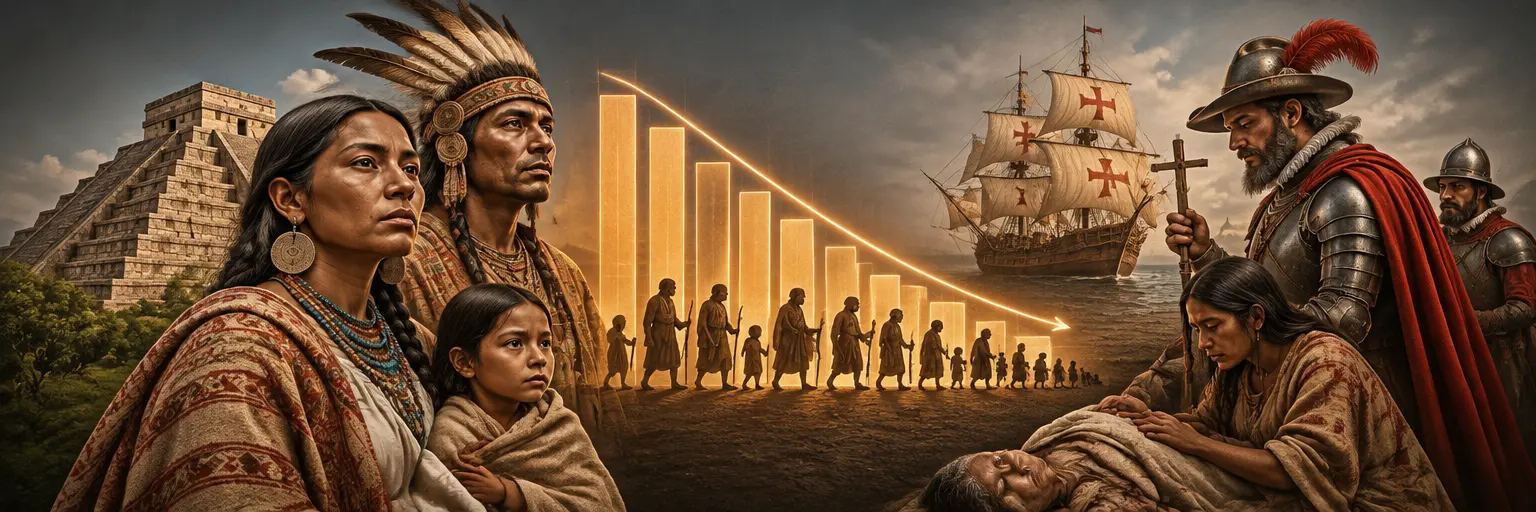
📉 The Great Population Collapse: Disease and Warfare
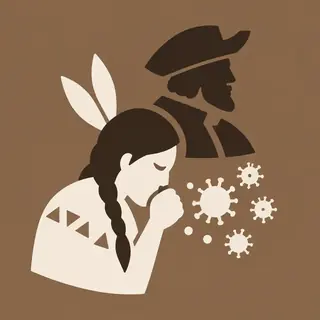
Between 1492 and 1650, the Indigenous population of the Americas fell by an estimated 90% in many regions, primarily due to introduced pathogens like smallpox, measles, and influenza, which outpaced any resistance. Warfare and forced labor compounded the crisis, as Spanish and Portuguese colonial systems disrupted food production and social networks. This catastrophic decline was not uniform: high-density urban centers like Tenochtitlan and Cusco suffered acute losses, while remote Amazonian groups initially remained isolated.
Because Europeans recorded few reliable censuses, historians reconstruct this collapse using archaeological evidence, oral traditions, and colonial tribute lists. The demographic nadir occurred around 1650, when the Indigenous population likely bottomed out at roughly 6 million across both continents. This collapse enabled European land seizure and the importation of African slaves, permanently altering regional demographics. For readers, this section reveals how a subtle biological encounter—not just military might—was the decisive factor in reshaping the Americas.
🌱 Recovery and Resurgence: Population Rebound in the Colonial Era
From the late 1600s onward, Indigenous populations began a slow but steady recovery, although their geographic distribution shifted dramatically. Mission settlements, reducciones, and haciendas concentrated survivors into new communities, often mixing different ethnic groups. The 18th century saw significant growth in the Andes, Mesoamerica, and the Southwest United States, where native agricultural systems survived despite colonial pressure. By 1800, the Indigenous population had rebounded to about 8-10 million, still well below pre-contact levels.
This recovery was uneven: Coastal groups often remained depleted due to sustained exposure to European diseases, while interior highland and forest communities fared better. Additionally, the colonial era introduced mestizaje—genetic and cultural mixing with Europeans and Africans—creating new demographic categories like mestizos and mulattos. This section helps readers understand that demographic change was not a one-way tragedy but a dynamic process of adaptation and biological blending that produced contemporary Latin American populations.
🔁 Migration and Forced Relocation: The Shifting Map of Peoples
Long-term demographic changes were profoundly shaped by migrations, both voluntary and coerced. The Spanish crown’s congregación policies in Peru and Mexico forcibly resettled scattered villages into centralized townships, decimating kinship networks while creating new administrative hubs. In North America, the later Indian Removal Act (1830) displaced eastern tribes across the Mississippi, but earlier colonial wars had already pushed refugees westward. Conversely, some groups like the Comanche and Apache expanded their territories by adopting horses and raiding, becoming demographic conquerors themselves.
African slavery introduced 10-12 million people to the Americas between 1500 and 1850, drastically increasing Afro-descendant populations in coastal Brazil, Caribbean islands, and the U.S. South. These forced migrations created new demographic centers and cultural enclaves that persist today. By mapping these movements, readers see how demographic change was not only about death and birth but also about the physical relocation of entire peoples. This era of upheaval laid the foundation for modern ethnic boundaries and landless Indigenous identities across both continents.
🧬 Genetic Legacies: DNA, Admixture, and Identity
Modern genetic studies reveal that contemporary Latin Americans possess significant Indigenous ancestry, often mixed with European and African lineages in complex patterns. For example, Mexican mestizos average about 50-70% Indigenous DNA, while Peruvian populations retain even higher percentages in highland regions. This admixture is a direct legacy of the demographic collapse and subsequent recovery, as survivors formed new communities with outsiders. However, genetic identity does not always equate to cultural identity—many genetically Indigenous individuals now identify as mestizo or vice versa.
Conversely, some Indigenous communities, particularly in the Amazon, Andes, and Arctic, have maintained relatively homogeneous genetic profiles despite centuries of contact. Genetic testing has also confirmed historical records of founder effects—where small surviving populations repopulated larger areas, reducing genetic diversity. This scientific lens helps readers appreciate that demographic change is written into our bodies, affecting disease susceptibility and ancestry testing outcomes. It also clarifies why Indigenous sovereignty debates often cite genetic continuity as evidence for land rights.
🌾 Economic and Social Reorganization: New Demographics of Labor
Post-conquest economies reorganized Indigenous populations into new labor roles, altering gender ratios and family structures. The mita system in Peru and the encomienda in Spanish colonies extracted tribute labor, causing death rates to exceed birth rates in mining centers like Potosí. This led to a demographic shift from rural villages to urban mining towns, which later declined, leaving depopulated hinterlands. In Brazil and the Caribbean, enslaved Indigenous people were replaced by African laborers, creating distinct demographic zones that persist today.
On the positive side, some Indigenous groups found economic niches that promoted growth, such as the Mapuche’s adoption of horses for ranching or the Pueblo peoples’ integration into Spanish trade networks. These adaptations allowed certain communities to stabilize and even expand their numbers. This section demonstrates how demographic change cannot be separated from labor systems, food security, and resource access—key factors still shaping Indigenous poverty and resilience in the modern era.
🌍 Modern Demographics: Indigenous Populations Today
In the 21st century, Indigenous populations have rebounded to roughly 50-60 million across the Americas, with significant growth in Bolivia, Guatemala, Peru, and Mexico. Urbanization has created new Indigenous identities in cities like Mexico City and Los Angeles, where migrants maintain ties to ancestral communities. However, this recovery is fragile—many groups face land encroachment, climate change, and language loss that threaten demographic stability. Census definitions also vary: Brazil counts only 0.5% as Indigenous, while Bolivia counts over 20%.
The demographic future hinges on legal recognition, healthcare access, and economic opportunity. For example, Indigenous women’s birth rates are higher than national averages in most countries, but mortality rates are also elevated. This final section shows that long-term demographic change is an ongoing story, not a closed chapter. Readers gain a nuanced view of how past conquests structure current population distributions, enabling better-informed advocacy for Indigenous rights and historical justice.
Frequently Asked Questions
What was the main cause of the Indigenous population collapse after 1492?
Introduced infectious diseases—especially smallpox, measles, and influenza—were the primary killer, spreading faster than European armies. Lacking immunity, native populations suffered mortality rates of 50-90% in affected areas. Warfare, forced labor, and disruption of food systems worsened the crisis, but pathogens were decisive in the demographic collapse.
How long did it take for Indigenous populations to recover?
Recovery began in the late 1600s, but many regions did not regain pre-contact numbers until the 20th century. Highland Mexico and the Andes rebounded by 1800, while lowland Amazon and Caribbean groups often took centuries longer. Today, total Indigenous numbers exceed pre-1492 levels, but distribution remains uneven.
Did all Indigenous groups experience demographic decline equally?
No. Isolated groups like the Yanomami initially avoided contact, while denser urban societies suffered massive losses. Groups that adopted horses or adapted to colonial economies, like the Comanche and Mapuche, sometimes grew in numbers. Geographic isolation and resistance strategies played crucial roles in survival rates.
How does genetic ancestry testing relate to Indigenous identity?
Genetic testing can reveal Indigenous DNA percentages, but identity is not solely biological—it includes cultural membership, language, and community recognition. Many mixed-heritage individuals have significant Indigenous DNA yet do not self-identify as Indigenous. Conversely, some fully Indigenous communities show high genetic homogeneity after centuries of isolation.
What are the current demographic trends among Indigenous peoples?
Indigenous populations are growing faster than national averages in most countries, driven by higher birth rates and improved health access. Urbanization is increasing, with many urban Indigenous people maintaining dual identities. However, threats like deforestation, mining, and climate change could reverse gains in vulnerable regions.