Legal Battles: Landmark Cases in Indigenous Land Rights
🌍 Indigenous land rights cases have shaped the legal landscape, highlighting the enduring struggles and triumphs of Indigenous communities. This article delves…
Read article

Land Rights and Modern Movements explores the enduring struggle of Indigenous peoples across the Americas to reclaim ancestral territories, protect sacred resources, and assert sovereignty in the face of centuries-old colonial legacies. From legal battles over treaty rights to grassroots campaigns against extractive industries, this topic highlights how contemporary activism builds on pre-Columbian stewardship traditions while adapting to global legal frameworks. Discover how land restitution, cultural revitalization, and political mobilization are reshaping modern Indigenous identities and influencing national policies, with resilient communities turning historical displacement into powerful platforms for environmental justice and self-determination.
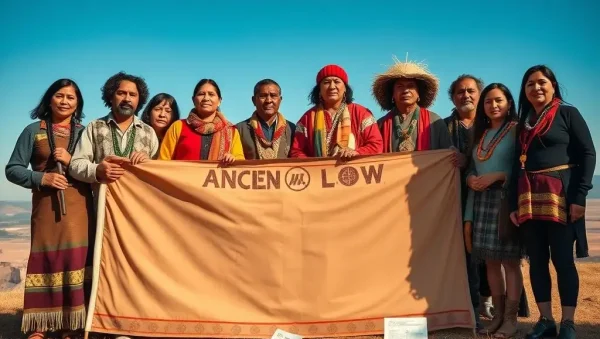
🌍 Indigenous land rights cases have shaped the legal landscape, highlighting the enduring struggles and triumphs of Indigenous communities. This article delves…
Read article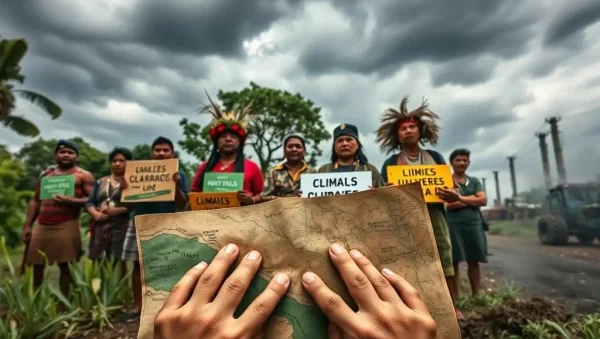
🌍 Indigenous land rights and climate change are deeply intertwined, as shifting climates threaten traditional territories. This article explores how indigenous movements…
Read article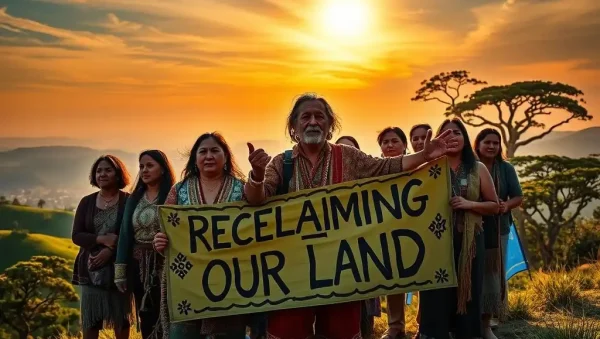
🌍 Reclaiming heritage is vital for Indigenous communities in America. By advocating for Indigenous land rights in America, these groups are not…
Read article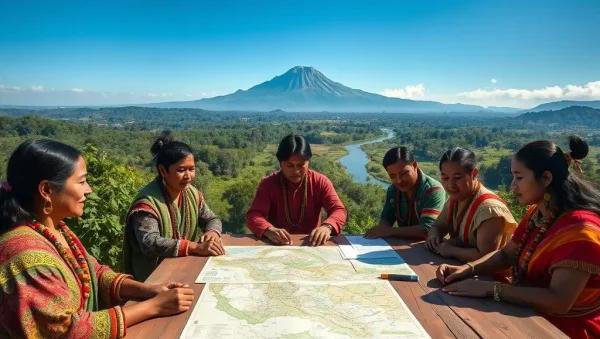
🌍 Indigenous land trusts offer significant benefits by empowering native communities to reclaim and protect ancestral lands. These innovative solutions not only…
Read article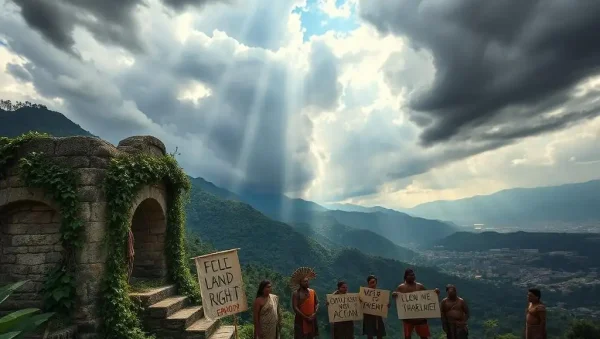
🌍 The legacy of conquest has left a profound mark on the Americas, fueling ongoing indigenous land disputes. This article explores the…
Read article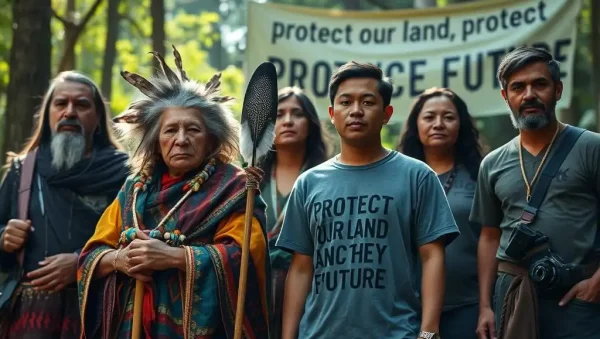
🌍 The article delves into Indigenous environmental alliance strategies, highlighting collaborative efforts between Indigenous communities and environmental movements. It showcases how these…
Read articleWhen European conquest reshaped the Americas, it didn’t just end empires—it ignited centuries of struggle over land, sovereignty, and cultural survival. The subcategory Land Rights and Modern Movements examines how Indigenous peoples have fought to reclaim ancestral territories, assert legal rights, and build contemporary political movements. From treaty battles in North America to constitutional reforms in Latin America, this section reveals a living history of resistance that continues to influence global human rights frameworks.
Understanding modern land rights begins with the colonial legal instruments that stripped Indigenous nations of territory—from papal bulls to treaties and “terra nullius” doctrines. This section breaks down how courts and governments have reinterpreted these documents in recent decades. For example, key rulings like the 1997 Delgamuukw decision in Canada and the Inter-American Court’s Awas Tingni case (2001) established that Indigenous land title exists independently of state recognition. Readers will learn how legal precedent now often weighs oral history alongside written records, creating new pathways for restitution.
Moreover, international bodies like the UN have shifted the discourse. The 2007 UN Declaration on the Rights of Indigenous Peoples (UNDRIP) asserts that no relocation should occur without free, prior, and informed consent. This framework empowers communities to challenge extractive industries and state infrastructure projects. By exploring these legal pillars, you’ll grasp why land is not just property but a spiritual, economic, and political foundation—and how modern movements leverage these rulings to rewrite old colonial narratives.
From the 1960s American Indian Movement (AIM) to the 1994 Zapatista uprising in Mexico, this section profiles both iconic and overlooked protests. AIM’s occupation of Alcatraz (1969) and Wounded Knee (1973) brought national attention to broken treaties, while the Zapatistas’ armed stand against NAFTA framed land rights as a struggle against global capitalism. In Ecuador and Bolivia, Indigenous-led uprisings have repeatedly toppled presidents by blocking roads and pipelines. These movements share a tactic of combining direct action with legal advocacy, often flipping the colonial image of passive victims into empowered agents of change.
You’ll also discover less-covered efforts, such as the Guarani–Kaiowá land reclamations in Brazil or the Mapuche territorial conflicts in Chile. Each movement is rooted in distinct histories—some drawing on pre-Columbian governance structures, others adapting Marxism or Pan-Indigenism. By comparing these cases, readers can see how modern movements are not monolithic but instead reflect diverse strategies: some emphasize electoral politics, others direct confrontation, and many forge alliances with environmental NGOs and human rights bodies to amplify their reach.
Indigenous land rights are inseparable from environmental protection. This area of study highlights how modern movements frame their demands not merely as ownership but as guardianship. For instance, the Standing Rock Sioux protests against the Dakota Access Pipeline (2016–17) mobilized thousands on the premise that water and sacred burial sites outweighed corporate profits. Similarly, Amazonian groups like the Yanomami have used satellite monitoring to combat illegal mining, combining traditional knowledge with modern technology. This fusion of ecology and sovereignty positions Indigenous peoples as critical allies in climate change mitigation.
Moreover, the concept of Buen Vivir (sumak kawsay), embedded in Ecuador’s and Bolivia’s constitutions, redefines development beyond Western extraction models. It prioritizes community well-being and nature’s rights over GDP growth. This section explains how such philosophical shifts translate into tangible policies, like legal personhood for rivers (the Whanganui in New Zealand and Atrato in Colombia). By understanding this overlap, you’ll see why many scholars argue that respecting Indigenous land rights is the most effective climate solution—a perspective gaining traction in global environmental summits.
Modern movements often hinge on historical treaties that were violated within decades of signing. This section dissects case studies: the US’s General Allotment Act (1887) that broke up communal lands, Canada’s Indian Act that eroded reserve boundaries, and Australia’s Native Title Act (1993) that followed the Mabo decision. Each legal framework created loopholes that still affect land tenure today. For example, many US tribes lack hunting, fishing, or water rights despite treaty guarantees—a gap that fuels current litigation. Understanding these broken promises is crucial for appreciating why trust deficits persist.
Reparation efforts range from cash settlements to land returns. Noteworthy examples include the 2009 return of Bear Butte to the Lakota and Cheyenne and the 2016 transfer of 20,000 acres in Oregon back to the Confederated Tribes of Siletz Indians. Brazil’s demarcation of Indigenous territories has been a contentious battleground, with agribusiness lobbying against new reserves. This section evaluates both successes and failures, showing how reparations are rarely straightforward—they require compensating for cultural loss, not just acreage. You’ll learn how modern movements pressure governments to move beyond token apologies toward genuine restitution.
In the 21st century, many Indigenous nations have pivoted from protest to partnership—or strategic confrontation—with corporations. This section explores tribal enterprises like the Navajo Nation’s coal operations or the Seminole Tribe’s casino empire, but also the pitfalls of such engagements. For instance, oil drilling on the U’wa land in Colombia and gold mines on Embera territory show how economic development can clash with cultural preservation. The rise of free, prior, and informed consent (FPIC) clauses has pressured companies to negotiate before extracting resources, yet enforcement remains uneven.
Alternatives are emerging, such as Indigenous-led renewable energy projects, eco-tourism cooperatives, and blockchain-based land registries aimed at preventing fraud. The Kichwa people of Sarayaku, Ecuador, won a landmark Inter-American Court ruling against oil giants, setting precedent for corporate accountability. Readers will examine how these economic strategies bolster legal arguments: by showing they can manage land sustainably, communities strengthen their claims. However, this section doesn’t shy from criticizing “greenwashing” or extractivism disguised as development, offering a balanced view of sovereignty’s economic complexities.
The 2001 Awas Tingni v. Nicaragua case at the Inter-American Court of Human Rights is frequently cited. It was the first binding international decision affirming that Indigenous communities have collective property rights to their ancestral lands, based on their customary tenure systems, even without official state title deeds.
Indigenous movements often rely on crowdfunding, NGOs like Survival International, and alliances with environmental groups. Many use social media to pressure multinationals and governments. Some secure grants from foundations, while others engage in global forums like the UN Permanent Forum on Indigenous Issues to gain diplomatic backing.
Most are nonviolent, using blockades, lawsuits, and protests. However, some, like the Zapatistas or certain Mapuche factions, have employed armed tactics or sabotage. State and paramilitary forces have often responded with violence, leading to international condemnation and human rights probes.
Yes, especially through negotiated agreements like impact-benefit pacts or co-management schemes, such as in Canada’s Inuvialuit region. However, conflicts arise when development is imposed without consent. Successful coexistence requires early, good-faith consultation and sharing of revenues, not just token participation.
Climate change threatens territories through sea-level rise, drought, and melting permafrost, which can also invalidate traditional land-use evidence. Conversely, it strengthens claims that Indigenous stewardship preserves biodiversity. Several communities have used climate litigation to demand stronger protection, linking carbon storage with land tenure security.