Understanding Changes in Social Structures Under European Conquest
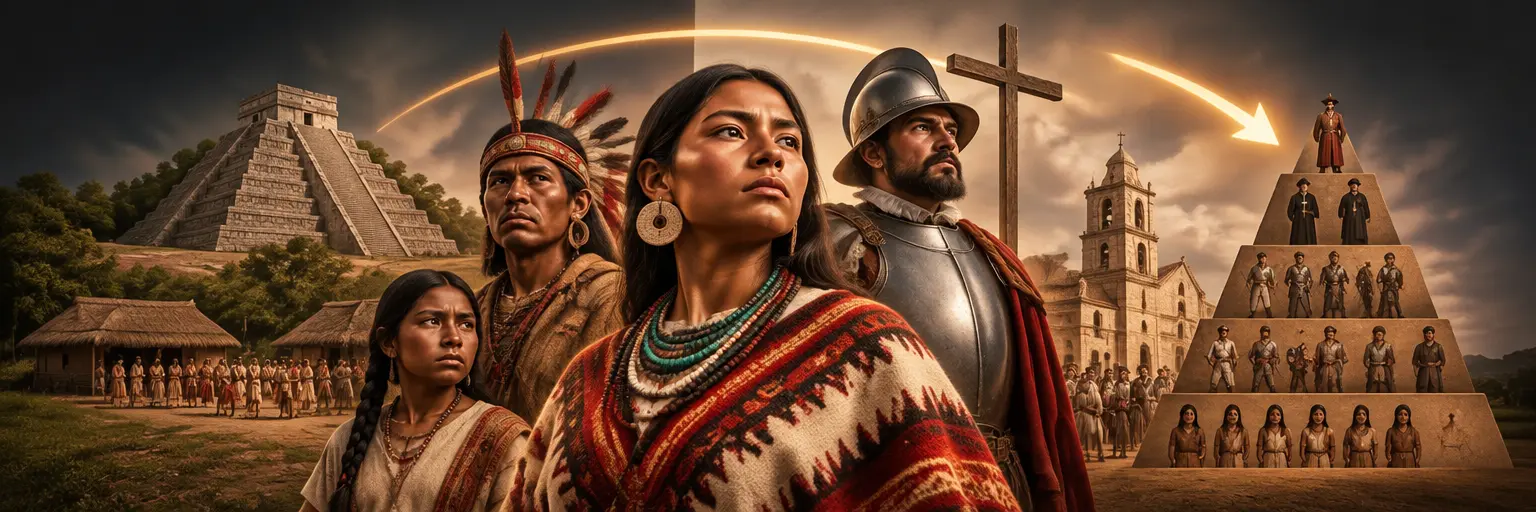
When European powers arrived in the Americas, they didn’t just conquer land—they systematically dismantled and reshaped the intricate social frameworks of Indigenous civilizations. This subcategory examines how kinship systems, governance, class hierarchies, gender roles, and community leadership were altered or destroyed, and how Indigenous peoples adapted, resisted, and redefined their identities in the face of colonial pressure. Here, you’ll uncover the deep societal transformations that continue to influence modern Indigenous communities and their struggles for recognition.
🏛️ Collapse of Traditional Governance and Leadership
Pre-Columbian societies like the Aztec tlatoani and Inca Sapa Inca held divine authority, with councils of elders and nobles managing tribute, justice, and ritual. European conquest replaced these with colonial administrators, encomenderos, and missionaries, often executing or co-opting local leaders. This disruption fractured political cohesion, turning once-centralized states into fragmented tributaries of the Spanish or Portuguese crown. The imposition of European legal systems and hereditary titles ignored Indigenous concepts of consensus and reciprocity, eroding trust in traditional authority.
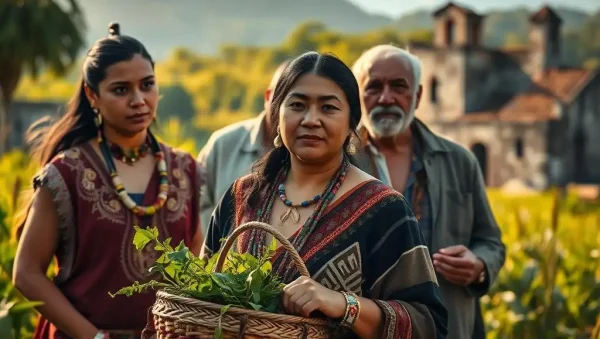
However, Indigenous elites sometimes navigated colonial structures to preserve partial autonomy—such as the caciques in the Andes who maintained land rights in exchange for loyalty. Over time, new hybrid leadership emerged, blending Catholic symbols with ancestral obligations. Understanding this shift is crucial for recognizing how modern Indigenous governance movements reclaim pre-colonial decision-making models while addressing colonial legacies of marginalization.
👑 Reordering of Class and Caste Hierarchies
European conquest imposed a rigid racial caste system (sistema de castas) that ranked Europeans, mixed-race individuals, and Indigenous peoples in a legal hierarchy. This replaced Indigenous class structures based on lineage, warfare merit, or agricultural roles, such as the Maya almehen nobility or Inca yanacona servants. Colonial taxes, forced labor (mita, repartimiento), and land seizures pushed many Indigenous commoners into poverty, while a small mestizo elite emerged as intermediaries. This reordering created new social mobility pathways but also entrenched racism that persists in Latin American societies today.
For Indigenous peoples, the caste system meant losing status based on ancestry—unless they could prove noble descent via colonial courts. Some communities deliberately adopted Spanish surnames and clothing to ascend socially, while others resisted by maintaining communal lands (ejidos) and internal egalitarian practices. This subcategory explores how class identity became racialized, and how Indigenous resistance to caste discrimination laid groundwork for later civil rights movements.
👩👧👦 Transformation of Family and Kinship Networks
Indigenous kinship systems—often matrilineal (like the Iroquois) or based on extended clans—were fundamentally challenged by Christian marriage norms, patrilineal inheritance, and the disruption of inter-community alliances. Missionaries banned polygamy, redefined marriage as a sacrament, and undermined women’s roles in property ownership and ritual life. For example, among the Aztec, calpulli (community clans) controlled land collectively; Spanish law converted these into private property owned by male heads of household, disenfranchising women and youth.
Yet kinship networks proved resilient. Indigenous households often blended Christian rites with ancestral practices, and godparentage (compadrazgo) became a new form of alliance-building. Forced resettlement into reducciones (mission towns) broke large kin groups but created new fictive kinship ties across diverse ethnicities. This section reveals how family structures adapted, and how the loss of matrilineal authority affected women’s social power for centuries—a legacy still debated in contemporary Indigenous feminism.
🛠️ Shifts in Labor, Gender Roles, and Economic Status
Colonial economies demanded labor for mines, plantations, and textile workshops, upending traditional subsistence roles. Indigenous men were conscripted into mita labor in Potosí or repartimiento for public works, while women were pushed into domestic service, weaving tribute (tribute cloth), or marketplace vending. Gender-separated labor became more pronounced, with women’s agricultural knowledge devalued and men’s wage labor prioritized. In some societies, like the Mapuche, women had held significant ritual and political influence; colonial pressure eroded that, though they retained control over household and horticultural tasks.
Economic status shifted from communal reciprocity to cash-based transactions, creating new wealth disparities. Some Indigenous individuals became kurakas (Andean lords) who managed colonial tribute collection, gaining privilege at the cost of community trust. This H3 explores how labor demands fractured traditional gender complementarity, while also highlighting cases where Indigenous women leveraged colonial courts to defend property rights—showing agency amid systemic change.
🕊️ Cultural Resistance and Revival of Social Structures
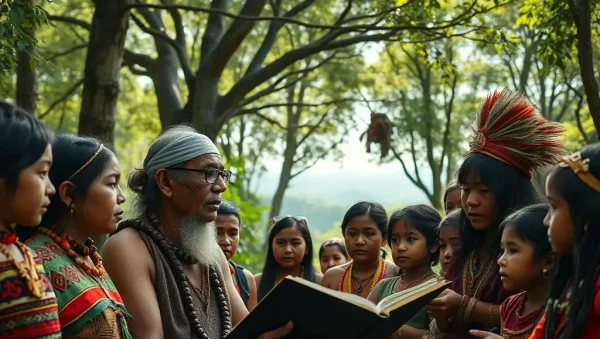
Despite conquest, many Indigenous groups preserved core social structures through secrecy, syncretism, and legal maneuvering. The cofradías (religious brotherhoods) in Mexico and Peru allowed communities to fund festivals, maintain leadership hierarchies, and manage communal lands under colonial disguise. The Inca ayllu system survived in rural areas, reorganizing labor and kinship around ancestral mountains and irrigation. Similarly, the Pueblo peoples of New Mexico retained their kiva-based governance and clan systems by masking them within Catholic feast days.
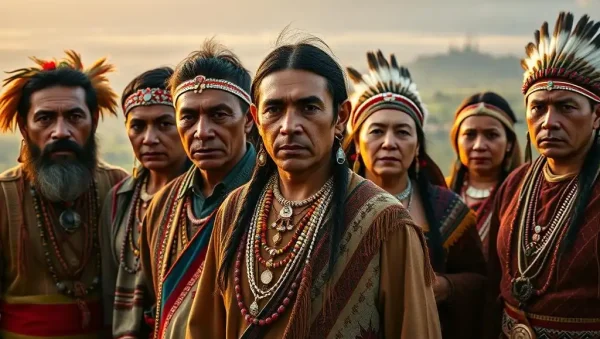
This revival isn’t static—modern Indigenous movements, like the Zapatistas or the Aymara autonomy in Bolivia, draw directly on pre-colonial social models to demand self-governance and collective rights. Understanding these continuities is essential for appreciating that “conquest” was never complete. This subcategory equips readers with historical context to see how Indigenous social structures are not relics but living systems adapting to contemporary challenges.
Frequently Asked Questions
What was the most significant change to Indigenous governance under European rule?
The replacement of collective, consensus-based rule with centralized colonial authorities and coerced tribute systems. Spanish viceroys and Portuguese governors assumed supreme power, while Indigenous councils were reduced to subordinate roles. This destroyed the Inca’s quarter-based administrative unity and the Aztec triple alliance, accelerating political fragmentation that European powers exploited.
How did the caste system affect Indigenous social mobility?
It legally locked most Indigenous peoples into lower status regardless of wealth or skill, but allowed exceptions for those who could prove noble lineage via colonial courts. Many caciques and kurakas gained land and privileges, yet they remained subordinate to Europeans. This system inhibited large-scale mobility and entrenched racial prejudice that persisted long after independence.
Did Indigenous gender roles disappear completely?
No, they transformed but persisted in modified forms. Women lost formal political power and land inheritance rights in many areas, but they retained influence in households, medicinal practices, and market exchanges. Some matriarchal customs survived in remote regions, and colonial courts sometimes upheld women’s property claims, showing resilience against patriarchy.
Why did some Indigenous communities cooperate with European colonizers?
Cooperation often stemmed from strategic survival—alliances against rival states, protection of trade routes, or preservation of local autonomy. The Tlaxcalans allied with Cortés against the Aztecs, gaining privileges while avoiding total subjugation. However, such cooperation usually came with heavy costs, including labor obligations and eventual loss of sovereignty.
How do modern Indigenous social movements use pre-colonial structures?
They invoke ajayu (Andean collective spirit) or sumak kawsay (good living) to advocate for communal land rights and self-governance. Organizations like the Confederation of Indigenous Nationalities of Ecuador (CONAIE) incorporate ayllu-based assembly and reciprocity principles into political platforms, demonstrating that these social forms remain powerful frameworks for resistance and cultural continuity.