Alliance and Warfare: Indigenous Strategies for Combat and Cooperation
🌍 Indigenous combat strategies in the Americas reveal a rich tapestry of cooperation and resilience. This article delves into how diverse tribes…
Read article
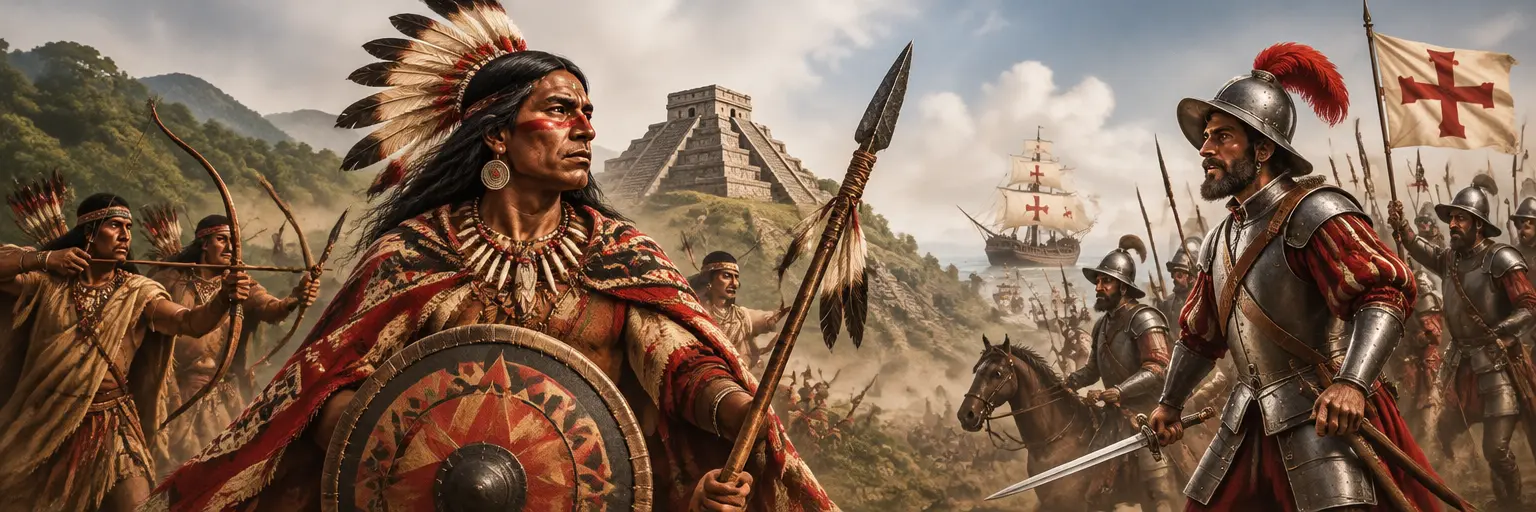
Explore how military technologies and strategies transformed the balance of power during the European conquest of the Americas, reshaping indigenous civilizations forever. From advanced metallurgy and gunpowder to cavalry formations and siege tactics, European forces leveraged innovations that clashed with the sophisticated warfare of native peoples—who employed guerrilla tactics, massive armies, and strategic use of terrain. This analysis delves into the pivotal roles of steel swords, firearms, horses, and naval dominance, alongside the devastating impact of disease and psychological warfare. Understand how these military advantages, combined with indigenous alliances and internal conflicts, led to rapid territorial expansion and cultural upheaval. Perfect for history enthusiasts, students, and researchers, this content highlights key battles, technological disparities, and adaptive strategies that defined an era of conquest and resistance. Uncover the nuanced interplay between European might and indigenous resilience, offering a balanced view of how military innovation and strategic error shaped the modern Americas.
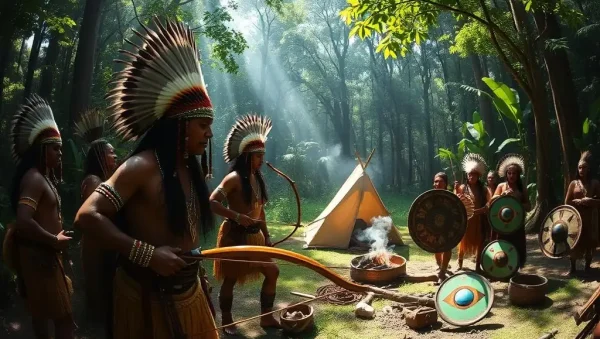
🌍 Indigenous combat strategies in the Americas reveal a rich tapestry of cooperation and resilience. This article delves into how diverse tribes…
Read article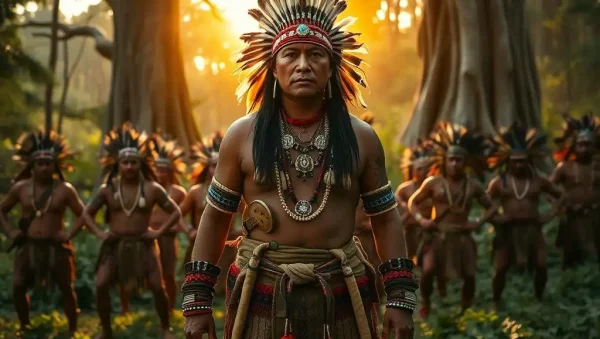
🌍 Indigenous warfare rituals significance reveals profound insights into the values and beliefs of pre-colonial societies. These rituals not only shaped military…
Read article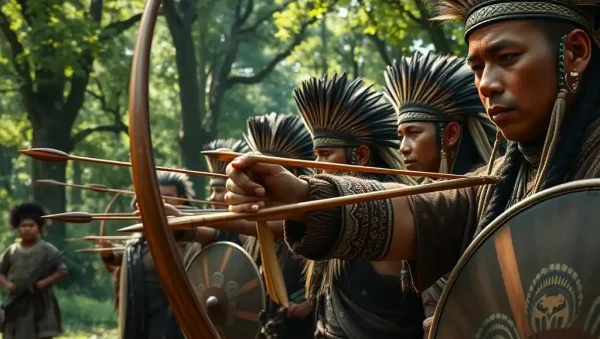
🌍 Indigenous military technologies impact modern warfare in profound ways, showcasing the ingenuity of pre-colonial societies. This exploration reveals how ancient strategies…
Read articleWhen European powers arrived in the Americas, they encountered sophisticated indigenous military systems that were far more complex than commonly portrayed. This subcategory delves into the weaponry, tactical formations, fortifications, and strategic doctrines employed by native civilizations—from Aztec eagle warriors to Inca road-based rapid deployment. Understanding these martial traditions reveals how indigenous societies adapted, resisted, and sometimes overwhelmed European invaders, reshaping the entire conquest narrative.
Contrary to popular belief, native warriors used advanced materials like obsidian-edged macuahuitl, which could sever a horse’s head in one swing, and cotton armor (ichcahuipilli) that proved surprisingly effective against Spanish swords. Atlatl spear-throwers increased javelin range and penetration, while slings and dart pipes offered deadly accuracy. Copper and bronze tools supplemented stone, especially in Andean regions, and poison-tipped arrows created psychological terror.
European steel had advantages, but indigenous weapons were optimized for tropical combat, dense forests, and high-altitude warfare. The macuahuitl was so feared that conquistadors specifically requested reinforced shields. Meanwhile, the Inca developed bronze-headed maces and star-shaped clubs that could crush Spanish helmets. Understanding these materials explains why many battles were close-run affairs, not one-sided slaughters—indigenous armor and weapons were designed for maneuverability and lethality in their native terrain.
Aztec armies used rotating battle groups, where elite eagle and jaguar warriors spearheaded attacks while commoners supported from flanks, creating a fluid, morale-driven assault system. The Inca perfected column-based shock tactics with slingers and club-wielders coordinated by signal flags and horns. Maya city-states employed ambush-heavy strategies in jungle terrain, using knowledge of canopy and waterways to outflank larger forces.
But the most transformative adaptation came later: guerrilla warfare. When European firearms and cavalry proved dominant in open fields, indigenous leaders like Tupac Amaru and Mapuche commanders shifted to hit-and-run raids, night attacks, and using terrain to neutralize gunpowder advantages. These tactics forced the Spanish to build forts and change their own strategies, proving that indigenous military thought was not static but dynamically responsive to new threats. The Mapuche eventually adopted horses and lances, becoming some of the best cavalry in the Americas.
Indigenous peoples constructed monumental defensive works, from the Sacred Cenotes of Maya cities (used as water and ritual reservoirs, but also tactical retreats) to the Inca hilltop citadels like Machu Picchu and Sacsayhuamán with their zigzag walls designed to funnel attackers into kill zones. The Aztec capital Tenochtitlan was a canal-based fortress where causeways could be breached and bridges raised, creating a natural moat system.
These fortifications were not just stone—they included trap pits, hidden paths, and signaling networks using smoke or drums. The Inca’s Qhapaq Ñan road system doubled as a military logistics network, allowing rapid troop movements across vast distances, sometimes 250 km per day via relay runners. When Spanish forces laid siege, these defensive designs extended resistance for months, forcing long campaigns that drained European resources and morale.
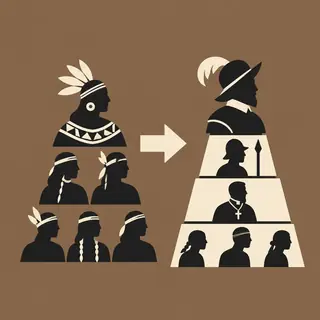
Large empires often used diplomatic intimidation—the Aztecs demanded tribute from subjugated cities, using flower wars to capture sacrificial victims, which simultaneously weakened rivals and displayed power. The Inca employed resettlement policies (mitma) to break resistance and create loyal populations. But more crucial was alliance-building: when Cortés arrived, disgruntled Tlaxcalans and other enemies of the Aztecs became his most effective soldiers, outnumbering Spanish troops ten to one.
Indigenous leaders also mastered psychological warfare, spreading rumors, performing ritualized displays of captured warriors, and using supernatural beliefs to control allies and enemies. The Mixtec and Zapotec maintained complex spy networks via merchants who gathered intelligence on Spanish positions. Understanding these strategies reveals that the Spanish conquest was often a civil war between indigenous factions, where European technology mattered less than native geopolitical knowledge.
Within decades of contact, indigenous forces began incorporating horses, steel blades, and even firearms into their arsenals. The Comanche, originally a nomadic hunters, became the most feared mounted warriors in North America, controlling a vast territory through mobile raiding tactics. The Mapuche of Chile famously adopted European tactics but maintained their own command structures, defeating Spanish forces for over 300 years in the Arauco War.
This adaptability extended to fortification design—later indigenous fortresses included angled bastions inspired by European star forts, built with native labor. Some groups, like the Pueblo peoples during the 1680 revolt, coordinated multi-tribal coalitions to expel the Spanish entirely, albeit temporarily. These examples show that indigenous military strategy was not static tradition but a living practice that evolved rapidly, often frustrating European colonial ambitions for generations.
The obsidian-edged macuahuitl was exceptionally lethal, capable of slicing through unprotected flesh and even decapitating horses. Its edge was sharper than steel, though more brittle. Cotton armor also proved highly effective, stopping many sword blows and even some arrows. However, the most impactful weapons were often environmental—use of terrain, weather, and guerrilla tactics overwhelmed European formations more than any single tool.
Yes, several did. The Mapuche in southern Chile won the Battle of Curalaba (1598), killing the Spanish governor and triggering a general uprising that destroyed all Spanish cities south of the Biobío River. The Inca under Manco Inca II also besieged Cusco (1536) and nearly succeeded, while the Pueblo Revolt of 1680 expelled the Spanish from New Mexico for 12 years.
Primarily through capture and trade. Escaped horses quickly multiplied in the Americas, and indigenous peoples became expert riders within decades. Firearms were acquired through raids, battlefield scavenging, and illicit trade with European deserters or rival colonial powers. By the 17th century, many plains nations had fully integrated mounted archery and later rifles into their warfare, often outperforming colonial cavalry.
Yes, but they were oral and visual. The Aztecs had warrior orders with strict training and tactical doctrines taught in calmecac schools. The Inca used quipu (knotted cords) to track troop counts and logistics, and they rehearsed battle plans using topographical models. No written manuals exist today, but colonial chronicles and indigenous codices (like the Florentine Codex) describe detailed battle formations and strategic rules.
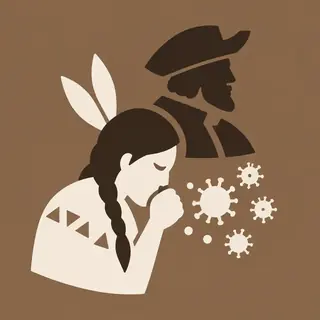
Key factors included smallpox and other epidemics killing up to 90% of the population, which disrupted leadership and morale. Additionally, Spanish alliances with rival indigenous groups supplied the majority of their infantry. Steel armor and firearms offered shock value, but the decisive element was often the internal fragmentation of indigenous empires—Spanish victories were frequently Indigenous civil wars with European leadership.