The Impact of European Technology on Inca Warfare
The arrival of European technology profoundly transformed Inca warfare. Innovations in weaponry and tactics not only altered traditional practices but also reshaped…
Read article
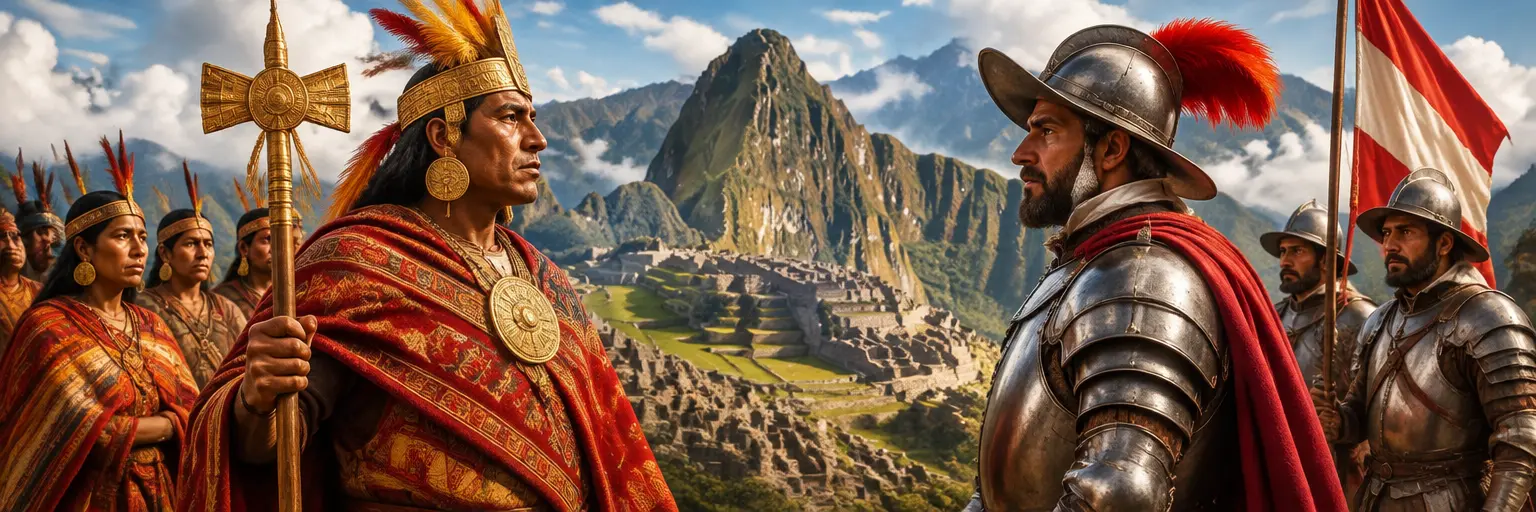
European Contact and Conquest marked a dramatic turning point in Inca history, when a once-mighty empire spanning over 2,000 miles along the Andes fell to a small band of Spanish conquistadors. This era, beginning with Francisco Pizarro’s arrival in 1532, was defined by a deadly mix of advanced weaponry, internal civil war, and devastating diseases like smallpox that ravaged indigenous populations. Despite their numerical superiority, the Incas were strategically outmaneuvered—culminating in the capture and execution of Emperor Atahualpa and the eventual fall of Cusco in 1533. Yet, resistance continued for decades, from the neo-Inca state in Vilcabamba to countless uprisings that echoed the empire’s enduring spirit. This period not only reshaped the political landscape of South America but also triggered a painful cultural collision that blended, erased, and transformed traditions, leaving a complex legacy visible in modern Andean identities. Explore how this conquest unfolded, the key figures and battles, and the profound consequences that still ripple through indigenous communities today.
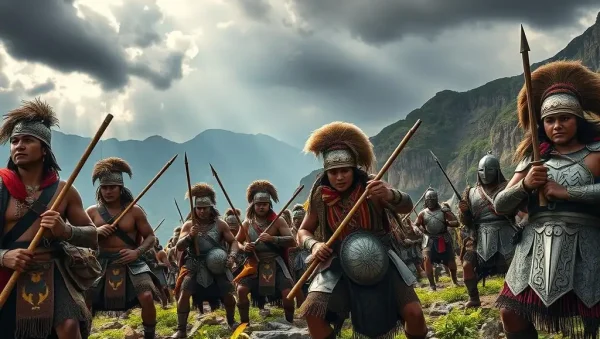
The arrival of European technology profoundly transformed Inca warfare. Innovations in weaponry and tactics not only altered traditional practices but also reshaped…
Read article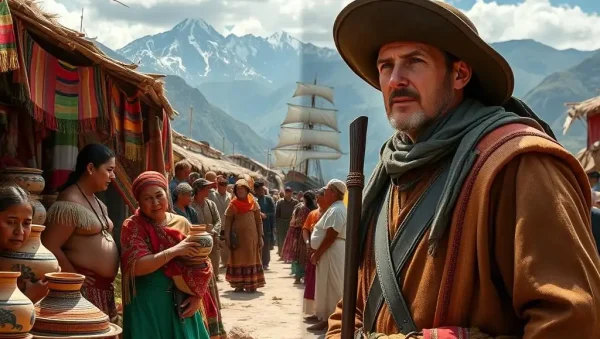
The Inca culture and European contact reshaped the Andes, introducing new technologies and ideas while eroding traditional practices and beliefs. This article…
Read article
The Myth of El Dorado explained reveals how the tantalizing legend of a golden city fueled European greed, leading to the exploitation…
Read article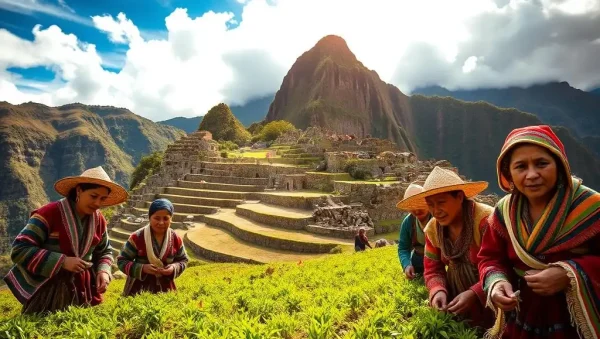
The conquest significantly altered Inca society transformation postconquest, reshaping its social structures, economies, and cultural practices. This article delves into the profound…
Read article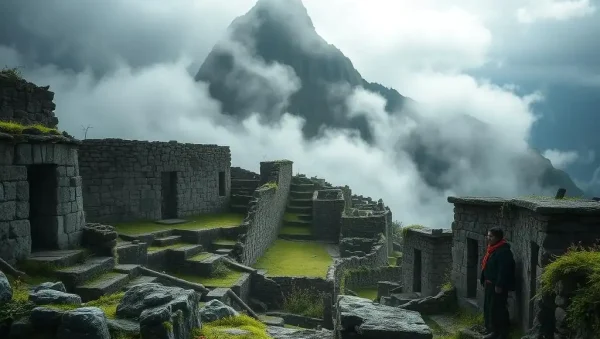
The Inca civilization faced devastating disease impact, as unseen pathogens decimated populations, disrupted social structures, and weakened their resistance to conquest. Understanding…
Read article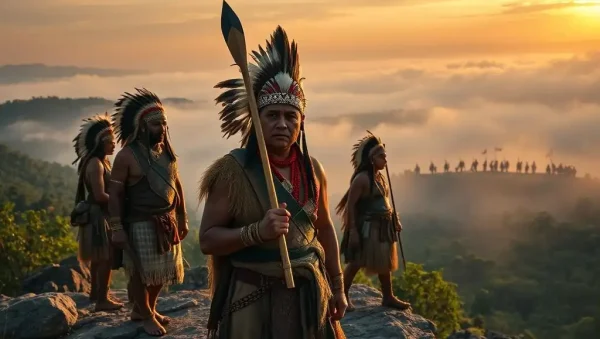
The involvement of Native American allies in conquest was pivotal during the Spanish colonization. These alliances shaped the dynamics of power, revealing…
Read articleThe arrival of Spanish conquistadors in the 1530s marked a dramatic and catastrophic turning point for the Inca Empire, one of the largest and most sophisticated states in the pre-Columbian Americas. This subcategory delves into the complex web of military strategy, political intrigue, disease, and cultural collision that led to the swift collapse of Tawantinsuyu. Here, you will uncover how a small band of Europeans, aided by internal divisions and epidemic illness, toppled an empire that stretched over 2,500 miles, reshaping the Andes forever. Explore the key battles, the tragic fate of emperors, and the enduring legacy of this conquest.
In 1532, Francisco Pizarro led a force of fewer than 200 men into the heart of the Inca Empire, a moment of profound consequence. Their first major encounter at Cajamarca was not a simple ambush but a calculated act of treachery, exploiting the Inca’s ritual hospitality. Emperor Atahualpa, fresh from a civil war victory over his brother Huáscar, met the Spanish under a flag of truce, only to be captured in a sudden, devastating attack. This event, immortalized in chronicles, demonstrated how superior weaponry, steel armor, and horses—unknown to the Andean world—combined with psychological warfare to overwhelm a vastly larger force.
For the Inca, the Spanish were initially seen as strange, bearded strangers, possibly fulfilling ancient prophecies. Yet, the real shock was the introduction of Old World diseases like smallpox, which had already decimated the population before Pizarro’s arrival. The accounts of the encounter reveal a world of misinterpretation: Atahualpa assumed the Spanish sought gold and could be bought off, while Pizarro saw a divine mandate to conquer. This first contact set the stage for a brutal, unequal struggle, where the Inca’s centralized power became their greatest vulnerability once their leader was captured.
Before the Spanish ever landed, the Inca Empire was already fractured by a devastating civil war between the brothers Huáscar and Atahualpa over succession after the death of Emperor Huayna Capac. This internal conflict, fought from 1529 to 1532, drained resources, killed tens of thousands, and left the empire politically and militarily exhausted. Atahualpa’s victory was pyrrhic, as his northern armies were far from the southern strongholds, and resentment simmered among conquered ethnic groups. Crucially, many of these groups, such as the Huancas and Cañari, saw the Spanish as liberators from Inca oppression and allied with Pizarro.
The civil war also shattered the unified command structure that had made the Inca military formidable. Generals and local governors, once loyal to a single Sapa Inca, now held shifting loyalties. When Pizarro captured Atahualpa, the empire essentially lost its central authority overnight. The Spanish exploited these divisions by playing factions against each other, using indigenous allies to fight alongside them in later campaigns. This period of vulnerability underscores how the conquest was not solely a European triumph but also a rebellion of the Inca’s own subjects, a fact often overshadowed in simplified narratives.
Following Atahualpa’s execution in 1533, the Spanish marched on Cusco, the sacred capital of the Inca Empire. They encountered little resistance initially, as the city had already been weakened by civil war and the psychological shock of the emperor’s death. Pizarro installed Manco Inca Yupanqui as a puppet emperor, hoping to rule through him and legitimize Spanish authority. However, this strategy backfired when Manco Inca, after enduring extreme humiliation and brutal treatment from the conquistadors, organized a massive rebellion in 1536, besieging Cusco with an army of over 100,000 warriors.
The siege of Cusco was the closest the Spanish came to total defeat, but the Inca lacked the ability to storm the city’s stone walls and eventually withdrew to the remote jungle stronghold of Vilcabamba. This Neo-Inca State persisted for decades, a symbol of resistance, yet the fall of Cusco marked the effective end of Inca political control over the Andes. The Spanish then began a systematic reorganization of the region, dividing land and labor through the encomienda system, which led to the exploitation and forced conversion of millions. The city itself was transformed, with churches built atop demolished temples, erasing visible traces of Inca power.
Oral histories and Spanish chronicles provide a fragmented view of the conquest, yet they also reveal a fierce and sustained resistance that lasted until 1572. The Vilcabamba state, led by successive Inca rulers like Túpac Amaru I, maintained guerrilla warfare and traditional rituals for nearly four decades. Spanish forces, however, relentlessly pursued them, finally capturing and executing Túpac Amaru, an event that signaled the complete cessation of Inca sovereignty. This resistance is not merely a footnote; it demonstrates the cultural tenacity of the Andean people, who adapted to Spanish rule but never fully surrendered their identity.
The chronicles of writers like Garcilaso de la Vega, a mestizo of Inca and Spanish descent, and Guaman Poma, an indigenous noble, offer conflicting yet invaluable perspectives. They detail not just battles but the social fabric of a world in collapse, including mass enslavement, forced migrations (mitma), and the destruction of quipu records. These accounts serve as primary sources for historians, but they also carry colonial biases. Understanding this subcategory means reading between the lines to appreciate how indigenous voices survived, albeit altered, within European narratives, preserving a memory of the Inca that continues to inspire modern Peruvian nationalism.
The European conquest did not erase the Inca legacy; instead, it created a hybrid culture that still resonates today. Spanish laws, language, and Catholicism were imposed, yet Andean agricultural practices, weaving, and even political structures survived in transformed ways. The Quechua language remains spoken by millions, and the concept of ayllu (communal landholding) persists in many highland communities. The conquest also triggered an unprecedented demographic collapse, with the indigenous population falling by up to 90% in the first century, due to disease, warfare, and forced labor in silver mines like Potosí. This demographic shift forever changed the region’s social and racial dynamics.
Modern Andean identity is a complex tapestry of indigenous and Spanish elements, where Catholic saints are often syncretized with Andean deities. The legacy of the conquest is thus not a simple story of destruction but a narrative of endurance and adaptation. The Spanish imposed a colonial caste system, yet intermarriage soon blurred these lines, creating a mestizo majority. Today, archaeological sites like Machu Picchu and the ruins of Cusco serve as powerful symbols of pre-conquest grandeur, but they also remind us of the violent rupture that followed. Understanding this impact is crucial for appreciating both the resilience of indigenous cultures and the deep inequalities that persist in modern Peru.
The Inca loss stemmed from a combination of factors: internal civil war, the devastating effect of Old World diseases like smallpox, superior Spanish weaponry and horses, and the strategic capture of Emperor Atahualpa. Additionally, the Spanish formed alliances with subjugated ethnic groups who resented Inca rule, effectively dividing and conquering a politically fragmented empire.
Atahualpa was held prisoner for eight months in Cajamarca, during which he offered a room filled with gold and silver as ransom. Despite meeting this demand, the Spanish executed him by garrote in 1533, fearing he would organize a rebellion. His death was a decisive blow that decapitated the empire’s central leadership and hastened its collapse.
Although the initial capture of Atahualpa took only a few months, the “conquest” was a prolonged process spanning nearly four decades. The fall of Cusco occurred in 1533, but the Neo-Inca state in Vilcabamba resisted until 1572. Sporadic revolts and guerrilla warfare continued even after, making the conquest a multi-generational struggle.
Smallpox and other Old World diseases arrived in the Andes before Pizarro’s forces, killing about 60-90% of the population in some regions. This epidemic weakened the empire’s ability to resist, as it struck down leaders, soldiers, and commoners alike, while also reducing agricultural productivity and labor for defense.
Vilcabamba was the last refuge of the Inca after the fall of Cusco, serving as the capital of a resistance state from 1539 to 1572. It preserved Inca culture and rituals under rulers like Manco Inca and Túpac Amaru I, ultimately ending with the Spanish capture and execution of Túpac Amaru, marking the final conquest.