Agriculture and Economy in the Inca Civilization
Welcome to our deep dive into the agricultural mastery and economic structures that underpinned the vast Inca Empire, or Tawantinsuyu. Here, you will uncover how the Incas transformed challenging Andean terrains into fertile breadbaskets, created a state-run redistribution system without currency, and built a resilient economy that sustained millions. Explore the innovative techniques, social organization, and spiritual connections that made their agricultural economy one of the most advanced in the pre-Columbian world.
🌄 Terrace Farming and Irrigation Mastery
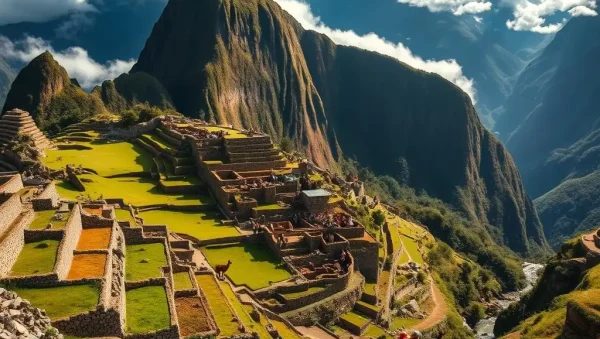
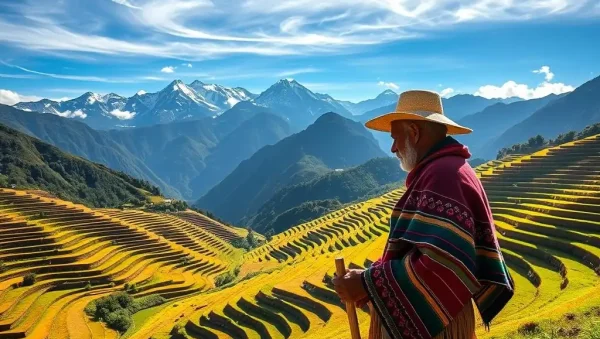
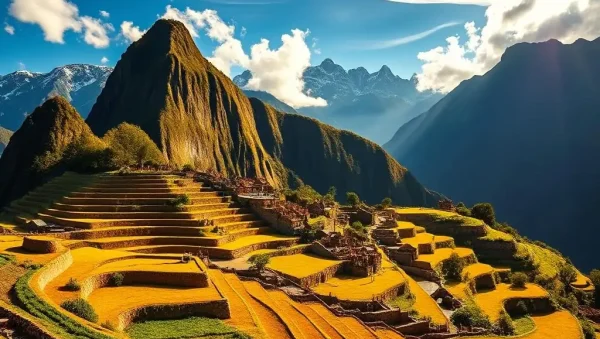
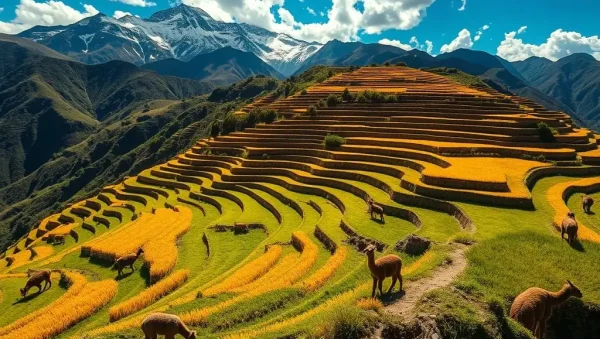
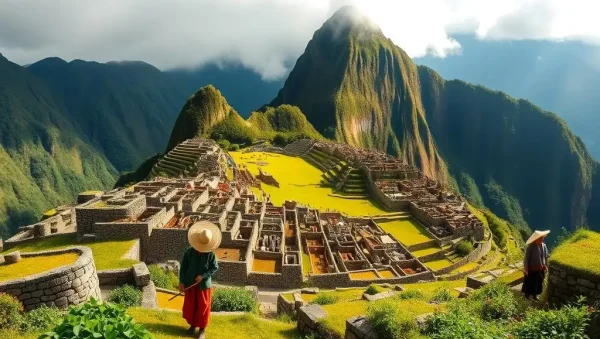
The Incas conquered steep mountain slopes through sophisticated agricultural terraces (andenes), which prevented soil erosion, maximized arable land, and created microclimates for diverse crops. These stone-walled platforms often included advanced irrigation canals that channeled glacial meltwater, using gravity-fed systems to distribute water efficiently across arid valleys. This engineering genius allowed cultivation of potatoes, maize, quinoa, and over 200 other plant species at altitudes up to 4,500 meters.
Visitors to this subcategory will learn how terrace construction varied by region, with experimental agricultural stations near Cusco, such as Moray, serving as ancient research centers for crop acclimatization. The Incas also employed raised beds (waru waru) in flood-prone areas and sunken gardens to harvest salt and coastal crops. Expect detailed insights into how these methods boosted yields by up to 300% compared to flat farming, supporting a population of roughly 12 million people.
🌽 Crop Diversity and Sacred Foods
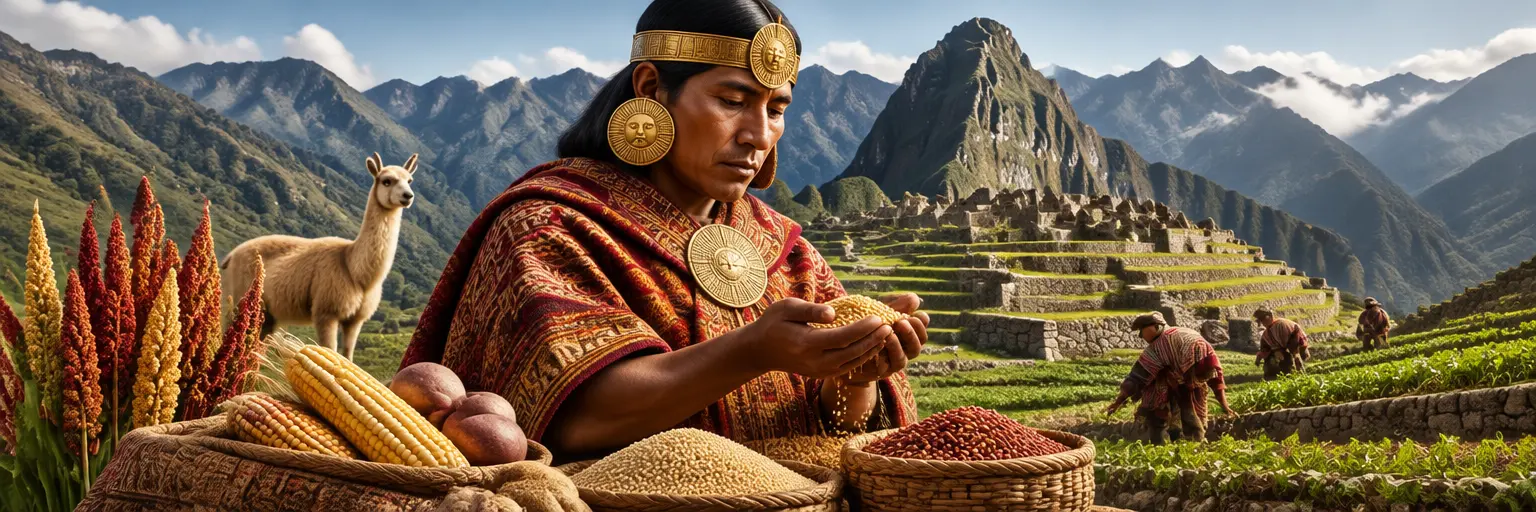
Inca agriculture was a biodiverse system anchored in staple crops like potatoes (over 3,000 varieties), maize (for beer chicha), and quinoa, supplemented by beans, squash, and peanuts. They also cultivated coca leaves for ritual and medicinal use, sweet potatoes, cotton, and exotic fruits. This diversity was not accidental; it ensured nutritional security and resilience against pests, frost, and drought common in the Andes.
Here, you will explore the spiritual significance of crops, where maize was associated with the sun god Inti and potatoes with Pachamama (Mother Earth). The Inca calendar was agricultural, with festivals timed to planting and harvests, such as Capac Raymi and Inti Raymi. Learn how they used freeze-drying (chuño) and soil classification systems to preserve food, and how surplus storage in qolqas (storehouses) was crucial for famine relief and military campaigns.
🐪 Camelid Herding and Highland Economies
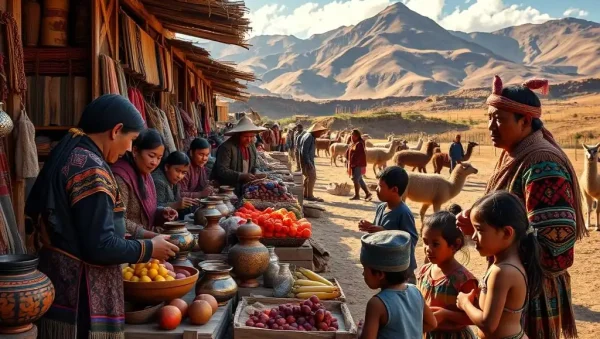
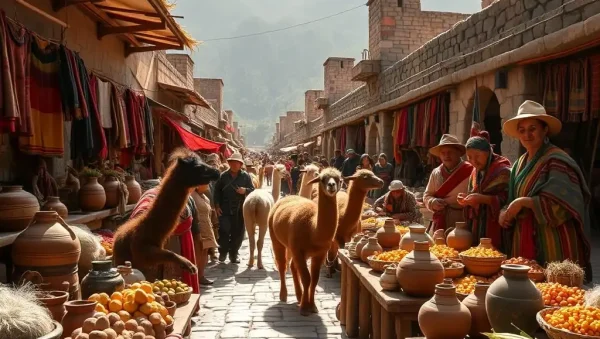
Beyond crops, the Incas relied heavily on camelids—llamas, alpacas, vicuñas, and guanacos—as a cornerstone of their highland economy. Llamas served as pack animals for caravans traversing up to 30 kilometers daily, while alpacas provided fine wool for textiles and vicuñas yielded ultra-soft fibers reserved for nobility. These animals also supplied meat, leather, and bones for tools, and their dung was prized fertilizer for terraces.
This section reveals how herding was organized communally, with state-owned herds and specialized castes of herders (llamachicuy). The Inca road system, Qhapaq Ñan, was designed in part for llama caravans, enabling trade of goods like dried meat (charqui) and wool across empires. Understand the ecological zoning that matched animals to altitudes, plus the ritual sacrifices of white llamas to placate deities, ensuring herd health and prosperity. This integration of pastoralism and farming created a synergistic, sustainable economy.
🏛️ State Redistribution and Labor Taxes
The Inca economy operated without money or markets, instead relying on a reciprocity-based model of labor taxation called mit’a. Every able-bodied male owed periodic work to the state—building roads, temples, or farming state lands— while receiving food, clothing, and shelter in return. This system was embedded in ayllu (kinship) community structures, where reciprocity and redistribution ensured no one starved and the elite managed surplus for ceremonial feasts.
Here, you’ll grasp how the state stored vast amounts of produce in imperial warehouses (qolqas) along roads, used for public works, disaster relief, and supporting armies. The quipu (knotted strings) served as an accounting system for tracking goods and labor obligations. This section explains the flow of tribute from conquered provinces, the role of curacas (local lords) as intermediaries, and how this system avoided hoarding by rewarding loyalty with gifts—cultivating political stability across 4,000 kilometers of diverse territories.
📈 Economic Cycles and Environmental Adaptation
Inca agriculture was finely tuned to El Niño-Southern Oscillation cycles and volcanic events, which could cause floods or droughts. They developed adaptive strategies like planting multiple altitudinal belts, staggering planting dates, and maintaining fallow rotation systems to buffer against year-to-year variability. These practices not only sustained food security but also allowed for surplus accumulation, which funded monumental architecture and imperial expansion.
Expect a detailed analysis of how the Incas managed resource distribution across ecological floors—from coastal deserts to high puna—through state-directed exchange. Learn about their soil conservation techniques, including contour plowing and mulching, and their use of cancha (enclosed fields) for experimental breeding. This segment also covers the economic impact of maize beer production on community cohesion, as well as the decline of these systems after Spanish conquest, when sheep and wheat disrupted traditional land use. Such insights reveal a resilient, forward-thinking economy that offers lessons for modern sustainable agriculture.
Frequently Asked Questions
How did the Incas manage irrigation without advanced technology?
They used gravity-fed canals carved from stone, earthen channels, and aqueducts that leveraged natural topographical slopes. Water was diverted from rivers and glacial melt, with distribution regulated by community labor and a calendar based on seasonal flows. Their skill in hydrological engineering allowed precise watering of terraces, minimizing wastage and ensuring crop viability even in arid zones.
What was the primary currency in the Inca economy?
Incas had no coinage or currency. Instead, their economy functioned on reciprocal labor (mit’a) and redistribution of goods. Taxes were paid in work, and the state stored and distributed necessities. High-value items like coca, textiles, and llama herds could be exchanged, but these were more about status than commercial trade.
What role did the quipu play in economic management?
The quipu, a system of knotted colored strings, served as a data-recording tool for censuses, labor obligations, and crop yields. Quipucamayocs (accountants) encoded numbers and categories, enabling central planners to track production, storehouse inventories, and tax contributions across the empire, thus maintaining economic control without writing.
How did extreme altitude affect Inca crop growth?
At high altitudes, cold and frost were challenges. Incas selected hardy potato varieties and frost-resistant quinoa; they also used terrace microclimates and raised beds that retained daytime heat. They practiced freeze-drying (chuño) to preserve potatoes for decades, turning a climate limitation into a storage advantage.
Did other indigenous groups influence Inca agriculture?
Yes, the Incas absorbed and improved techniques from conquered peoples, such as waru waru raised fields from the Colla and tiered terracing from the Wari. They also encouraged experimental breeding at sites like Moray to develop crops adapted to diverse microclimates, integrating regional knowledge into their imperial agricultural network.