Scientific Achievements of the Inca Civilization
The Inca Empire, known as Tawantinsuyu, was not only a political and military powerhouse but also a cradle of remarkable scientific innovation. From the arid peaks of the Andes to the Amazon basin, the Incas developed sophisticated systems in astronomy, engineering, agriculture, and medicine that were far ahead of their time. This subcategory delves into the ingenious methods and knowledge that allowed the Incas to thrive in one of the world's most challenging environments, leaving a legacy that still puzzles modern scientists and engineers. Here, you will uncover how their empirical observations and practical problem-solving shaped a civilization that mastered its world without the use of written language or the wheel.
🔭 Inca Astronomy and Calendrical Systems
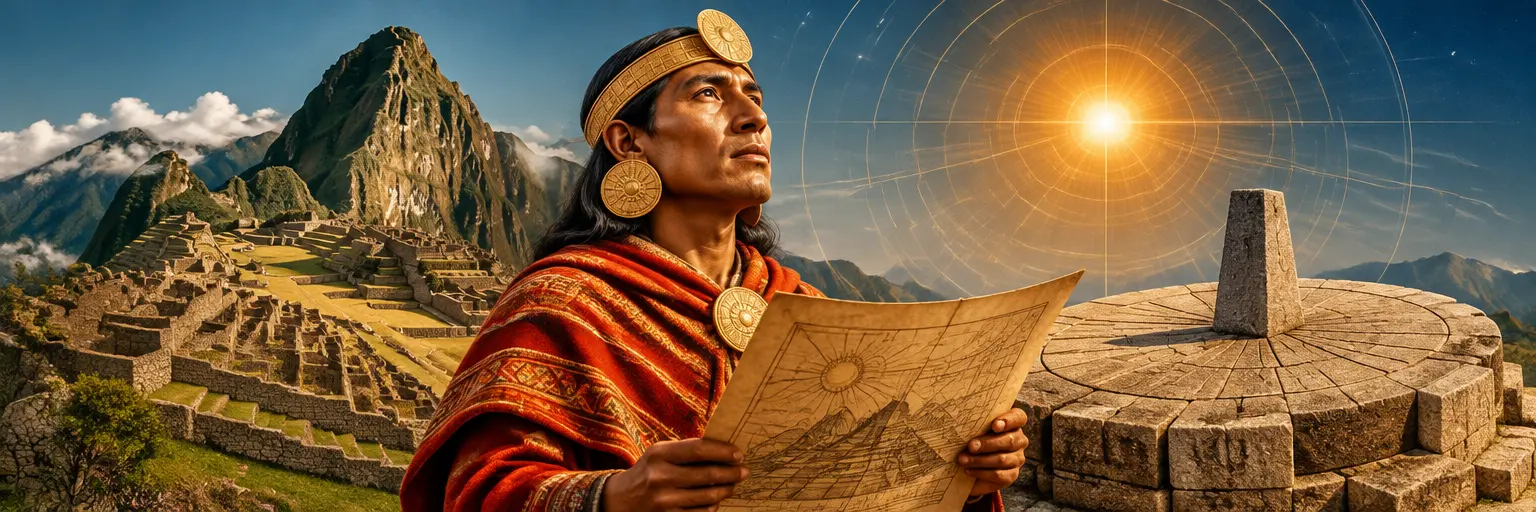
The Incas were meticulous observers of the night sky, using astronomy to synchronize agricultural cycles with celestial events. Their intihuatana stones, or "hitching posts of the sun," served as precise solar observatories, marking solstices and equinoxes. This expertise allowed them to create a lunar calendar with 12 months, adjusted by celestial observations, which was vital for planting and harvesting across their vast empire. They also recognized constellations not only in stars but also in the dark spaces of the Milky Way, called yana phuyu, linking agriculture and weather patterns to cosmic signs. This knowledge was not merely ceremonial; it was a practical tool, ensuring food security for millions of subjects through a well-timed agricultural year.
For modern researchers, the Inca calendar reveals a sophisticated understanding of solar and lunar mechanics. The Qorikancha in Cusco was aligned so that the sun’s rays would illuminate specific niches during solstices, demonstrating their mastery of architectural orientation. Their observational accuracy, using only shadows and horizon markers, rivals that of many Old World civilizations. Today, these astronomical alignments are studied by archaeoastronomers to reconstruct Inca cosmology and its integration with imperial governance. By exploring this subcategory, you will learn how the Incas transformed raw sky data into a functional calendar that organized labor, festivals, and offerings, making astronomy a cornerstone of their state religion and daily survival.
🌾 Agricultural Engineering and Terracing Techniques
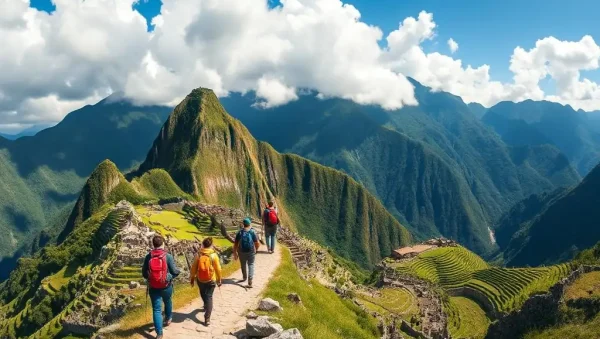
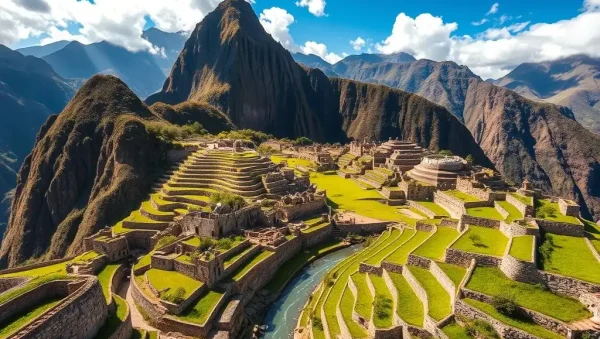
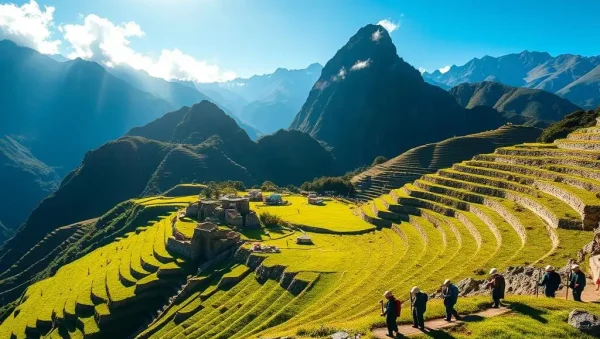
Perhaps the most visible scientific achievement is the Inca mastery of agricultural terraces, or andenes. These stepped fields, carved into steep Andean slopes, were marvels of soil conservation, irrigation, and microclimate management. The Incas built stone retaining walls that absorbed solar heat during the day and released it at night, protecting crops from frost. Each terrace level had its own drainage system, preventing erosion and landslides during heavy rains. They developed over 250 varieties of potatoes and numerous strains of maize, quinoa, and other crops, using experimental plots at different altitudes to select species resilient to varying conditions. This agricultural engineering not only fed an empire of over 10 million people but also reduced famine risk by creating diverse microclimates within a single hillside.
Modern agronomists have been astonished by the Inca irrigation canals, which could transport water over distances of 10 miles or more through stone channels, often using aqueducts and siphons. The waru waru, or raised-field agriculture, used in the highlands, involved digging ditches to create elevated planting beds that stored moisture and mitigated temperature extremes. This system of adaptive agricultural science allowed cultivation in regions that today are considered marginal for farming. By studying this subcategory, you will discover how the Incas used soil analysis (via crop rotation), biological pest control (with natural predators like birds), and hydrological knowledge to maintain fertility without external fertilizers. Their legacy is a blueprint for sustainable farming in fragile mountain ecosystems, now being revived by modern farmers.
🏗️ Engineering and Road Network (Qhapaq Ñan)
The Inca road system, the Qhapaq Ñan, was a monumental engineering feat that stretched over 25,000 miles, connecting highland capitals to coastal deserts and jungle outposts. This network included suspension bridges made of woven grass and reeds, which could bear the weight of llamas and heavily laden porters. These bridges were replaced annually, demonstrating advanced materials science and load-bearing calculations. The roads were built with cambered surfaces for drainage, retaining walls, and step systems for steep ascents. The engineering precision allowed for rapid troop movement and communication via chaskis (runners) who could relay messages over 150 miles per day—a feat that required structured rest stations (tambos) positioned every 15-20 miles.
The Incas also excelled in stone masonry, using frictional interlocking blocks that require no mortar, yet remain earthquake-resistant for centuries. Their technique of ashlar masonry, where stones are cut to fit perfectly, is still a mystery; some blocks weigh over 100 tons and were transported over steep terrains without the wheel. Modern engineers studying the Sacsayhuamán fortress have found that the zigzag walls are designed to dissipate seismic energy, a passive seismic isolation method. This subcategory reveals how their empirical engineering incorporated geology, choosing bedrock types that would not slip, and topography, using natural features to reinforce structural lines. The Qhapaq Ñan itself was a tool of scientific logistics, enabling census-taking, resource management, and the dispersion of crops and goods across diverse ecosystems.
💊 Medical and Surgical Knowledge
The Incas developed a remarkably effective medical system that combined herbal pharmacology with surgical techniques. They performed trepanation—drilling holes into the skull—with an astounding survival rate (often over 70%), using bronze or obsidian tools. This procedure was likely used to treat severe head trauma, epilepsy, or chronic headaches, showing a deep understanding of cranial anatomy and hygiene. They also practiced bone setting, amputations, and dental extractions, using coca leaves as a local anesthetic and for pain management. Their herbal pharmacopoeia included quinine (for malaria), or molle tree sap (as an antiseptic), and a wide array of plants now used in modern medicine, such as ephedra for asthma.
The Inca approach to public health was also scientific: they established drainage systems in cities to prevent waterborne diseases and built bath complexes with hot springs for therapeutic purposes. They understood nutritional science, ensuring a balanced diet through agricultural diversification, and they practiced mummification as a means of preserving bodies for epidemiological study, observing disease patterns. Medical exams were regular, with kamayocs (public health officials) inspecting households for cleanliness. This subcategory explores how their empirical observations of the human body, combined with herbal chemistry, created a healthcare system that was both preventive and curative. Modern ethnobotanists continue to mine Inca knowledge for new pharmaceutical compounds, validating their scientific rigor in a field often overshadowed by European medicine.
🌿 Environmental Management and Ecology
Inca scientific thinking extended to environmental engineering and ecology, as they managed entire ecosystems sustainably over centuries. They practiced agroforestry, planting trees like quishuar alongside crops to provide windbreaks and fix nitrogen. They built cochas (artificial ponds) to store water for irrigation and prevent soil salinization. Additionally, they classified lands into ecological zones (such as yunga, quechua, puna), each with specific management practices—a system of biogeography that predates European classification by hundreds of years. The Incas carefully rotated lands, allowing fallow periods to restore nutrients, and they developed terrace microclimates that acted as small-scale weather modifiers, protecting crops from wind and frost.
This subcategory highlights how the Incas used data collection via khipus—knotted cords for recording numerical data—to track crop yields, herd sizes, and even environmental cycles like El Niño events. Their hydrological modeling allowed them to divert glacial meltwater into reservoirs, mitigating drought and flood risks. By integrating geological knowledge (choosing stone types) and botanical inventories, they maintained biodiversity, cultivating dozens of native species now lost to monoculture. In this section, readers will understand how the Inca civilization functioned as a sustainable society, with scientific principles embedded in daily governance. This ecological intelligence is now cited as a model for climate-adaptive agriculture, proving that traditional knowledge can inform modern environmental science.
Frequently Asked Questions
How did the Incas build earthquake-resistant walls without formal engineering?
They used a technique called ashlar masonry, cutting stones so precisely that they fit without mortar, allowing friction to absorb seismic motion. The trapezoidal shapes and slightly inclined interior walls help distribute stress. They also selected bedrock that was stable, and the stones’ rough surfaces increased friction. This empirical method, refined over generations, ensured structures remained intact during tremors.
What was the purpose of the Qhapaq Ñan beyond transportation?
The road system was a scientific infrastructure for imperial management. It enabled rapid communication via runners, facilitated military deployment, and allowed officials to conduct census and agricultural surveys across different ecological zones. It also supported the distribution of crops and goods, while tambos served as weather and agricultural data collection points, aiding in resource allocation.
Did the Incas have a written numerical system for science?
Yes, they used khipus—knotted cords with decimal positional values—to record numerical data such as crop yields, labor contributions, and astronomical observations. These were read by specialist khipukamayuqs. Research suggests khipus also encoded non-numerical data, like classification of soils or weather patterns, serving as a binary or categorical database.
How did Inca astronomy influence their daily lives?
Their solar and lunar calendars dictated planting, harvesting, and festival dates. Observatories like Intihuatana at Machu Picchu marked solstices, helping farmers time crop cycles. They also used dark cloud constellations for seasonal rainfall predictions, linking celestial observation with agricultural planning, thus ensuring food security for the entire empire.
What modern science has validated Inca medical practices?
Modern ethnobotany has confirmed that many Inca plants, like quinine against malaria and coca as an anesthetic, are effective due to chemical compounds. Studies on trepanation show high survival rates, with many skulls showing signs of healing, proving their surgical techniques were as safe as pre-modern European methods. This validates Inca empirical knowledge in pharmacology and anatomy.