The Connection Between Inca Art and Agricultural Practices
🌄 Discover the intricate Inca art and agriculture connection that reflects how these ancient practices not only shaped their society but also…
Read article
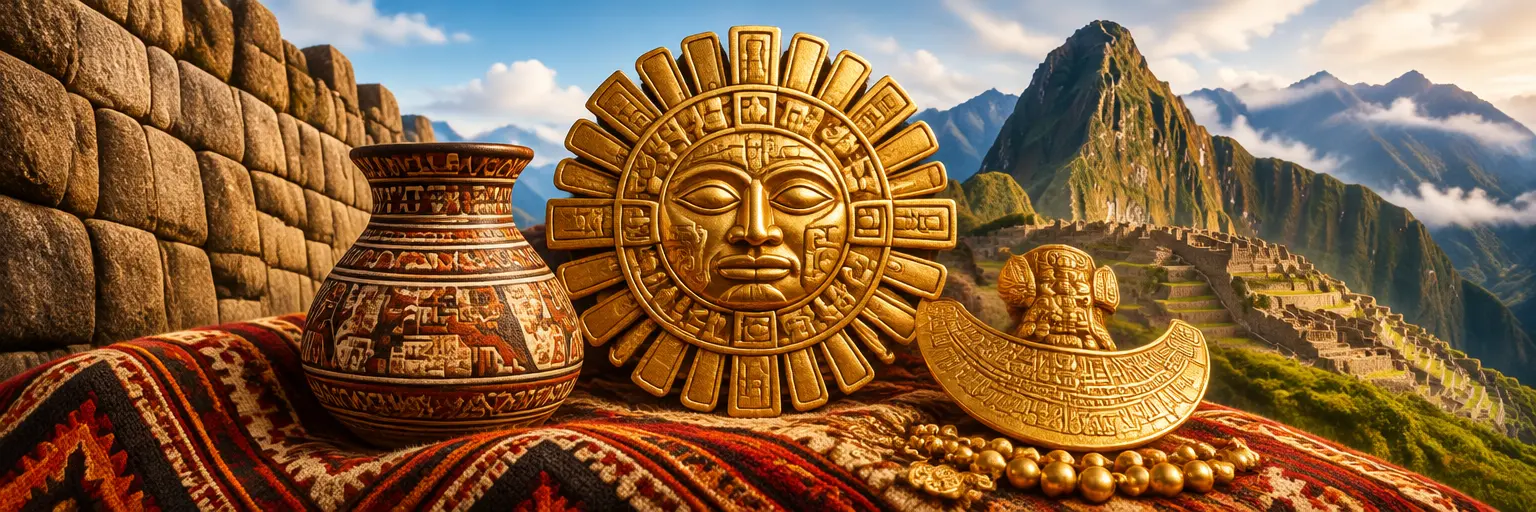
Discover the awe-inspiring art and culture of the Inca Empire, a civilization that fused spiritual devotion with masterful craftsmanship. From the intricate stone masonry of Machu Picchu to the vibrant textiles dyed with natural pigments, every creation told a story of cosmic order, imperial power, and communal identity. The Incas elevated ceramics, metalwork, and featherwork into sophisticated expressions of belief, while their quipu recording system and ceremonial architecture revealed a deeply organized society. Explore how religious festivals, music, and ritual offerings shaped daily life, and see how these artistic traditions continue to inspire modern Andean identity. This is your gateway to understanding the visual language of an empire that still speaks through its enduring masterpieces.
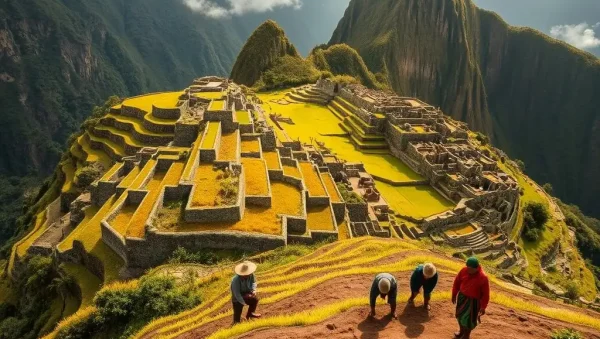
🌄 Discover the intricate Inca art and agriculture connection that reflects how these ancient practices not only shaped their society but also…
Read article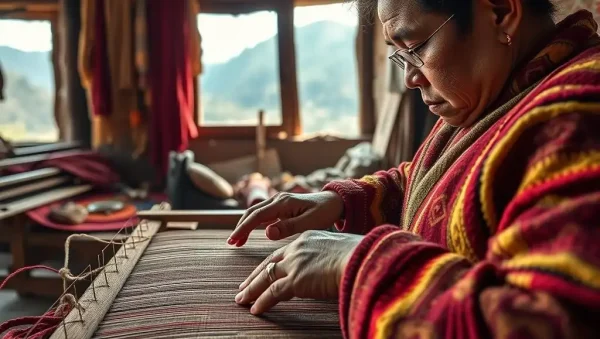
🌟 Discover the rich Inca textile weaving history, where vibrant fabrics tell stories of culture, tradition, and ingenuity. Explore how these remarkable…
Read article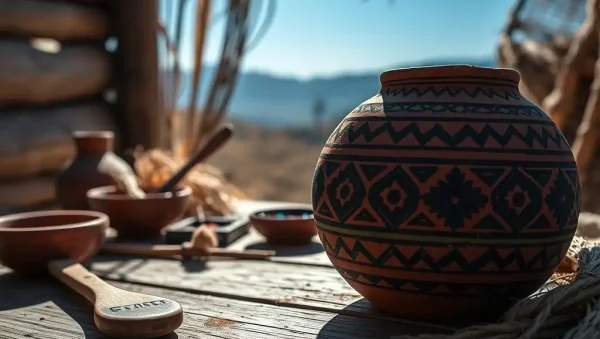
Inca pottery artistic techniques showcase the rich cultural heritage of the Inca civilization. This article delves into their intricate methods, vibrant designs,…
Read article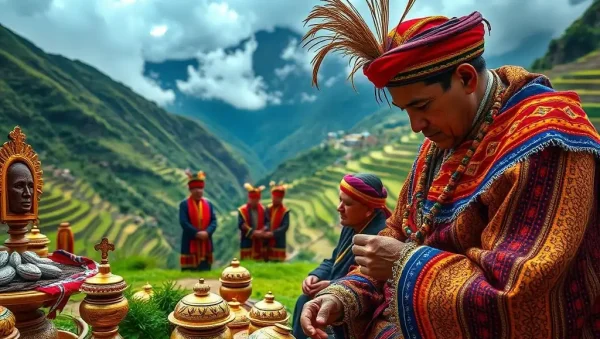
🌟 Inca ceremonial art significance lies not only in its aesthetic beauty but also in its profound role within rituals, symbolizing spirituality…
Read article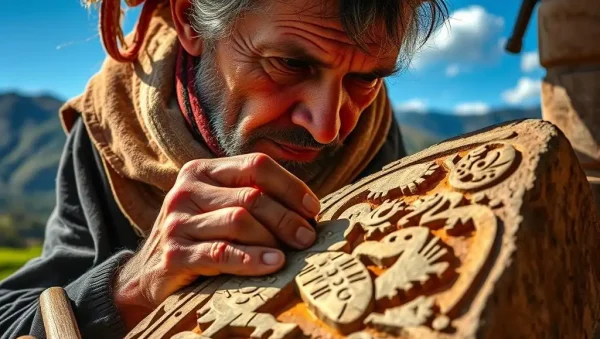
Discover the artistry of Inca stone and wood carving, where skilled sculptors crafted intricate designs that reflected their deep spiritual beliefs and…
Read article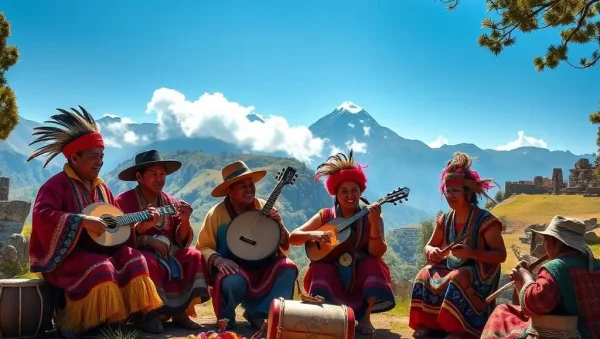
🎶 Inca music instruments and traditions played a vital role in social rituals, storytelling, and agricultural celebrations, reflecting the rich cultural heritage…
Read article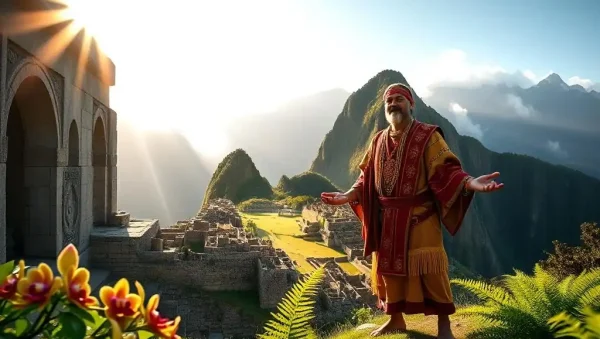
🌍 Inca art holds profound spiritual significance, reflecting the intricate beliefs and cosmic understanding of the ancient civilization. Through sacred geometries, these…
Read articleStep into the vibrant world of the Inca Empire, where artistic expression and cultural practices were not mere decoration but the very fabric of a sophisticated society. From the precision-cut stones of Machu Picchu to the intricate patterns of royal textiles, the Inca left an indelible mark on the Andes. This subcategory delves into the visual arts, ceremonial life, and symbolic language that defined one of history's most remarkable civilizations, offering valuable insights for history enthusiasts, travelers, and students of pre-Columbian cultures.
Inca architecture stands as a testament to engineering genius and aesthetic vision. The hallmark of this art form was dry-stone construction without mortar, where polygonal blocks fit so perfectly that a knife blade cannot penetrate the joints. This technique, known as ashlar masonry, not only resisted earthquakes but also created a visually seamless surface that integrated with the natural landscape. Notable sites like Sacsayhuamán and Ollantaytambo showcase massive walls with trapezoidal niches, doors, and windows—a design unique to the Inca that provided structural stability and a distinctive silhouette.
Readers will learn how the Inca used sacred geography in their layouts, aligning structures with celestial events and mountain peaks. The artistry extended beyond function: carved rocks, including the famous "throne of the Incas" at Pisac, display smoothed curves and symbolic shapes that hint at ritual uses. This section provides a detailed look at the tools (bronze chisels, stone hammers) and labor organization that enabled such masterpieces, alongside modern archaeological interpretations of their cosmic and political meaning.
Inca textiles were considered the highest currency and a form of written communication. Made from alpaca, vicuña, and cotton, these fabrics featured geometric patterns called tocapus that encoded status, clan identity, and historical records. The most prized were cumbi, luxurious cloths woven by dedicated male artisans (cumbicamayos) for royalty, with thread counts exceeding modern standards. Dyes came from cochineal insects, indigo plants, and mollusks, producing vivid reds, blues, and purples that have faded little over centuries.
This section explores the spinning and weaving process, from backstrap looms used by commoners to vertical looms in imperial workshops. You will discover how khipu—knotted cords—served as a textile-based accounting and narrative system, possibly including artistic glyphs. By examining preserved examples from elite tombs, readers grasp how textiles reinforced social hierarchies, religious ceremonies, and even diplomatic gifts, making them an indispensable key to Inca cultural identity.
Inca ceramics, unlike earlier Andean cultures, favored standardized utility over flamboyance, yet they remain strikingly elegant. The iconic aryballos (a large, pointed-bottom jar) featured geometric motifs—diamonds, crosses, and step patterns—painted in brown, black, and white slip. These vessels served for storing chicha (corn beer) and water, but their designs also mirrored astronomical observatories and territorial markers. Metalwork, on the other hand, was reserved for religious and royal use: gold and silver were considered "sweat of the sun" and "tears of the moon."
Readers will explore the lost-wax casting technique used for figurines, ceremonial knives (tumi), and ornamental plaques. The famous Inti Raymi festival involved golden sun masks, while silver llama sculptures were offered at mountain shrines. This section also clarifies how the Spanish conquest melted down most precious metals, but surviving pieces—like the gold garden at Coricancha—offer a glimpse of lost splendor. Practical guides on identifying authentic Inca ceramic styles versus later imitations are included.
Inca culture thrived through a dense calendar of ceremonies that integrated agriculture, astronomy, and ancestor worship. The most important was Inti Raymi, the Festival of the Sun, held on the winter solstice in Cusco. During this event, the Sapa Inca (emperor) addressed the sun god Inti, offerings of chicha and maize were made, and hundreds of participants performed masked dances. Other rites included Capacocha, a state-level child sacrifice to appease mountain deities, and Quyllur Rit'i, a pilgrimage that persists today in syncretic form.
This section explains the role of artisans as ritual specialists, creating ceremonial objects like qeros (wooden drinking cups) and conopas (stone amulets) that were believed to hold spiritual power. You will learn about the ayllu system—a kin-based collective that organized labor and feasting—and how music, using flutes, drums, and conch shells, accompanied every stage of the festivals. Comparisons to contemporary Andean celebrations highlight cultural continuity and adaptive resilience.
Though the Inca lacked a written script in the conventional sense, they possessed a rich oral tradition that preserved history, mythology, and poetry through harawis (songs) and willakuy (narratives). The Quechua language, still spoken by millions, served as the empire’s lingua franca, and its poetic forms included metaphors of nature—mountains as gods, rivers as ancestors. Additionally, the quipu system of knotted cords encoded numerical and narrative data, with new research suggesting possible phonetic elements.
This section explores how artistic expression was embedded in state-sponsored memory. For example, the story of the creation deity Viracocha was recited during taqui dance-songs, while the Ollantay drama, later transcribed post-conquest, reveals pre-Hispanic themes of loyalty and rebellion. Readers will understand how Spanish chroniclers, such as Garcilaso de la Vega, attempted to capture these traditions, and how modern scholars decode tocapu patterns as a form of incipient writing. This provides a balanced view of Inca "literacy" in a global context.
The Inca primarily used stone (andesite, granite), clay for ceramics, and fibers from alpaca, vicuña, and cotton. Metals like gold, silver, and copper were reserved for elite and ceremonial objects. They also employed feathers, shells, and wood in decorative arts, showcasing resourcefulness despite lacking iron tools.
Inca textiles were more standardized and geometric, using repeated motifs like diamonds and hooks. They prioritized finer thread counts and uniform density, while earlier cultures like the Wari and Tiwanaku favored vivid figurative scenes. Inca tocapus were also more systematic, likely serving as a proto-writing system for names and places.
Absolutely. Machu Picchu is a masterpiece of site-specific architecture that blends natural rock formations with built structures. Its Temple of the Sun and Intihuatana stone show advanced astronomical orientation, while the surrounding terraces and water channels reflect a unity of function and aesthetic that epitomizes Inca artistic philosophy.
Many gold and silver works were melted down and shipped to Europe, and temples were dismantled for colonial buildings. However, artistic traditions survived in hybrid forms, such as Cusco School paintings blending Catholic themes with Inca motifs. Textiles and ceramics continued in rural communities, preserving ancestral techniques into the present.
Key sites include the Museo Larco in Lima, the Museo Inka in Cusco, and the Brooklyn Museum's permanent collections. For on-site experiences, visit Machu Picchu, Sacsayhuamán, and the weaving communities of Chinchero, where artisans demonstrate backstrap loom techniques. Many pieces are also accessible virtually via museum digital archives.