Exploring Moche Architecture and Urbanism
Dive into the monumental world of the Moche civilization, a pre-Columbian society that flourished along Peru’s northern coast from roughly 100 to 800 CE. Their architecture and urbanism reveal a sophisticated understanding of engineering, cosmology, and social organization. This subcategory unpacks the huacas (sacred pyramids), sprawling urban centers, and intricate irrigation systems that defined Moche life, offering a gateway to understanding how these indigenous peoples shaped their environment with enduring mastery.
🏛️ Monumental Huacas and Sacred Architecture
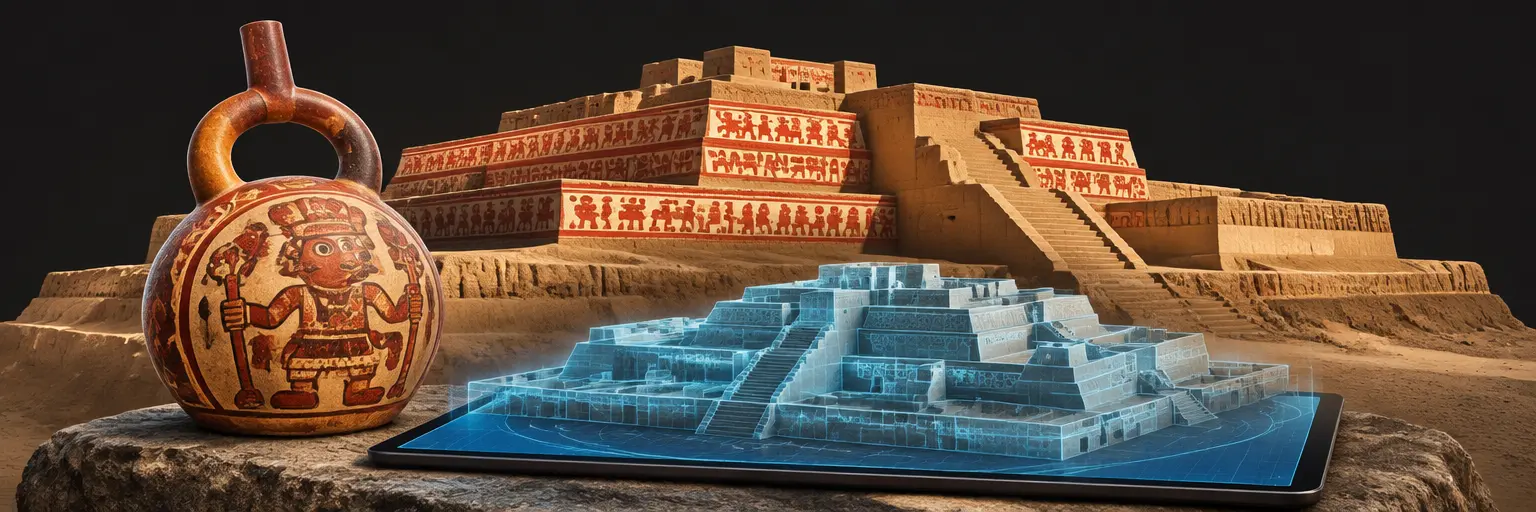
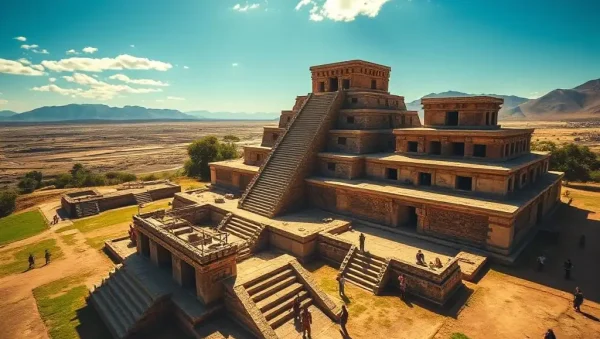
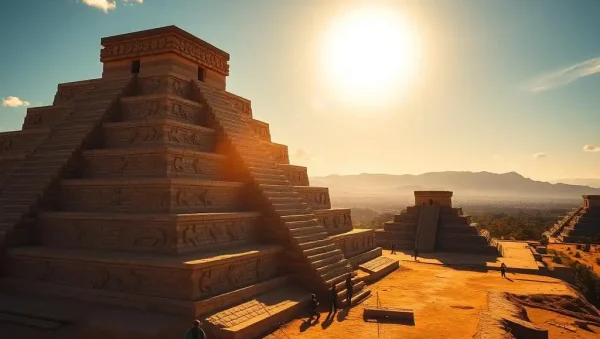
The Moche are renowned for their massive adobe structures, such as the Huaca del Sol and Huaca de la Luna near modern Trujillo. These stepped pyramids served as religious, administrative, and ceremonial hubs, built with millions of molded mud bricks. Each brick often bore maker’s marks, indicating organized labor and a centralized state. Expect to learn how these monuments align with celestial events and burials, revealing a cosmology where architecture mirrored the sacred mountain landscape. The sheer scale—over 140 million bricks at Huaca del Sol—highlights a powerful elite who mobilized vast workforces.
Beyond their size, these huacas featured elaborate friezes painted in vivid colors, depicting deities, warriors, and ritual sacrifices. The Huaca de la Luna stands out for its three-tiered platform and intricate iconography tied to rain and fertility. This section examines construction techniques, from ramp systems to wall niches, and how ritual spaces were deliberately renewed through periodic rebuilding. Such practices reinforced dynastic power and ancestral veneration, making architecture a living text of Moche belief. By studying these structures, you gain insight into how sacred space was engineered to mediate between humans and the supernatural world.
🏘️ Urban Centers and Settlement Patterns
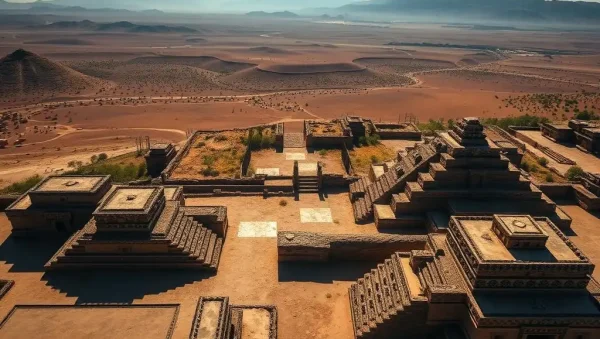
Moche urbanism was not a single city but a network of ceremonial centers, residential compounds, and administrative sites spanning river valleys. Archaeological evidence from sites like Cerro Blanco and Pampa Grande shows planned layouts with distinct zones for elites, artisans, and commoners. This subcategory explores how cities like Galindo rose as political capitals, featuring defensive walls and road systems that connected agricultural hinterlands. You will discover that Moche cities were dynamic, adapting to flood cycles and warfare, with shifts in population and function over centuries.
Residential architecture varied by class: elite compounds used fine adobe with courtyards and storerooms, while commoner homes were simpler, using cane and wattle. Urban zoning also included craft production areas, especially for ceramics and metallurgy, which were vital to Moche economy and ritual. The canal systems, such as the Ascope and Chicama channels, integrated urban centers into a broader agricultural landscape. This section emphasizes that Moche urbanism was a blend of ceremonial pomp and practical logistics, reflecting a society that balanced ritual demands with everyday sustenance and defense.
💧 Irrigation Engineering and Water Management
One of the Moche’s most enduring achievements was their mastery of hydraulic engineering. In a desert coastal environment, they built extensive canal networks, some stretching over 100 kilometers, to divert river water into fertile fields. The La Cumbre Canal, for example, connected the Moche and Chicama valleys, showcasing inter-valley cooperation and technical skill. This section details how these systems were designed with gentle gradients, stone-lined channels, and headgates to control flow, enabling year-round agriculture for maize, beans, and cotton. Such innovations supported dense populations and generated surplus for trade and tribute.
Water management was both practical and ritualistic, as evidenced by ceremonial wells and carved stone altars that depict water deities. The Moche built reservoirs and aqueducts to mitigate El Niño floods, demonstrating adaptive resilience. However, mismanagement or climatological extremes occasionally led to collapse, offering cautionary tales. Here, you will explore case studies of canal abandonment and remodeling, linking engineering decisions to political shifts. This knowledge helps modern engineers and historians value indigenous water wisdom, proving that ancient urbanism was deeply intertwined with environmental stewardship and social cohesion.
🏺 Domestic Life and Vernacular Building
Beyond monumental works, Moche architecture includes vernacular dwellings that reveal daily life. Homes were often rectangular, with low stone foundations and upper walls of quincha (cane and mud), providing insulation against heat. Roofs used thatch or matting, while interior floors were polished with clay. This subcategory examines excavation findings from sites like Cerro Chepen, where household layouts show specialized areas for cooking, weaving, and storage. You will see how domestic spaces mirrored social hierarchies, with larger compounds incorporating ancestor altars and burial chambers beneath floors.
Building materials were locally sourced, emphasizing sustainability and communal labor. Adobe brick development evolved over time, with early Moche using conical bricks and later periods adopting rectangular ones. This section also looks at how walls were decorated with geometric patterns or painted murals, blurring lines between home and temple. The study of domestic architecture offers clues about gender roles, food practices, and craft specialization. By understanding these humble structures, you gain a holistic view of Moche society—where every building, from palace to hut, was a deliberate act of cultural expression and survival adaptation.
🛕 Funerary Architecture and Elite Burials
Moche burial practices are spectacularly revealed through architecture, such as the Royal Tombs of Sipán and the Tomb of the Lord of Ucupe. These elite burials were housed within platform mounds, sometimes added to existing huacas. This subcategory explores how tombs were constructed as underground chambers with niches for offerings, and how they were sealed with heavy adobe blocks to deter looters. The Moche burial complex often included multiple individuals, sacrificed retainers, and rich grave goods like gold masks, copper ornaments, and ceramics. These structures were not just graves but theaters of power, designed to project the deceased ruler’s divine status.
Funerary architecture also involved processional spaces and ramps leading to burial chambers, allowing for post-burial rituals. The orientation of tombs—often facing east or toward mountains—aligned with Moche cosmology. Excavations at San José de Moro reveal female priestess burials, indicating women held high ritual roles. This section examines how tomb construction methods varied by region and period, reflecting political fragmentation. By analyzing these structures, we reconstruct Moche beliefs about death, ancestor worship, and the afterlife, understanding architecture as a bridge to eternity and a tool for legitimizing hereditary rule.
Frequently Asked Questions
What is the most famous Moche architectural site?
The Huaca del Sol and Huaca de la Luna complex near Trujillo is the most iconic. The Huaca del Sol was one of the largest adobe structures in the ancient Americas, while Huaca de la Luna contains vivid murals and was used for rituals. Together, they epitomize Moche monumental architecture and urban planning, attracting extensive archaeological study.
How did the Moche build without modern tools?
They used molded adobe bricks, formed in wooden molds and sun-dried. Workers transported mud, water, and reeds using woven baskets and llamas. Ramp systems allowed workers to carry bricks up as construction rose. Efficiency came from mass production and forced labor, with each group marking bricks to track quotas, enabling the construction of massive pyramids.
Did Moche urban planning include street grids?
Yes, but not always rigidly. Sites like Pampa Grande show rectilinear layouts with main avenues and plazas, while others are more organic. Central areas were reserved for ceremonial and elite functions, with artisan quarters on peripheries. Urban grids were integrated with natural topography, such as rivers and hills, creating functional and ritualistic flow.
What happened to Moche cities after their decline?
By around 800 CE, many Moche centers were abandoned due to climatic events like mega-El Niños, plus social upheaval. Some sites were reoccupied by later cultures like the Lambayeque and Chimú, who built atop Moche structures. Over centuries, adobe eroded, and looters damaged many tombs. However, preservation efforts today protect remaining huacas as heritage sites.
Are there any Moche buildings still standing today?
Yes, though heavily weathered. The Huaca de la Luna and Huaca del Sol remain physically standing, with ongoing conservation. The Huaca Rajada (Sipán) also has visible platforms. Excavated walls and ramps are stabilized, while new structures are partially reconstructed for tourism, offering a glimpse of original grandeur despite centuries of erosion and looting.