Myths of the Moche: Understanding the Spiritual Beliefs of Ancient Peru
Unlock the fascinating world of Moche spiritual beliefs and myths, revealing how this ancient Peruvian culture intertwined daily life with rich narratives…
Read article
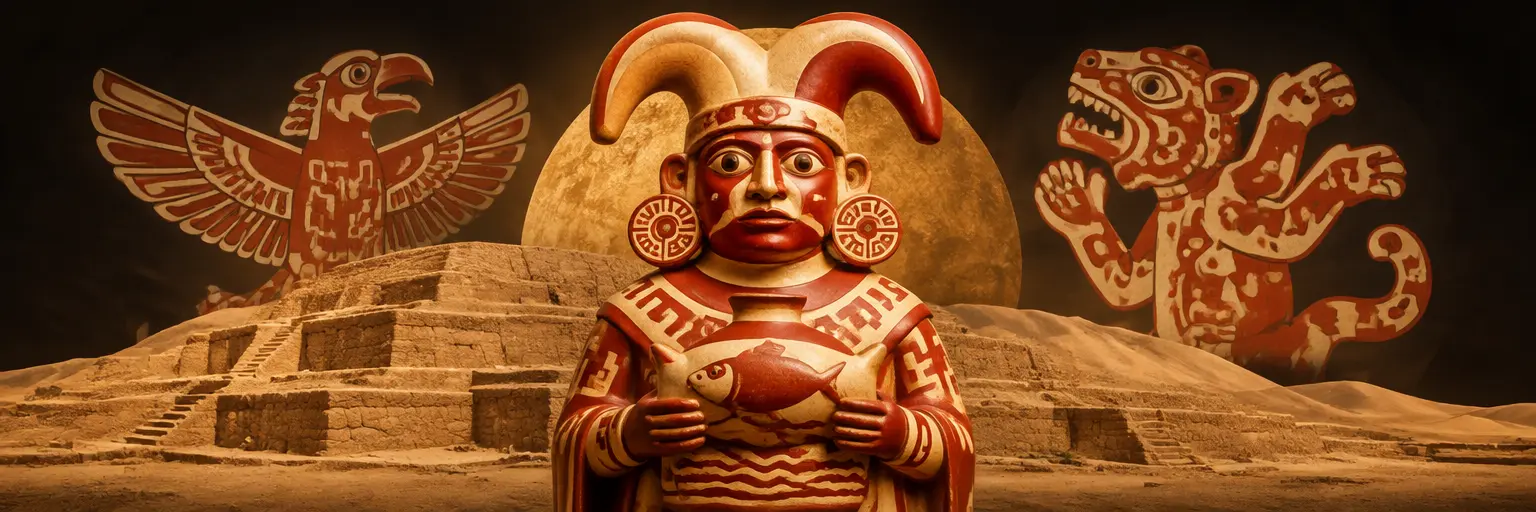
Explore the spiritual heart of the Moche civilization, where religion and mythology intertwined to shape every aspect of life along Peru’s northern coast. This ancient culture, flourishing from 100 to 800 CE, wove a rich tapestry of powerful deities, sacred rituals, and cosmological beliefs that are vividly preserved in their ceramics, murals, and metalwork. Here, you’ll uncover the divine pantheon—including the warrior god Ai Apaec, the “Decapitator,” and the nurturing earth goddess—whose stories explain creation, fertility, and the cycles of nature. Through elaborate ceremonies, human sacrifice, and hallucinogenic visions, Moche priests communicated with the supernatural, ensuring cosmic balance and agricultural abundance. Discover how mythological narratives were not just stories but dynamic forces that justified political power, organized society, and responded to environmental challenges like El Niño. From the iconic tombs of Sipán, rich with offerings to guide the dead, to the enigmatic Huaca de la Luna temples, this exploration reveals a civilization where the divine was omnipresent.
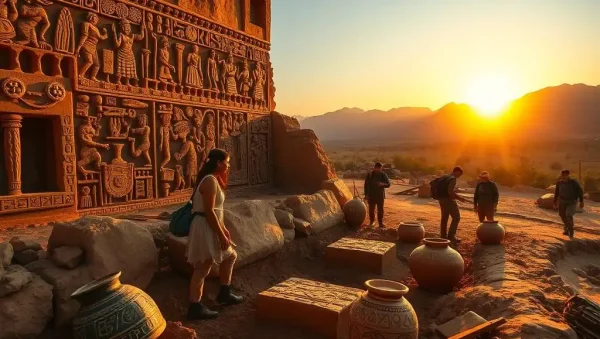
Unlock the fascinating world of Moche spiritual beliefs and myths, revealing how this ancient Peruvian culture intertwined daily life with rich narratives…
Read article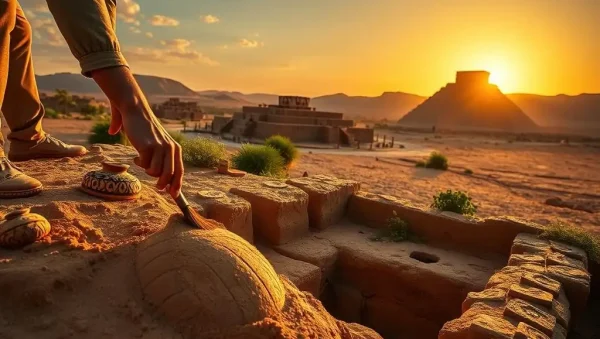
The Moche ancestor worship practices reveal profound connections between the living and the deceased, highlighting their reverence for lineage and tradition. This…
Read article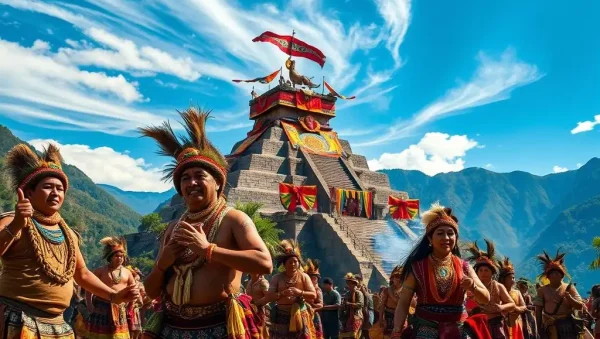
🌟 The Moche festivals and celebrations were vibrant expressions of devotion, featuring elaborate rituals, music, and mesmerizing art. These events not only…
Read article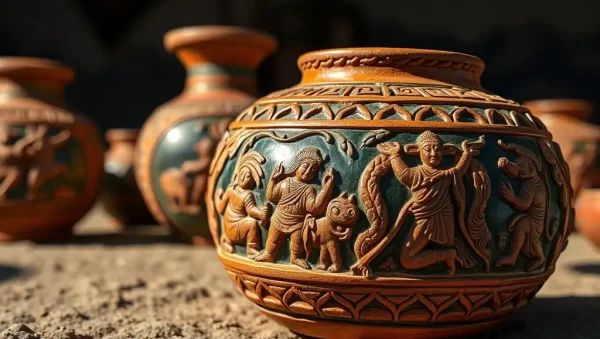
🌟 Moche ceramics religious symbolism reveals the profound spiritual beliefs of this ancient civilization. Through intricate designs and vivid imagery, these artworks…
Read articleDelve into the spiritual heart of the Moche civilization, a pre-Columbian culture that flourished on Peru's northern coast from roughly 100 to 800 CE. Their religion and mythology were not mere beliefs but a complex system that governed politics, agriculture, warfare, and daily life. This subcategory guides you through the pantheon of deities, the dramatic rituals, the symbolic art, and the profound worldview of a people who saw the divine in every mountain, wave, and creature. Discover how their myths shaped one of the most sophisticated societies of the ancient Americas.
Here you will encounter the primary deities that ruled the Moche cosmos. The Decapitator God (Ai Apaec) was the supreme creator, often shown with fanged jaws and holding a human head, symbolizing both death and regeneration. Equally vital was the Sea Goddess, who controlled the ocean's bounty and was worshipped with offerings of shells and Spondylus, while a Moon Goddess oversaw the tides and women's cycles. The Moche also revered a Sun God, a Corn God, and a complex pantheon of animal spirits like owls, foxes, and serpents, each embodying specific forces of nature.
By studying these deities, you will learn how the Moche integrated their environment into theology. The Pacific Ocean was not just a resource but a living entity, and the Andes were the home of ancestral spirits. Unlike later Inca religion, Moche gods were anthropomorphic yet hybridized, often merging human traits with jaguar, bird, or spider features. This section explains the iconography found on ceramics and murals, helping you decode the visual language that priests used to communicate divine will to the populace.
The Moche are infamous for their elaborate sacrificial ceremonies, which are vividly depicted in their painted pottery and monumental temple friezes. These rituals involved the capture of enemy warriors, who were then paraded, bloodied, and finally decapitated or had their throats slit on pyramid summits. The blood was collected in ceremonial goblets and offered to the gods, especially the Decapitator God, to ensure agricultural fertility and the return of El Niño rains. This was not random violence but a highly structured cosmic obligation, with specific steps, clothing, and musical accompaniment.
For readers, this section clarifies the difference between popular myth and archaeological evidence. You will see how the Huaca de la Luna (Temple of the Moon) served as the primary stage for these ceremonies, with murals depicting the fate of prisoners. We also examine the role of hallucinogenic plants like San Pedro cactus, which allowed priests to commune with the spirit world. Understanding Moche sacrifice is essential for grasping their cyclical worldview—death was necessary for rebirth, and blood was the ultimate fertilizer for both maize and society itself.
This facet explores the role of the shaman, a crucial intermediary between the human and supernatural realms. Moche shamans, often depicted as women or gender-fluid figures, used trance states induced by natural hallucinogens, fasting, or drumming to journey to the underworld. They transformed into animal familiars—jaguars, condors, or snakes—to retrieve healing knowledge, predict harvests, or communicate with ancestors. The famous "Warrior Priest" and "Priestess" tombs, like those unearthed at Sipán, reveal that these spiritual leaders were buried with golden masks, copper crowns, and ritual paraphernalia.
Here, you will understand how shamanism was not separate from daily life but interwoven with medicine, politics, and art. The Moche believed sickness was a spiritual imbalance, and shamans used herbal remedies, divination, and exorcisms to restore harmony. We also discuss archaeological evidence of ritual paraphernalia—cocaine-laced hair in tombs, snuff trays, and whistling pots—that confirm their altered states. This section offers a bridge between the visible ceremonial life and the hidden, inner world of Moche spiritual experience.
The Moche left no written texts, so their mythology lives on through their extraordinary art—fineline painted ceramics, massive adobe murals, and intricate metalwork. Here, you will learn to interpret the recurring motifs: the "Revolt of the Artifacts," where weapons and pots come to life to attack humans, reflects the power of animism; the "Weeping God" scene shows a deity shedding tears of rain; and the "Funerary Processions" depict the soul's journey after death. Every vessel, stirrup-spout bottle, or face-neck jar was a sacred object, often used in rituals before being placed in tombs.
This section provides a visual grammar for understanding Moche mythology. We break down the four primary iconographic groups: anthropomorphic deities, zoomorphic beings, human-animal composites, and scenes of sacrifice. You will see how color had meaning—red for blood and life, black for night and the underworld. By analyzing the evolution of these images over several centuries, we show how religious beliefs shifted, yet maintained core themes of reciprocity and cosmic cycle. Whether you are an artist, historian, or curious reader, this guide empowers you to "read" a Moche pot as fluently as a holy text.
The Moche did not simply worship in nature; they monumentalized their mythology in stone and mud. This subcategory explains how their huacas (sacred pyramids) were constructed to align with celestial events, especially the solstices and the rising of the Pleiades. The Huaca del Sol and Huaca de la Luna were not just administrative centers but cosmic mountains that recreated the primordial origin places of the gods. Nearby, the "Crocodile Temple" and "Shrine of the Deer" in the hinterlands served as nodes in a network of sacred geography, each tied to a specific mythic event or patron deity.
For a deeper understanding, we detail how architectural spaces mirrored mythological narratives—ramps symbolized the ascent to heaven, plazas represented the earthly plane, and subterranean chambers stood for the underworld. Discover how the Moche manipulated water channels to create the sound of rain during rituals, and how they buried successive temples within temples, each layer representing a mythic era. This perspective reveals that the Moche landscape itself was an open-air scripture, and every temple was a living embodiment of their creation story.
The main creator god was Ai Apaec, also known as the Decapitator God. He appears as a human figure with feline fangs and frequently holds a severed head, symbolizing his power over life and death. He was believed to ensure agricultural fertility and was propitiated through rituals and sacrifices on temple summits.
Evidence suggests sacrifices were tied to major events—droughts, El Niño floods, or new temple dedications—rather than a fixed annual calendar. Recent excavations at Huaca de la Luna revealed multiple mass burial pits with adult male warriors and adult women, but these events were curated and repeated over decades, not yearly.
They used the San Pedro cactus (containing mescaline), which is still used in Andean folk medicine today, as well as tobacco, coca leaves, and possibly the seeds of the vilca tree. Chemical analysis of hair from elite tombs confirmed traces of coca and other psychoactive compounds associated with ritual trance.
We rely on iconographic interpretation of ceramics, murals, and metalwork, cross-referenced with colonial Spanish accounts of later Andean beliefs and archaeological context. Scholars like Anne Marie Hocquenghem and Christopher Donnan have built systematic catalogues of repeated motifs to decipher mythological narratives.
Yes, the Huaca de la Luna and Huaca del Sol in Trujillo, Peru, are open to visitors, with vivid restored murals showing deities and sacrifice. The Royal Tombs of Sipán Museum houses incredible funerary offerings. Nearby, El Brujo complex features the tattooed mummy of the “Lady of Cao,” a female priestess-ruler, confirming women's roles in mythology and governance.