Scientific Achievements of the Moche Civilization
The Moche civilization, flourishing on Peru’s northern coast from roughly 100 to 800 CE, stands as a testament to indigenous ingenuity. Beyond their iconic pottery, the Moche developed sophisticated scientific systems in hydraulics, astronomy, metallurgy, and medicine that rivaled many contemporary Old World cultures. This subcategory explores their empirical knowledge and how they applied it to agriculture, architecture, and ritual life, revealing a society deeply attuned to its environment and capable of remarkable technical precision.
🔬 Hydraulic Engineering and Agricultural Mastery
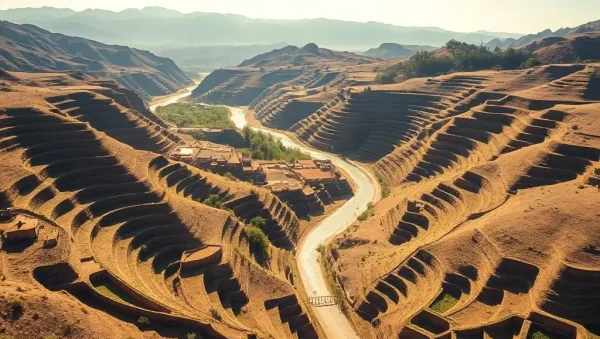
The Moche transformed a desert landscape into fertile farmland through an extensive network of irrigation canals, aqueducts, and reservoirs. Their most famous achievement is the Ascope Canal, stretching over 80 kilometers, which diverted water from the Chicama River. They used precise gradients and stone-lined channels to minimize evaporation and manage seasonal floods, demonstrating advanced hydrological understanding. These systems supported dense populations and surplus crops like maize, beans, and cotton, forming the economic backbone of Moche power.
Engineers also constructed "wachaque" – sunken field systems that tapped groundwater and captured moisture from coastal fog. This dual approach allowed year-round cultivation despite erratic rainfall. The Moche’s ability to measure land slopes and water flow without modern instruments underscores their applied mathematical skills. Their hydraulic legacy influenced later Andean civilizations, including the Chimú and Inca, and remains a subject of study for modern sustainable agriculture in arid regions.
🌌 Astronomical Observation and Calendar Systems
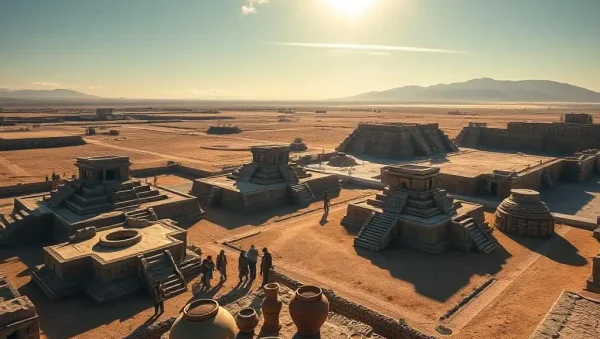
Moche priests and astronomers meticulously tracked celestial bodies, particularly the Pleiades, the Milky Way, and lunar phases. They aligned ceremonial platforms and huacas (sacred shrines) with solstices and equinoxes, as evidenced at the Huaca del Sol and Huaca de la Luna. Their calendar integrated lunar months with solar years to predict El Niño events, which brought torrential rains or droughts. This predictive ability guided planting, harvesting, and ritual sacrifices, linking cosmology with practical survival.
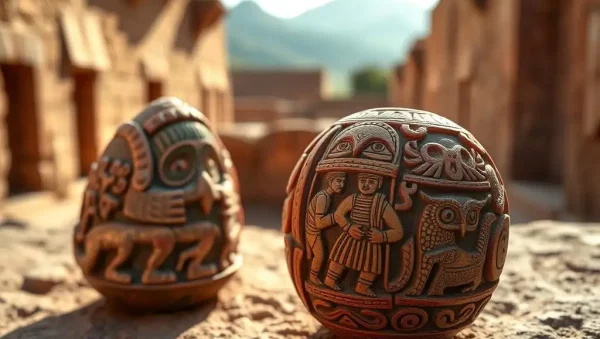
Evidence of astronomical records appears on painted ceramics and adobe friezes depicting celestial creatures, such as the decapitator god holding a crescent knife. The Moche used gnomon-like shadow casters to mark equinoxes, and their counting system, based on units of ten, supported precise tracking of celestial cycles. This knowledge not only regulated agriculture but also reinforced political authority, as rulers claimed divine sanction by forecasting environmental shifts with remarkable accuracy.
⚗️ Metallurgy and Alloy Innovation
The Moche pioneered advanced metallurgical techniques, including smelting, lost-wax casting, and gilding. They produced alloys of gold, silver, copper, and arsenic, creating objects with high tensile strength and shiny surfaces. Their signature technique – electrochemical replacement plating – allowed them to coat copper objects with thin layers of gold without heat, a sophisticated process unmatched elsewhere in the Americas. These skills produced ceremonial masks, nose ornaments, and weaponry that signified elite status and ritual power.
Metallurgical experimentation extended to utilitarian items like chisels, needles, and fishhooks, demonstrating a practical side to their craft. They also created "tumbaga" alloys to mimic gold, reducing costs while preserving visual splendor. Analysis of Moche smelting furnaces reveals controlled temperatures exceeding 1,100°C and the use of forced-air draft through clay tubes. This expertise laid groundwork for later Andean metal industries, and modern museums still marvel at the fine detail of their goldwork, which often features repoussé designs of animals and deities.
🏺 Medical Knowledge and Surgical Practices
Moche medical practitioners possessed practical knowledge of anatomy and surgical intervention, as shown by trepanation – drilling holes into the skull to relieve pressure from trauma. Archaeological evidence reveals numerous healed skulls with bone regrowth, indicating high survival rates. They used obsidian knives, bronze scalpels, and likely employed natural antiseptics from plant resins. Their understanding of cranial pressure points and wound management was remarkably advanced for the era.
Depictions on pottery and murals illustrate specific medical procedures, including amputation, splinting of fractures, and even possible cesarean births. They utilized coca leaves and San Pedro cactus for anesthesia and ritual healing, combining pharmacological knowledge with spiritual practices. The Moche also developed a vast pharmacopeia from local flora, treating infections, fevers, and gastrointestinal ailments. Their holistic approach, blending empirical surgery with supernatural diagnosis, influenced later Andean healers and remains a fascinating field for ethnomedical research.
🧮 Numbers, Geometry, and Dye Chemistry
The Moche used a base-10 counting system with symbolic representations on quipu-like cords, though less complex than later Inca khipus. They applied geometry in constructing perfectly aligned adobe pyramids and intricate canal curves, showing an intuitive grasp of angles and volume. Archaeologists have identified precise repeating units in their architecture, suggesting standardized measurement systems. Their practical mathematics facilitated labor organization, tribute collection, and astronomical calculations.
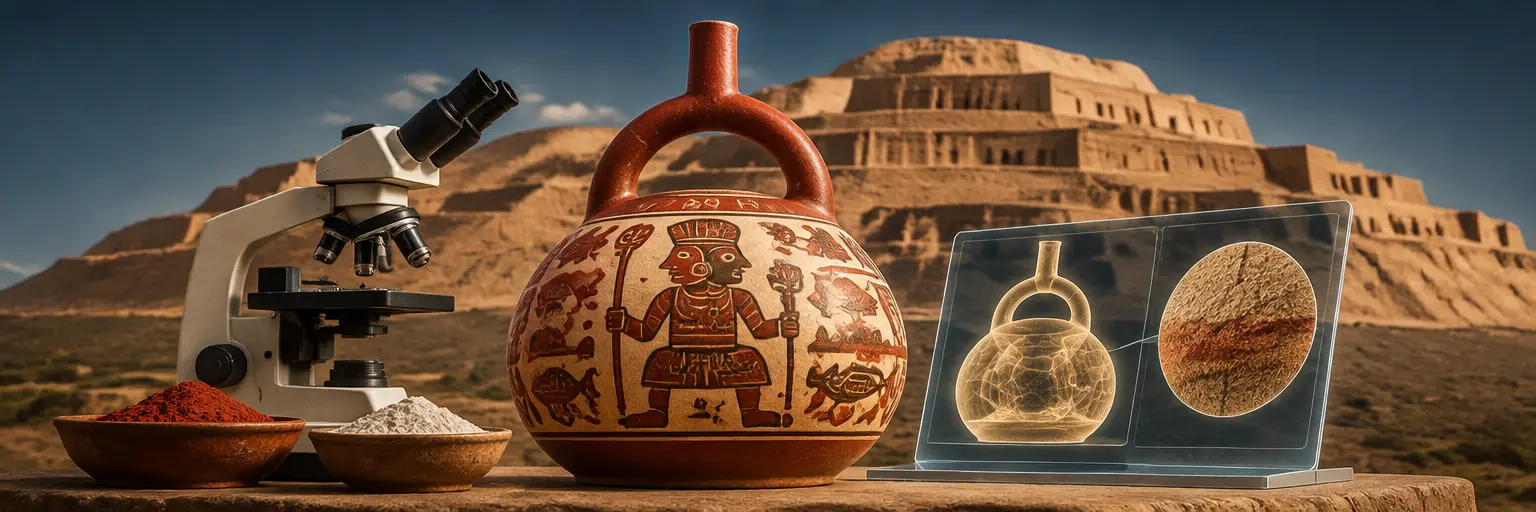
Equally impressive was their mastery of dye chemistry. From indigo plants, cochineal insects, and mollusk secretions, they created vibrant reds, blues, and purples that resisted fading for centuries. Chemical analysis reveals the use of mordants like alum and urine to fix dyes, and their textile production involved multiple dye baths for colorfastness. This chemical knowledge extended to ceramic glazes and mineral pigments, producing the distinctive Moche palette of cream, red, ochre, and black. Their techniques remain influential in modern natural dyeing and conservation science.
Frequently Asked Questions
What was the most significant scientific achievement of the Moche?
Their hydraulic engineering stands out, particularly the Ascope Canal network, which enabled agriculture in a hyper-arid desert. This system sustained one of the Americas’ most populous urban centers and demonstrates advanced surveying and fluid dynamics, influencing later Andean irrigation technology.
How did the Moche predict El Niño events?
By observing the Pleiades star cluster and its rising patterns, Moche astronomers correlated celestial changes with oceanic and atmospheric shifts. They tracked lunar cycles and constructed solar calendars, allowing them to anticipate wet or dry years and adjust planting and rituals accordingly.
Did Moche metallurgy influence other civilizations?
Yes, their electrochemical gilding technique and copper-arsenic alloys were adopted and refined by the Chimú and Inca. Moche mold and lost-wax methods spread along trade routes, making their technological innovations foundational to Andean metalworking traditions.
Were Moche surgeries successful?
Evidence from healed trepanation skulls shows survival rates near 70%, impressive for ancient medicine. They used sterilized tools, controlled bleeding with cautery, and applied herbal antibiotics, suggesting skilled post-operative care and anatomical knowledge.
What dyes did the Moche use and how were they made?
They used cochineal for crimson, indigo for blue, and murex snail secretions for purple. The process involved crushing insects or plants, mixing with lime and alum, and fermenting in warm conditions. Modern tests confirm their dyes retained color for over 1,500 years.