Political Structure and Governance in the Moche Civilization
Explore the intricate governance systems that powered the Moche Civilization, a pre-Columbian society that flourished along Peru's northern coast from 100 to 800 CE. This subcategory delves into how the Moche organized power, managed resources, and maintained social order without a centralized empire, revealing a sophisticated blend of theocratic authority, elite competition, and regional autonomy. From ceremonial centers to irrigation networks, discover how political structure shaped every aspect of Moche life and left a lasting legacy in Andean history.
🏛️ Theocratic Leadership and Divine Kingship
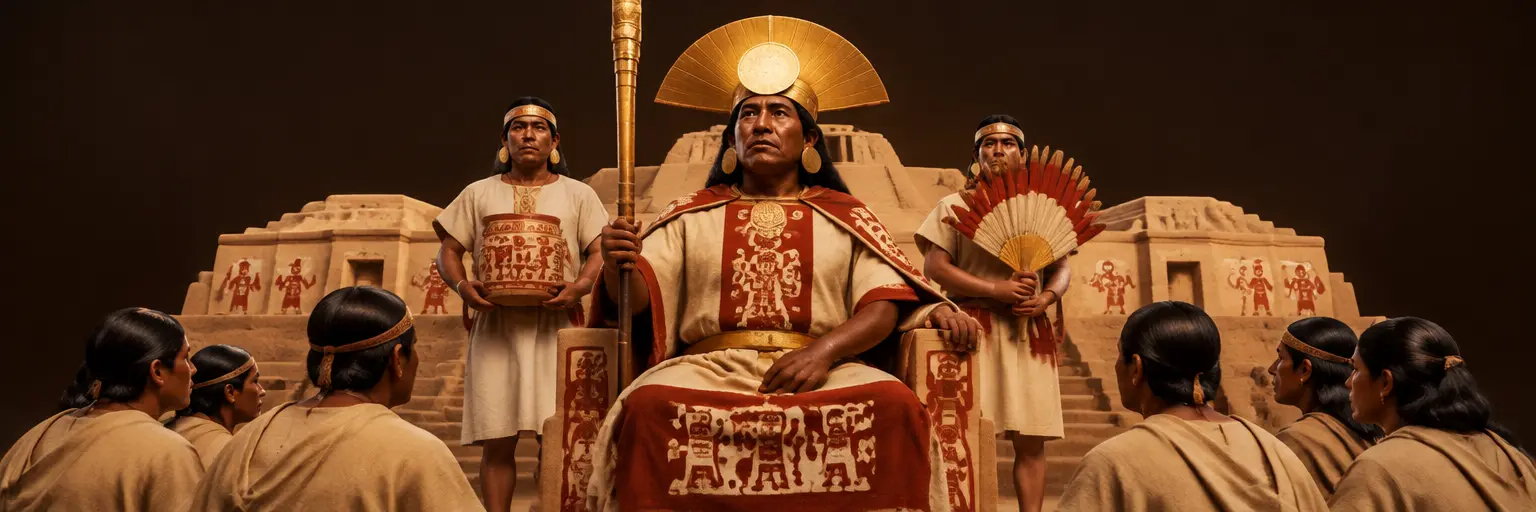
The Moche political system was deeply rooted in the belief that rulers held divine status, acting as intermediaries between the gods and the people. Archaeological evidence, such as the famous Lord of Sipán tomb, shows elite leaders adorned with gold, copper, and shell regalia, signaling their sacred authority. These rulers likely performed rituals, oversaw human sacrifices, and controlled access to supernatural powers, legitimizing their rule through religious ceremonies at monumental huacas (pyramids).
Unlike the later Inca empire, Moche governance was not a unified state but rather a series of politically independent valleys, each with its own ruling lineage. This decentralized structure allowed local elites to adapt to environmental challenges, such as El Niño floods, while maintaining ideological cohesion through shared religious practices. Theocratic leadership ensured that political decisions were framed as divine mandates, reinforcing social hierarchy and enabling the mobilization of labor for large-scale public works like irrigation canals and temple construction.
⚙️ Elite Networks and Regional Autonomy
Moche governance relied on a complex network of elite families who controlled strategic resources, including fertile farmland, marine resources, and craft production. These elites likely formed alliances through marriage, tribute, and trade, creating a mosaic of competing political centers along the Moche, Chicama, and Virú valleys. Excavations at sites like Huaca de la Luna reveal painted murals depicting processions of warriors and captives, suggesting that military prowess was essential for asserting regional dominance.
This regional autonomy meant that political power was fluid and contested, with no single ruler holding absolute authority over the entire Moche world. Instead, valley-based lords negotiated their status through monumental architecture, feasting, and the accumulation of luxury goods. This competitive environment stimulated innovation in metallurgy, ceramics, and hydraulic engineering, as elites vied for prestige. Understanding this fragmented political landscape is crucial for interpreting Moche iconography, which often glorifies individual rulers and their supernatural ancestors.
🌾 Economic Control and Labor Management
Political governance in Moche society was inseparable from economic management, particularly the administration of water, land, and labor. The Moche engineered extensive irrigation systems, some spanning over 100 kilometers, to transform arid valleys into productive agricultural zones. Controlling these water sources allowed political elites to dictate planting cycles, collect surplus crops, and redistribute food during scarcity, solidifying their authority over commoners and artisans.
Labor was organized through a system of corvée obligations, where communities contributed workers for public projects such as temple construction, canal maintenance, and warfare. In return, rulers provided feasts, ceramic vessels, and ceremonial goods, reinforcing reciprocal relationships. Artisans specializing in fine metalwork, weaving, and pottery were likely attached to elite households, producing prestige items that symbolized political power. This economic centralization, even at a local level, enabled the Moche to sustain dense populations and undertake ambitious architectural projects that still awe visitors today.
🗡️ Military Organization and Conflict Resolution
Warfare played a pivotal role in Moche political structure, serving both as a means of territorial expansion and as a ritualized display of power. Iconographic scenes on ceramics and murals show warriors in combat, capturing prisoners, and leading them to sacrifice, indicating that military victories were used to legitimize rulers. The presence of fortified hilltop settlements, such as Cerro Chepén, suggests that inter-valley conflicts were common, with alliances shifting based on resource access and political ambitions.
The Moche military was likely organized under elite commanders who were also religious leaders, blurring the lines between martial and priestly roles. Captured enemies were often subjected to ritual sacrifices at ceremonial centers, their blood offered to deities to ensure agricultural fertility. This fusion of warfare and religion meant that political disputes were resolved through both physical combat and supernatural negotiation. By framing conflicts as cosmic battles, Moche rulers could justify their dominance, maintain social order, and deter rebellion from within their own communities.
🏺 Symbolism in Governance and Legacy
Moche political authority was visually communicated through a rich symbolic language found in pottery, murals, and body adornment. Rulers are depicted with distinctive headdresses, earspools, and nose ornaments, each item signifying rank and connection to specific deities, such as the Ai-Apaec (the Decapitator) or the Moon God. These symbols were not merely decorative; they served as political propaganda, reinforcing the ruler’s divine mandate and societal role as protector and provider.
The legacy of Moche governance influenced later Andean civilizations, including the Wari and Chimú, who adopted similar theocratic and regional models. Modern scholars continue to debate whether Moche was a centralized state or a confederation of independent polities, but the evidence highlights a flexible political system capable of resilience and adaptation. For contemporary readers, studying Moche political structure offers insights into how complex societies manage power without written records, relying instead on ritual, reciprocity, and monumental architecture to maintain cohesion—a testament to human ingenuity in the pre-Columbian Americas.
Frequently Asked Questions
Was the Moche Civilization a single unified empire?
No, the Moche were not a unified empire but a series of independent political centers along Peru's northern coast, each with its own ruling elite. They shared cultural traits, religion, and art styles but lacked centralized administration, making governance more regional and competitive.
How did Moche rulers maintain their political authority?
Moche rulers maintained authority through divine kingship, claiming descent from gods and performing rituals at ceremonial pyramids. They controlled irrigation, labor, and trade, while military victories and sacrificial ceremonies reinforced their power, creating a cycle of religious and economic dominance.
What role did warfare play in Moche governance?
Warfare was central to Moche political life, used for territorial expansion, capturing sacrificial victims, and demonstrating martial strength. Elite commanders integrated military success with religious symbolism, using conflicts to legitimize their rule and resolve disputes between regional powers.
Did the Moche have a written legal code?
No, the Moche left no evidence of a written legal code. Governance relied on oral traditions, ritualized agreements, and social customs, with authority enforced through religious sanction and economic reciprocity rather than formal laws.
How does Moche political structure influence modern understanding?
Moche political structure challenges assumptions about ancient statehood, showing that complex societies can thrive without central bureaucracy. It highlights the adaptability of theocratic and regional governance models, offering comparative insights into political organization and resource management in non-Western civilizations.