Moche Artifacts in Modern Museums: Preserving a Legacy
The display of Moche artifacts in modern museums not only showcases the rich artistic legacy of this ancient civilization but also fosters…
Read article
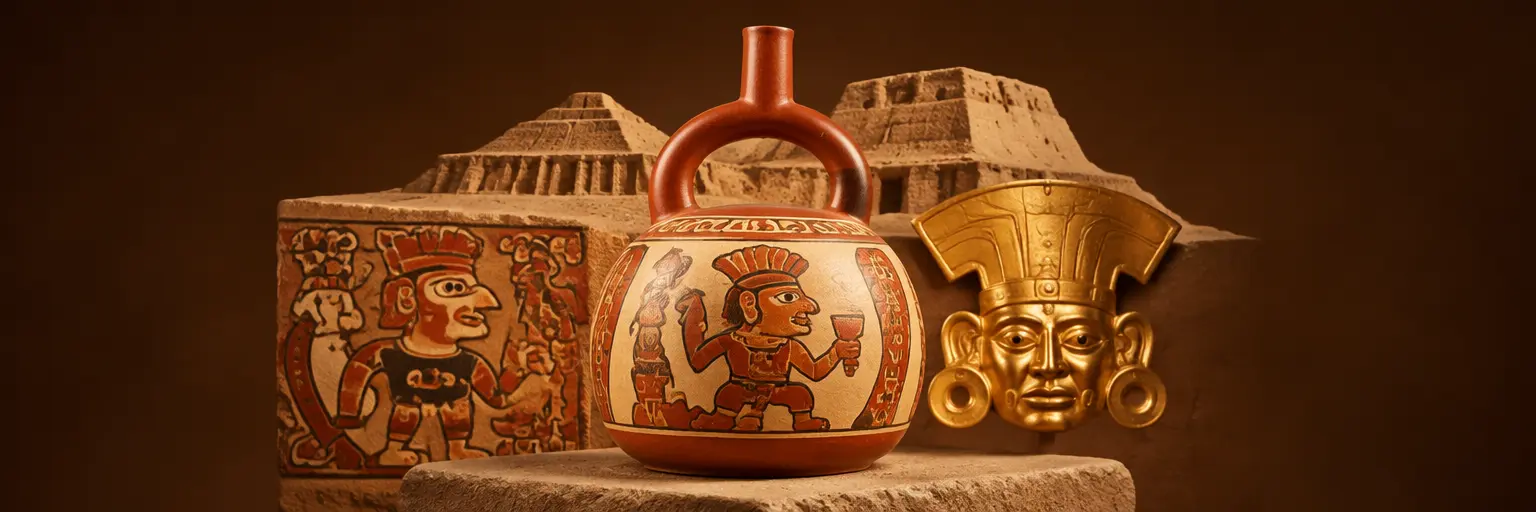
Discover the breathtaking artistry and spiritual depth of the Moche Civilization, a culture that flourished along Peru’s northern coast from 100 to 800 CE. Their ceramic masterpieces, intricate mural paintings, and golden ornaments reveal a society obsessed with ritual, nature, and the divine. From lifelike portrait vessels to sprawling temple friezes depicting mythical beings, Moche art is a window into a world where every object carried meaning—whether used in ceremonies, politics, or daily life. Explore how their iconography blended human, animal, and supernatural elements, capturing everything from warfare and sacrifice to music, weaving, and sexual expression. These artifacts not only showcase extraordinary technical skill—using molds, fine-line painting, and three-dimensional modeling—but also serve as a vital record of a sophisticated people’s beliefs, social hierarchy, and interactions with their environment. By studying these cultural treasures, we gain a richer understanding of the Moche worldview and their enduring influence on Andean heritage. Dive into this vibrant legacy of creativity, symbolism, and innovation that continues to inspire scholars and art lovers alike.
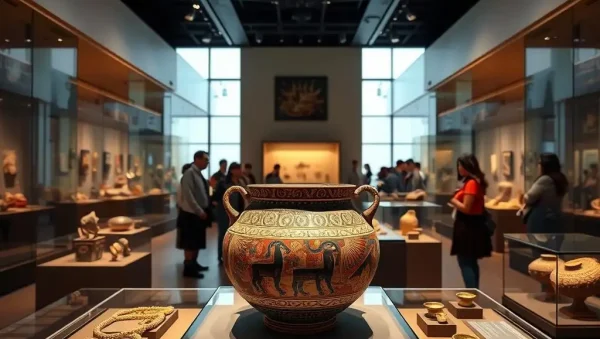
The display of Moche artifacts in modern museums not only showcases the rich artistic legacy of this ancient civilization but also fosters…
Read article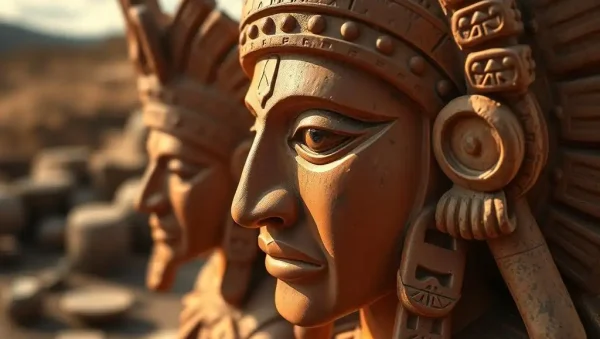
🌍 Moche sculpture, a remarkable expression of indigenous culture, intricately captures the dual themes of life and death. These exquisite clay creations…
Read article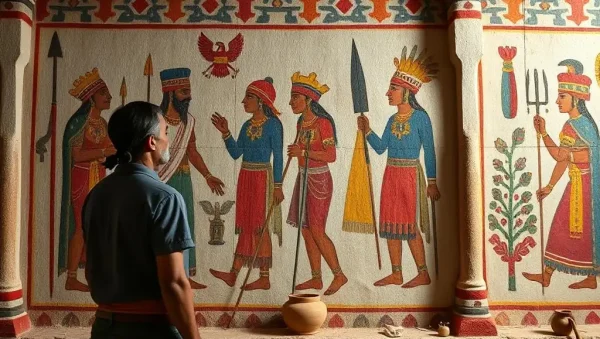
Discover how Moche murals and ancient beliefs reveal the intricate social structures and spiritual practices of this remarkable civilization, offering a captivating…
Read article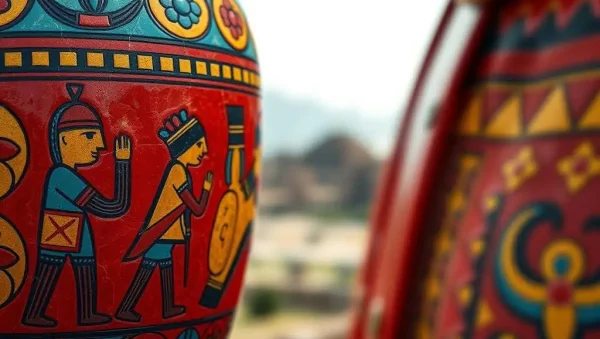
The vibrant Moche art color techniques reveal the rich cultural narratives and societal values of this ancient civilization. By examining their innovative…
Read article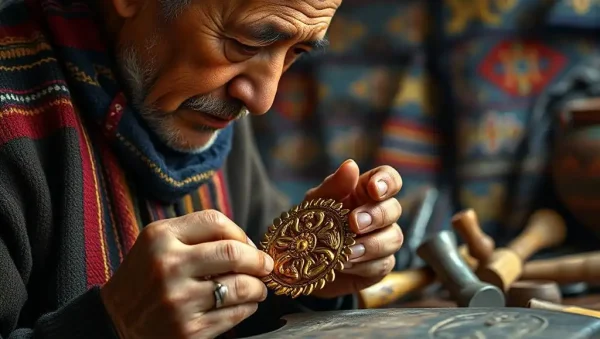
✨ Moche goldsmithing craftsmanship significance lies not only in its exquisite artistry but also in its rich symbolism, reflecting the cultural values…
Read article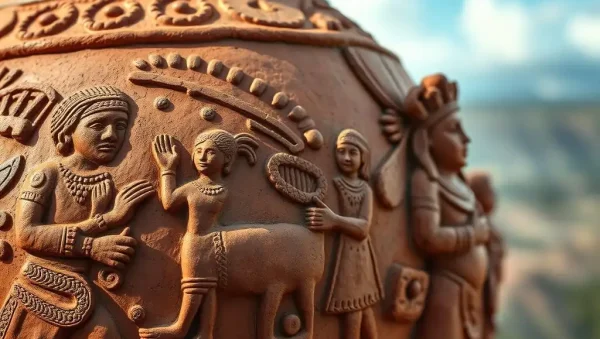
🌟 The intricate Moche gender roles in art reveal profound insights into their societal structure, showcasing how artistic expression intertwined with cultural…
Read articleDelve into the vibrant world of the Moche, a pre-Columbian society that flourished on Peru's northern coast from roughly 100 to 800 CE. Renowned for their extraordinary ceramic artistry, intricate metallurgy, and complex ritual life, the Moche left a legacy that continues to captivate archaeologists and art lovers alike. This subcategory uncovers the spiritual, social, and aesthetic dimensions of a people who expressed their worldview through stunningly realistic pottery, monumental adobe temples, and sophisticated textile and mural traditions. Discover how their art served as a visual language for power, mythology, and daily existence.
The Moche are celebrated for their sculptural and painted ceramics, which functioned as both everyday vessels and ceremonial offerings. Their famous "portrait vessels" capture individual faces with astonishing realism, suggesting a deep interest in personal identity and societal roles. Similarly, their narrative pots depict scenes of war, hunting, sexuality, and supernatural beings, offering a vivid window into their daily life and belief systems. Through these pieces, we can trace the technological sophistication of their kilns and the symbolic importance of specific animal motifs like the owl, spider, and deer.
These ceramics were not merely decorative but served as communicative tools within a chiefly society. The use of stirrup-spout bottles and fine-line painted scenes demonstrates a standardized artistic canon, likely linked to religious or political authority. For modern viewers, each vessel is a three-dimensional chronicle, revealing the Moche’s keen observational skills and their ability to merge realism with mythic abstraction. Explore how these artifacts have become the cornerstone of understanding Moche social hierarchies and regional variations across their valleys.
The Moche built massive adobe structures, most notably the Huaca del Sol and Huaca de la Luna near modern Trujillo. These pyramids served as administrative centers, ceremonial stages, and burial grounds for elite individuals. The Huaca de la Luna, in particular, features layered murals depicting the god Ai-Apaec, as well as complex friezes of warriors and captives, highlighting the centrality of ritual sacrifice in Moche cosmology. These monuments were not static; they were periodically renovated, with older structures buried beneath new construction, symbolizing cyclical renewal and political continuity.
Architectural design also reflects a deep understanding of engineering and labor organization, with millions of adobe bricks used in their construction. The alignment of these structures with celestial events suggests a sophisticated calendrical system. Walking through these ruins, one can see how sacred spaces were deliberately integrated into the landscape, reinforcing the power of the ruling elite and their connection to the divine. This section offers a virtual tour of these awe-inspiring relics and their excavation history.
Beneath the earth, Moche tombs have yielded spectacular examples of gold, silver, and copper craftsmanship. Elite individuals were buried with intricate ear ornaments, nose rings, and ceremonial knives (tumi), often inlaid with turquoise and shell. These metals were not merely status symbols; they carried symbolic weight, with gold associated with the sun and masculine forces, and silver linked to the moon and feminine principles. The Moche developed advanced techniques like lost-wax casting and gilding, which allowed for intricate and highly detailed ornamentation.
This artistry extended to textiles, where cotton and camelid fibers were woven into complex patterns, often featuring the same mythological figures seen on pottery. Feathered textiles and elaborate headdresses would have marked leaders during public ceremonies, creating a spectacle of color and light. Understanding these materials reveals the extent of Moche trade networks, as raw materials like Spondylus shells were imported from distant Ecuador. Learn how these objects demonstrate the intersection of artistry, economy, and ideological power.
Moche art is replete with supernatural beings, including the "Decapitator" god and a host of animal-human hybrids. The ritual of human sacrifice, often depicted in fine-line painting, was a central theme, meant to appease deities and ensure agricultural fertility. Archaeologists have discovered evidence of such practices in tombs and sacrificial plazas, confirming that these images were not purely imaginative but reflected actual ceremonies. Priests, warriors, and shamans played distinct roles in these rituals, as shown in their different attire and accoutrements.
Beyond sacrifice, the Moche revered a complex pantheon where animals like the fox, snake, and owl served as intermediaries between realms. The interplay of life and death is a recurring motif, with vultures and skeletons depicted alongside growing crops, symbolizing the cycle of renewal. This section explores the iconography that defined Moche religion, helping you decode the profound spiritual messages embedded in their art and architecture. It is your guide to understanding the mental universe of this fascinating civilization.
While often viewed as a single culture, the Moche civilization comprised several distinct valleys, each with its own artistic nuances. The northern valleys, like Lambayeque, show strong influences from earlier Cupisnique traditions, while southern centers near the Moche River developed more standardized styles. Over time, you can observe a shift from thick-walled, dramatic sculptures to thinner, more elegant pieces with refined line work, indicating changes in taste or cultural contact. These stylistic differences offer crucial clues about political alliances and migrations.
Moreover, the transition to the later Moche V period shows increased thematic complexity, with broader narrative scenes depicting entire landscapes. This evolution suggests a response to environmental pressures, such as the El Niño events that disrupted their agriculture. By comparing pottery and mural styles across regions, researchers reconstruct a dynamic history of war, cooperation, and adaptation. This section serves as a detailed map of how Moche artistic identity developed and diversified over its seven-hundred-year existence.
The most famous Moche artifact is arguably the Lord of Sipán's tomb assemblage, discovered in 1987. This royal burial contained gold and silver ornaments, ceramics, and shell beads, showcasing the pinnacle of Moche metallurgy and textile work. Its realism and richness have made it a benchmark for understanding Moche elite culture and burial practices.
No, the Moche did not have a written script. Instead, they communicated complex narratives through their fine-line painted ceramics and sculptural scenes. These visual records are considered a form of "proto-writing," as they consistently encode ritual and mythological sequences that we can partially decode through comparative analysis.
Moche potters used mold-based production for many vessel types, allowing for the rapid replication of standardized shapes and images. However, the finest portrait vessels and narrative pieces were hand-modeled and often unique. Expert artisans controlled firing atmospheres to achieve the distinctive red and cream coloration seen on most wares.
The Moche decline around 800 CE is attributed to a combination of severe climate change, including prolonged droughts and catastrophic El Niño floods, which disrupted agriculture and social stability. Additionally, internal political fragmentation and pressure from neighboring groups like the Wari likely contributed to the collapse of their centralized authority.
Major collections are housed in Peruvian museums, notably the Museo Tumbas Reales de Sipán in Lambayeque and the Museo Larco in Lima. Internationally, institutions like the Metropolitan Museum of Art in New York and the British Museum in London have significant holdings, offering global access to their artistic heritage.