European Contact and Conquest: The Moche Civilization's Final Chapter
The Moche Civilization, renowned for its stunning ceramic art, monumental adobe pyramids, and sophisticated irrigation systems, thrived along Peru's northern coast from roughly 100 to 800 CE. Yet, long before the Spanish arrived, the Moche had already declined—but the story of European contact and conquest reshapes how we understand their legacy. This subcategory explores the dramatic intersection of indigenous Moche descendants with European invaders, focusing on how colonial powers encountered, misrepresented, and ultimately absorbed Moche cultural remnants into a new colonial order.
🏛️ First Encounters: Spanish Chroniclers and Moche Ruins
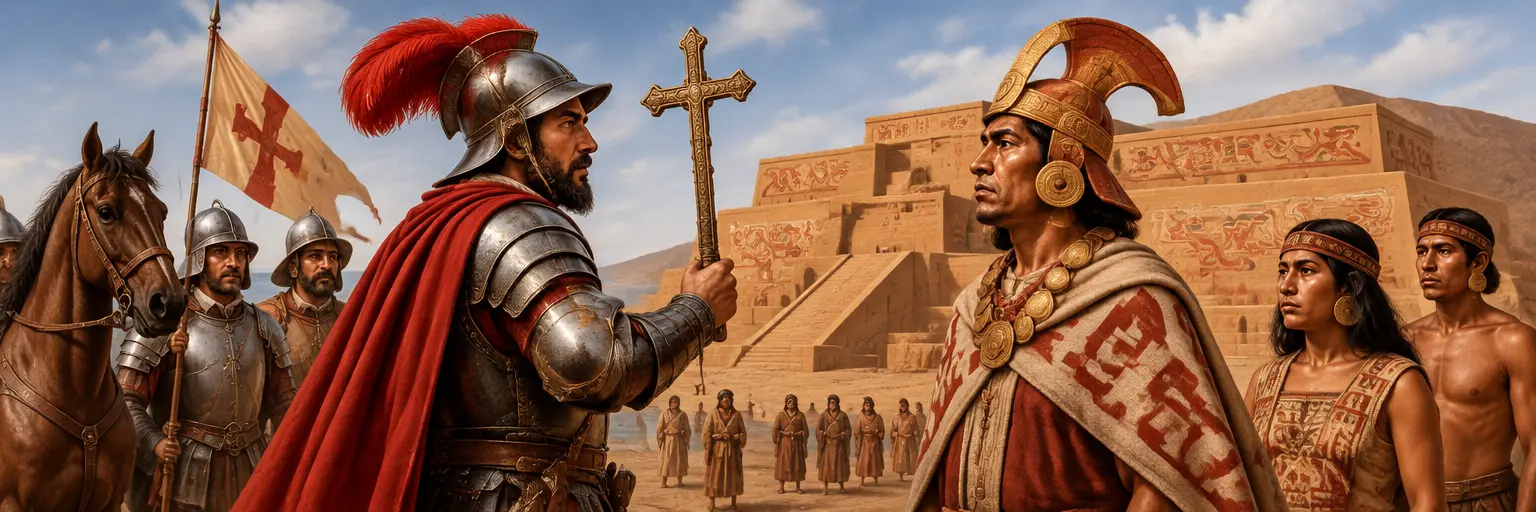
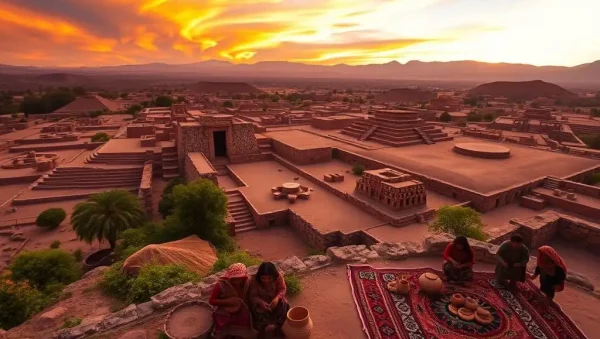
When Spanish conquistadors and chroniclers arrived in the 16th century, they found not a living Moche empire but imposing ruins like Huaca del Sol and Huaca de la Luna still revered by local indigenous communities. Chroniclers such as Pedro Cieza de León and Felipe Guamán Poma de Ayala documented these monumental structures, often attributing them to mythical giants or biblical floods rather than to the Moche people themselves. Their writings became the first European "records" of Moche civilization, yet they were filtered through colonial biases and misapprehensions.
These early accounts shaped a distorted narrative that persisted for centuries, dismissing Moche achievements as primitive or foreign. However, recent archaeological work, including excavations at Sipán, has corrected these misconceptions by revealing the Moche's advanced metallurgy, hydraulic engineering, and complex ritual life. For readers, this section illuminates how colonial documentation often obscured indigenous realities, and why modern scholarship must critically re-read these sources to recover authentic Moche history.
⚔️ Colonial Impact on Moche Descendants and Landscapes
Although the Moche state collapsed centuries before European arrival, their descendants—various ethnic groups like the Muchik-speaking peoples—were forcefully integrated into the Spanish colonial system. The Spanish imposed encomienda and reducción policies, relocating native communities into planned towns, disrupting ancestral land ties, and demanding tribute and labor for colonial enterprises. The ancient Moche irrigation canals were repurposed but often fell into disrepair, while Christian missions overlaid new religious meanings onto old sacred sites.
This period saw dramatic demographic collapse due to introduced diseases like smallpox and measles, which devastated indigenous populations unaccustomed to such pathogens. Yet, Moche cultural elements persisted subtly: pottery styles, weaving techniques, and agricultural practices survived in muted forms within colonial-era indigenous households. By examining colonial tribute records, parish registers, and land disputes, historians trace how Moche descendants adapted, resisted, and negotiated their identities under Spanish rule—a story of resilience amidst conquest.
🏺 Archaeological Rediscovery in the Colonial and Republican Eras
European contact also triggered the looting and extraction of Moche artifacts, beginning with Spanish treasure hunters who targeted elite tombs for gold and silver ornaments. During the colonial period and into the 19th century, huaca looting (huaquerismo) became widespread, destroying countless archaeological contexts. Later, explorers like Max Uhle (a German archaeologist) conducted the first systematic excavations in the early 1900s, labeling the culture "Moche" and bringing its artifacts to European museums, thus beginning a new chapter of external interpretation.
This section underscores how European frameworks of "ancient civilization" often exoticized Moche culture, focusing on its vivid erotic pottery or violent sacrificial scenes while ignoring its societal complexity. Today, modern Peruvian archaeologists and local communities reclaim this heritage, using new technologies like LiDAR and isotopic analysis to reconstruct Moche lifeways. Readers will learn how the legacy of colonial extraction still affects museum collections and repatriation debates, making the study of European contact essential to ethical archaeological practice.
📜 Syncretism and the Transformation of Moche Beliefs
European conquest introduced Christianity, but Moche-derived belief systems did not vanish instantly. Instead, a process of religious syncretism occurred, blending Andean deities with Catholic saints and festivals. For example, the ancient Moche worship of Ai Apaec (the decapitator god) became partially assimilated into folk Catholicism, where local patron saints assumed protective roles over crops and water. Colonial extirpation campaigns targeted "idolatry," yet indigenous communities covertly maintained rituals honoring mountain deities and ancestral huacas.
This cultural fusion is visible in colonial-era ceramics that combine Moche stylistic motifs with Christian iconography, such as crosses or haloed figures. Festivals like the Fiesta de la Cruz in northern Peru today incorporate pre-Hispanic agricultural rites alongside Catholic processions. For readers, this section reveals how European conquest did not erase Moche spirituality but transformed it into a hybrid tradition that persists in modern Andean culture—a powerful testament to indigenous endurance and creative adaptation.
🌾 Economic Disruption and Continuity in Coastal Agriculture
The European conquest introduced new crops, livestock, and land tenure systems that drastically altered coastal agriculture, which had been the Moche's economic backbone. Spanish colonists prioritized export crops like sugar and cotton, using indigenous labor under harsh conditions, while also importing Old World animals such as cattle, sheep, and horses that compacted soils and changed local ecosystems. Traditional Moche crops like maize, beans, and squash were still grown, but often for subsistence rather than the large-scale surplus that once supported Moche elites.
Despite these disruptions, many Moche-era irrigation techniques survived, particularly in smaller community-managed canals. Colonial records show that indigenous villages maintained común water rights, adapting pre-Hispanic governance structures to Spanish legal frameworks. This section explores how European economic policies both dismantled and repurposed Moche infrastructural heritage, providing readers with a nuanced view of conquest as a complex process of loss and persistence—one that still influences modern Peruvian agriculture and water management debates.
Frequently Asked Questions
Did the Moche Civilization still exist when Europeans arrived?
No, the Moche civilization had declined as a political entity by around 800 CE, centuries before the Spanish arrived in 1532. However, their descendants, local ethnic groups, and cultural traditions persisted, and Europeans encountered Moche ruins and artifacts, which they often misinterpreted as belonging to other ancient peoples.
How did Spanish chroniclers describe Moche sites like Huaca del Sol?
Spanish chroniclers often described Moche sites as creations of mythical giants, Romans, or biblical figures, reflecting their inability to comprehend indigenous architectural achievements. They documented these ruins in narratives but rarely linked them to the living indigenous communities, contributing to long-standing misconceptions that modern archaeology has corrected.
What was huaquerismo, and how did it affect Moche artifacts?
Huaquerismo refers to the looting of ancient tombs and temples, a practice that intensified after European conquest and continued into modern times. Looters sought precious metals and ceramics, destroying archaeological contexts and scattering artifacts globally. This loss severely hampers scientific study and fuels illicit antiquities trade.
Are there any Moche cultural practices still alive today?
Yes, many elements of Moche culture persist in northern Peru, such as traditional weaving, pottery styles, agricultural calendars, and syncretic religious festivals. Modern Muchik language speakers and indigenous communities maintain rituals honoring ancestral huacas and water deities, blended with Catholic practices, demonstrating cultural continuity despite conquest.
Why is European contact important for studying the Moche civilization?
European contact is crucial because it marks the beginning of written documentation, colonial exploitation, and the systematic destruction or reinterpretation of Moche heritage. Understanding this period helps researchers critically assess historical sources, recover indigenous perspectives, and address ongoing issues of looting and repatriation.