Exploring North American Indigenous Political Systems
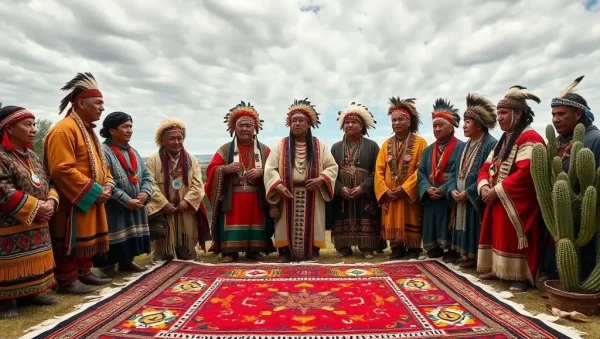
Dive into the sophisticated governance structures that shaped pre-colonial North America. Far from simple tribal bands, Indigenous nations developed complex systems of consensus, federation, and law that balanced individual freedom with communal well-being. This subcategory reveals how the Haudenosaunee Confederacy influenced democratic thought, how the Cherokee built a written constitution, and how leadership was often rooted in spiritual and ecological responsibility rather than coercion. Understanding these systems offers vital insights into alternative models of governance that remain relevant today, challenging Western-centric notions of statehood and power.
🏛️ The Haudenosaunee Confederacy: A Model of Federalism
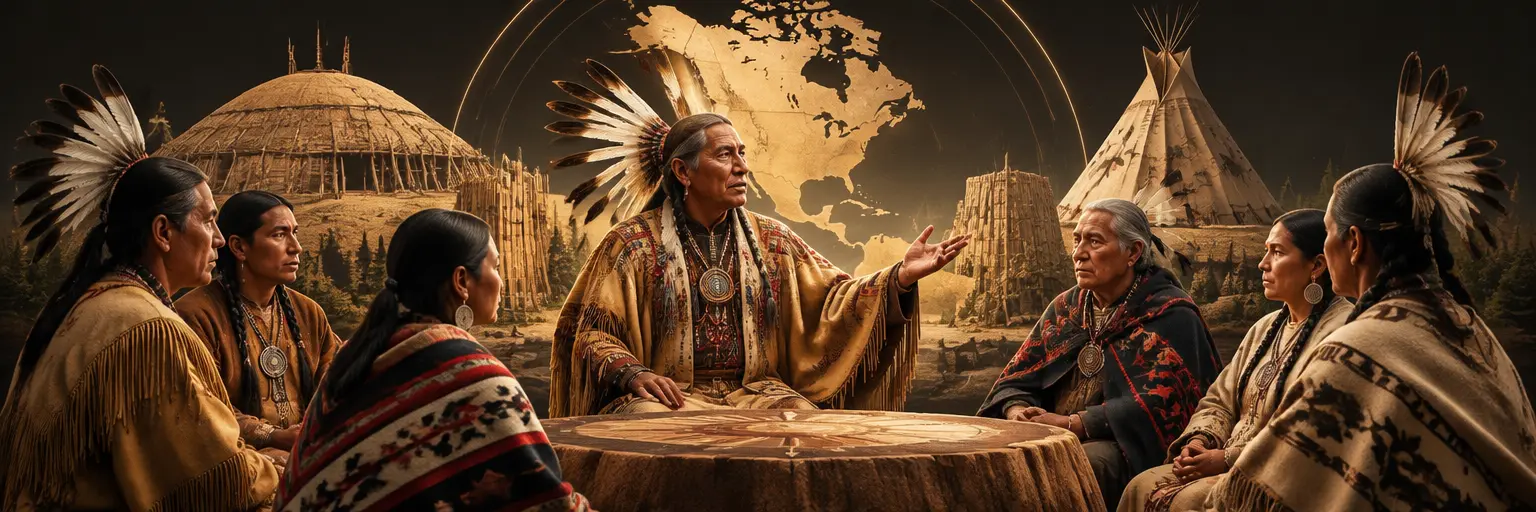
The Haudenosaunee (Iroquois) Confederacy, known as the “Great Law of Peace,” united five (later six) nations under a council of fifty sachems. This system, established centuries before European contact, featured a bicameral legislative process, checks and balances, and a clear separation between civil and military leadership. Significantly, women held the power to nominate and remove sachems, ensuring matrilineal oversight of political decisions. The Confederacy’s principles influenced colonial thinkers like Benjamin Franklin, who referenced it during the Albany Congress of 1754.
Beyond mere structure, the Confederacy operated on consensus rather than majority rule, with each nation holding veto power to prevent domination by larger groups. This decentralized federalism allowed for remarkable stability and adaptability across centuries. The Great Law also included provisions for amendment, the protection of individual rights, and a peace-focused foreign policy—an extraordinary achievement given the frequent warfare of surrounding societies. For modern political scientists, the Haudenosaunee model demonstrates that large-scale, multi-ethnic governance can thrive without a centralized coercive state.
⚖️ Consensus and Clan-Based Decision Making in the Plains and Woodlands
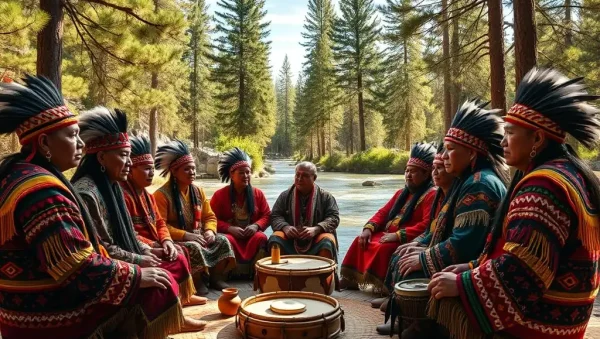
Across the Great Plains and Eastern Woodlands, political power was rarely concentrated in a single chief. Instead, clans—often traced through matrilineal lines—formed the basic political unit, with each clan appointing a council of elders to debate matters affecting the tribe. Decisions on war, peace, and resource allocation required unanimous agreement among council members, a process that could take days but ensured broad social buy-in. For example, the Ojibwe and Sioux used pipe ceremonies to open councils, reinforcing spiritual legitimacy for decisions made.
Leadership in these systems was persuasive, not coercive. A chief had no police or army; they led by example, generosity, and oratorical skill. If a leader lost community confidence, the clan quietly replaced them. This framework minimized factionalism and prevented the rise of tyrants. Furthermore, decisions regarding hunting territories or diplomatic alliances were integrated with ecological knowledge, as elders often held long-term environmental records passed down orally. Thus, governance was not a separate sphere but woven into kinship, ritual, and land stewardship, offering a stark contrast to adversarial, winner-take-all politics common in modern states.
🌾 Urban and Stratified Systems: Cahokia and the Mississippian Chiefdoms
Not all North American Indigenous systems were egalitarian. The Mississippian culture, centered at Cahokia near present-day St. Louis, developed a hierarchical society with a powerful priest-chieftain, monumental earthen pyramids, and a redistributive economy. Rulers were considered divine intermediaries between the sun and the people, controlling tribute of maize, hides, and shells from hundreds of satellite villages. This political structure facilitated large-scale labor coordination, as seen in the construction of Monk’s Mound—a 100-foot-tall earthen platform covering 14 acres.
The chiefdom’s authority was reinforced through a complex calendar system, astronomy, and iconography linking leaders with celestial beings. However, this stratified model proved fragile; around 1350 CE, Cahokia’s political center collapsed due to environmental stress, resource depletion, and possibly internal revolt. This case study highlights that centralized power in Indigenous North America was not an evolutionary dead end but an experimental response to agricultural surplus and trade networks. The Mississippian legacy persists in the mound-building traditions of the Natchez and other southeastern peoples, who retained a caste system into the 18th century, demonstrating a broad spectrum of governance from egalitarian bands to state-like polities.
📜 The Cherokee and Creek: Written Constitutions and Republicanism
In the 19th century, the Cherokee Nation in the southeastern United States adopted a written constitution modeled partly on the U.S. Constitution, but with distinct Indigenous principles. Drafted in 1827, the Cherokee constitution established a three-branch government—executive, legislative, and judicial—but also embedded provisions for communal land ownership and the protection of matrilineal clan rights. This document was a bold assertion of sovereignty in the face of Georgia’s forced removal laws, culminating in the landmark Supreme Court case Worcester v. Georgia (1832), which recognized Cherokee self-governance.
Similarly, the Muscogee (Creek) Confederacy developed a comprehensive constitution in 1867, creating a national council with proportional representation across towns and a written legal code. These innovations were not mere imitations but pragmatic adaptations, integrating traditional town council procedures with written law to resist U.S. encroachment. The Cherokee even established a national newspaper, the Cherokee Phoenix, printing laws in both English and Cherokee syllabary. These systems prove that Indigenous political thought was dynamic, capable of legal codification while preserving core values of consensus and kinship—an influential model for modern tribal sovereignty movements.
🕊️ Women’s Political Power and Clan Autonomy in the Southwest
Among the Pueblo peoples (Hopi, Zuni, and Rio Grande nations), political authority was deeply intertwined with religious societies, and women held substantial power through land ownership and clan matriarchs. Unlike European systems, public office was often restricted to men, but the real leverage lay in the clan house, where senior women allocated agricultural fields, controlled food stores, and influenced the selection of male leaders. In Hopi villages, the kikmongwi (village chief) was chosen with the approval of his mother’s clan, and his primary duty was to maintain harmony with the spiritual forces ensuring rain.
This system emphasized communal well-being over individual ambition. Theocratic councils, composed of priestly societies, made decisions on planting dates, trade, and warfare, with women holding veto power over male-initiated conflicts. The absence of a coercive police force was compensated by strong social sanctions, such as ridicule and temporary exile. For social scientists, the Hopi and Zuni demonstrate that political systems can function without a separate, autonomous state, embedding governance within religious and kinship networks. This model offers a powerful example of gender-balanced authority and ecological sustainability, still practiced in modified form across the Southwest today.
Frequently Asked Questions
What was the most influential pre-colonial Indigenous political system in North America?
The Haudenosaunee Confederacy is often cited as the most influential due to its sophisticated federal structure, consensus-based decision-making, and direct influence on colonial European thinkers like Benjamin Franklin. Its principles of checks and balances and female suffrage were revolutionary and continue to be studied as a model of decentralized governance.
Did Indigenous North American nations have written laws before European contact?
Most relied on oral traditions, wampum belts, and ceremonial records, but some, like the Cherokee in the early 19th century, adopted written constitutions after colonization. However, pre-contact systems used mnemonic devices and oral recitation to preserve law, which functioned effectively for centuries without alphabetic writing.
How were leaders chosen in North American Indigenous societies?
Leadership selection varied widely. In egalitarian bands, leaders emerged through demonstrated skill and generosity, while in chiefdoms like Cahokia, inheritance played a role. The Haudenosaunee used female-nominated sachems, and the Plains tribes often appointed war chiefs only for specific conflicts, maintaining social chiefs for day-to-day governance.
Did Indigenous political systems include any form of checks and balances?
Yes, prominently. The Haudenosaunee had separate councils for war and peace, and women could veto decisions. The Creek and Cherokee used multiple councils and judicial review. Even in simpler bands, consensus requirements and clan autonomy served as structural checks against concentrated power.
Are any of these Indigenous political systems still active today?
Absolutely. The Hopi Tribal Council, the Navajo Nation Council, and the Haudenosaunee Grand Council continue to govern under systems blending traditional practices with federal U.S. law. For instance, the Navajo Nation’s government includes both an elected president and a council respecting clan-based community representation, ensuring continuity of Indigenous governance.