Mathematical Systems in Astronomy: The Cosmic Blueprint of Indigenous America
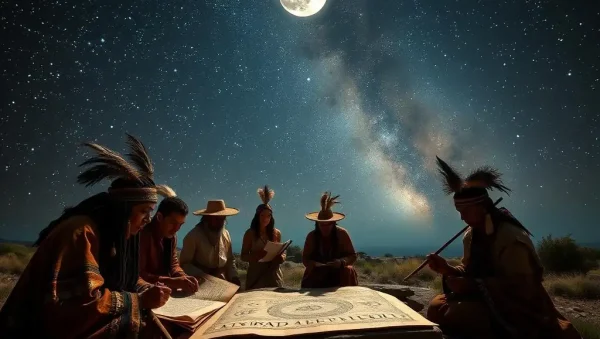
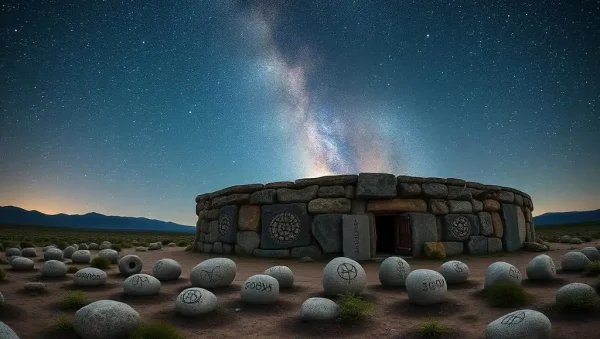
Unlock the sophisticated numerical frameworks that guided Indigenous astronomers across the Americas. This subcategory explores how Maya, Inca, Aztec, and other Native civilizations encoded celestial cycles into precise calendars, architectural alignments, and predictive models—long before modern mathematics formalized such systems. Discover the synergy of arithmetic, geometry, and observational astronomy that shaped their worldviews and technological achievements.
🌌 The Maya Long Count and Base-20 Mathematics
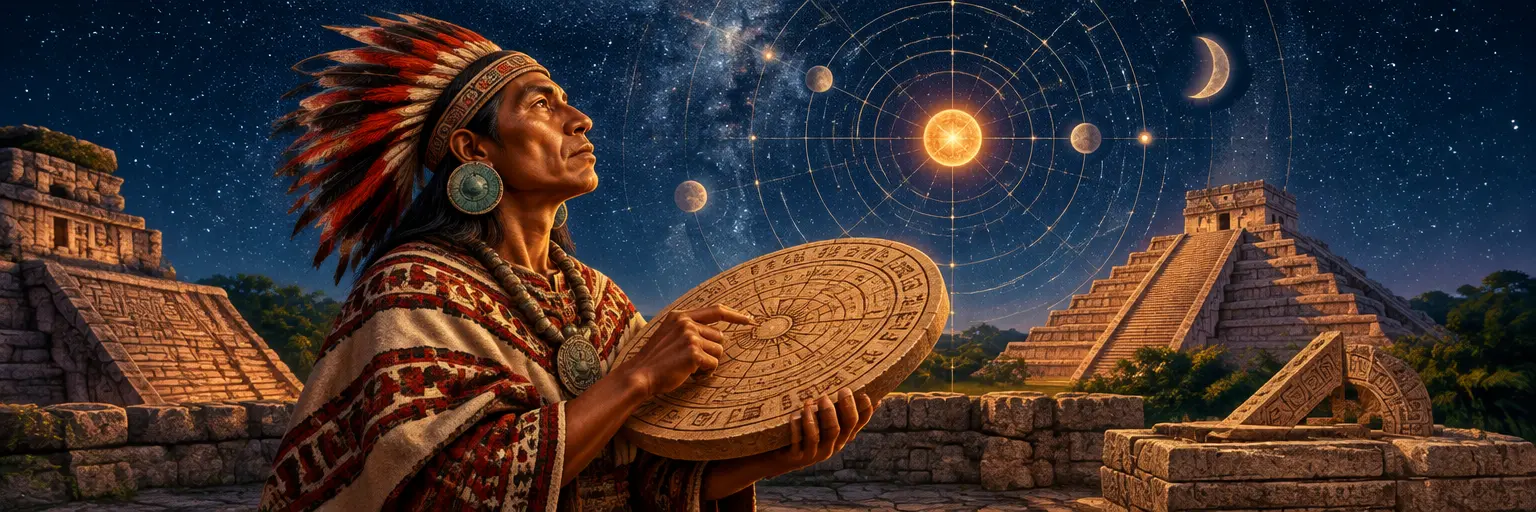
The Maya developed a vigesimal (base-20) numeral system featuring the concept of zero—a revolutionary abstraction absent in many Old World cultures. Their Long Count calendar integrated astronomical observations with cyclical time, tracking the precession of equinoxes and planetary synodic periods with remarkable precision. This mathematical backbone allowed scribes to compute eclipse cycles and the Venus table in the Dresden Codex, predicting celestial events centuries ahead.
Expect to learn how Maya mathematicians used bar-and-dot notation for place value, enabling calculations up to millions. Their calendrical round interlocked a 260-day ritual cycle with a 365-day solar year, creating a 52-year Grand Cycle. This system wasn’t just arithmetic; it was a cosmic ledger dictating agricultural, religious, and political life—proof that mathematical systems were inseparable from astronomical practice.
🔭 Inca Quipu and Celestial Accounting
The Inca Empire utilized quipus—knotted cords—as a binary-coded decimal system for census, tribute, and astronomical records. While often seen as administrative tools, recent research reveals quipus encoded solar and lunar observations, particularly for determining solstices and equinoxes. Inca astronomers at Coricancha aligned structures to the Pleiades and used horizon markers to track seasonal changes crucial for crop cycles.
Dive into how quipu knots represented numerical values via position, color, and knot type, enabling complex data storage without writing. The Inca divided the year into 12 lunar months with intercalary adjustments, demonstrating a pragmatic blend of arithmetic and empirical sky-watching. This subcategory highlights how Indigenous mathematics served practical astronomy, managing both state resources and ceremonial timing with astonishing accuracy.
🌒 Aztec Tonalpohualli and Solar Alignments
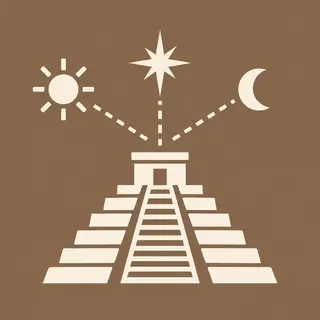
The Aztec (Mexica) employed a 260-day tonalpohualli (day count) and a 365-day xiuhpohualli (solar year), synchronized every 52 years in the New Fire Ceremony. Their mathematics used a vigesimal system for counting, but astronomical applications relied on modular arithmetic—tracking day names and numbers in cycles. The Templo Mayor in Tenochtitlan was aligned to cardinal directions and marked equinoctial sunrises, integrating geometry with ritual astronomy.
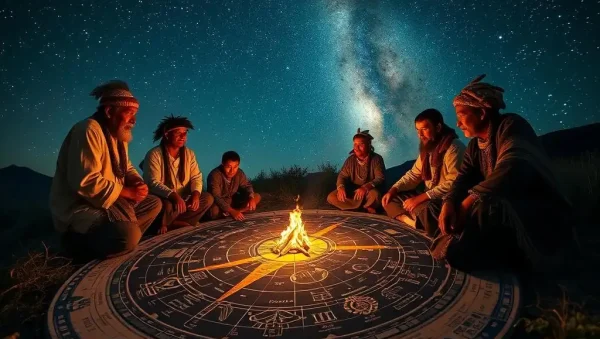
Details here reveal how Aztec codices recorded planetary movements, especially Venus as the morning star, associated with warfare. Their calendar wheel documents how mathematical remainders and multiplication were used to calculate festival dates. This section connects numeric systems to monumental architecture, showing that every temple was a physical calculator for predicting celestial patterns—an engineering feat of applied mathematics.
📐 Mesoamerican Precession and Eclipse Prediction
Beyond single cultures, mathematical systems in astronomy transcended borders—Maya, Zapotec, and Mixtec societies shared a common base-20 frame yet tailored it to local phenomena. They developed tables predicting solar and lunar eclipses using Saros-like cycles, with inscriptions showing counts of lunations and eclipse seasons to the day. These models required sophisticated interpolation and error correction, akin to modern numerical analysis.
You’ll grasp how they utilized arithmetic progressions and least common multiples to reconcile lunar months with solar years. For instance, the Maya calculated that 405 lunations equal 46 Tzolkin cycles, a ratio accurate within hours. This subcategory underscores that Indigenous mathematical systems were not primitive tally marks but dynamic tools for investigating cosmos—demonstrating high-level problem-solving that predates European contact.
🛰️ Legacy and Modern Validation
Contemporary satellite data and archaeoastronomy confirm alignments and predictions made by Indigenous mathematicians. For example, the Maya’s tropical year estimate of 365.2420 days differs by only 0.0002 days from modern values—a feat requiring centuries of systematic observation. Ethno-mathematicians now decode quipus and codices, revealing how these systems influenced early cartography and timekeeping in the Americas.
Expect discussions on how these mathematical frameworks are being revitalized in Indigenous communities today, from teaching base-20 arithmetic in schools to using quipus for cultural preservation. This section bridges past achievements with current relevance, proving that ancient mathematical systems in astronomy are not artifacts but living knowledge—offering sustainable models for contemporary time management and cosmic awareness.
Frequently Asked Questions
Did Indigenous Americans use the concept of zero?
Yes, the Maya independently developed a placeholder zero around 36 BCE, centuries before it appeared in India or Europe. Their zero, depicted as a shell, enabled large-number calculations and positional notation in base-20, essential for complex astronomical predictions like eclipse tables.
How accurate were Indigenous astronomical calendars?
Remarkably accurate—the Maya solar year was within 0.0002 days of modern measurements, and their Venus table predicted conjunctions within a few hours. Inca solstice markers and Aztec alignments also achieve sub-degree precision, empirically refined over generations.
What is the significance of the 260-day calendar?
The 260-day tonalpohualli likely originated from the overlap of human gestation (260 days) and the zenithal passage of the sun in Mesoamerica. It served as a ritual and divinatory cycle, intertwined with agricultural and astronomical rhythms, and paired with the 365-day year to form a 52-year calendar round.
Can quipus really encode astronomical data?
Yes, recent studies show quipus contain unary, decimal, and hierarchical coding patterns that record lunar phases, eclipse cycles, and solstice dates. While many quipus remain undeciphered, systematic patterns indicate their use as celestial ledgers alongside census data.
Did Indigenous math influence modern astronomy?
Indirectly, yes—their precise calendars were absorbed into colonial records and later informed anthropological studies. Modern archaeoastronomy uses their mathematical expressions to validate computational models, while Indigenous knowledge systems inspire innovative approaches to timekeeping and environmental prediction.