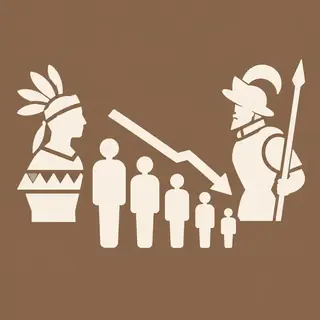
Exploring Other European Conquests in the Americas
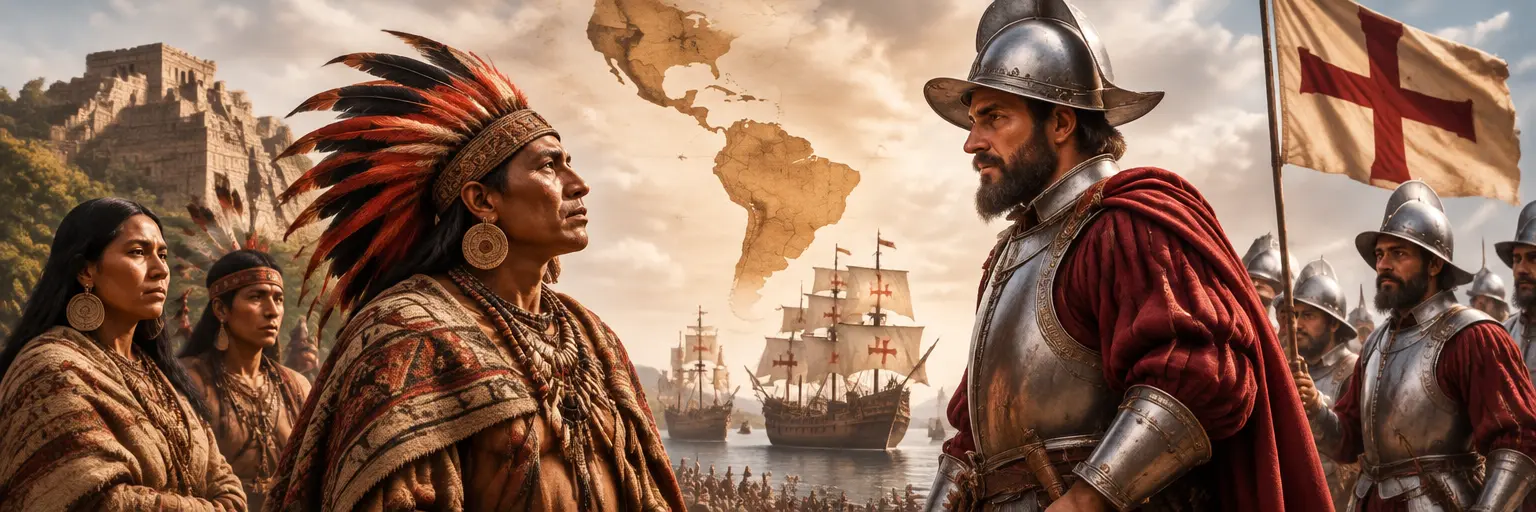
Beyond the well-known Spanish and Portuguese conquests, the Americas witnessed a complex web of other European powers—British, French, Dutch, and even Russian—each leaving a distinct imprint on indigenous civilizations. This subcategory delves into the lesser-known but equally transformative campaigns, alliances, and resistances that shaped the continent’s native peoples from the 16th to the 19th centuries. Here, you’ll uncover how these conquests disrupted, adapted, and sometimes preserved indigenous lifeways, offering a nuanced perspective on colonial impact beyond the Iberian narrative.
🌍 British Colonization and Indigenous Resistance
The British conquest of North America was not a single event but a sustained, piecemeal process driven by settler colonialism. Unlike Spanish extraction-focused rule, the British sought land for permanent settlement, leading to systematic displacement of tribes like the Powhatan, Pequot, and Iroquois. Expect to learn about pivotal conflicts, such as King Philip’s War (1675–1676) and the French and Indian War, where indigenous nations strategically allied with or against the Crown. Key takeaways include the role of trade alliances, the devastating impact of introduced diseases, and the legal mechanisms like the Proclamation of 1763 that attempted to regulate—but ultimately failed to protect—native sovereignty. This section also highlights native adaptation strategies, from diplomatic negotiations to armed resistance, which varied greatly by region and tribe.
For SEO-conscious readers, this facet covers keywords like British colonial policy, settler colonialism, and indigenous land dispossession. You’ll also find narratives of resilient leaders, such as Metacom and Pontiac, who forged pan-tribal coalitions. The content emphasizes how British conquest’s “frontier” nature created a unique dynamic of cultural exchange and conflict, influencing everything from language to governance in modern North America. Understanding this helps contextualize contemporary indigenous land claims and treaty rights, making this section vital for historians and students alike.
🇫🇷 French Explorations and Alliances in the Interior
French conquest in the Americas, particularly in Canada and the Mississippi Valley, took a markedly different path—one of trade over territorial domination. The French established alliances rather than subjugation, partnering with Huron, Algonquin, and Illinois nations for the lucrative fur trade. Expect insights into the coureurs des bois, Jesuit missions, and the pivotal Battle of the Plains of Abraham (1759), which ended French imperial ambitions. This subcategory reveals how French “soft conquest” allowed many indigenous groups to maintain political autonomy while integrating into a hybrid economic network. You’ll explore the devastating effects of missionization and epidemic diseases, yet also learn about the relative lack of large-scale land seizure compared to British or Spanish methods.
Content here focuses on terms like New France, fur trade economics, and indigenous diplomacy. A practical example includes the Iroquois Confederacy’s “Covenant Chain” with the Dutch, later adapted by the British, showing how French decline reshaped alliances. For those researching native agency, this section offers case studies of tribes like the Ottawa and Ojibwe who used French competition to their advantage. The narrative underscores that French conquest was more commercial and religious, leaving a lasting legacy in place names, métis cultures, and the geopolitics of North America—valuable for anyone tracing colonial impacts beyond military conquest.
🇳🇱 Dutch and Swedish Ventures: Trading Posts and Small-Scale Claims
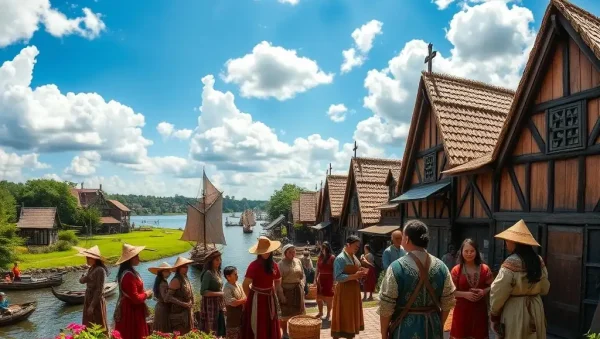
The Dutch and Swedish conquests were commercial outposts rather than vast territorial empires. New Netherland (centered on modern New York) and New Sweden (along the Delaware River) represent mercantile colonialism where profit from furs and tobacco dictated interactions. Expect to examine the Dutch purchase of Manhattan, the patroon system, and the short-lived Swedish fort at Christina. These ventures thrived on indigenous partnerships, especially with the Mohawk and Susquehannock, but collapsed under English pressure by the mid-17th century. This subcategory illustrates that not all conquests were military; some were economic and spatial, establishing precedents for property rights and trade laws that influenced later colonial powers. It also highlights how smaller European states carved niches, yet their lack of demographic weight meant quicker assimilation into Anglo-American dominance.
Key SEO phrases include Dutch West India Company, Swedish colonial history, and indigenous trade networks. Readers will gain a clear picture of how these conquests altered local power balances—e.g., firearms traded for beaver pelts escalating tribal warfare. The legacy is subtle but critical: Dutch legal concepts and Swedish log cabins permeated American culture. For indigenous communities, these brief occupations often meant disruption of traditional territories, yet also new opportunities for negotiation. This section is essential for understanding the multiplicity of European actors and how their smaller scale still yielded long-term consequences, especially in urban centers like New Amsterdam (future New York City).
🇷🇺 Russian Expansion in Alaska and the Pacific Northwest
A less-examined conquest is the Russian push into Alaska and down the Pacific coast, beginning in the 18th century. Driven by the maritime fur trade (sea otter pelts), Russian promyshlenniki (hunters) exploited Aleut, Alutiiq, and Tlingit communities often through forced labor and hostage-taking. Expect to learn about the Russian-American Company’s quasi-monopoly, the brutal subjugation of the Aleuts, and the resilient Tlingit resistance that kept Russians mostly coastal. Unlike other Europeans, Russians established colonial enclaves rather than large settlements, with missions like Sitka’s New Archangel. This subcategory shows how geography and resource extraction shaped a conquest that was simultaneously exploitative and, in some areas, reliant on intermarriage and creolization, creating a unique Russian-Indigenous legacy that persists in Alaskan place names and Orthodox Christian communities.
For search visibility, include terms like Russian colonization of Alaska, sea otter trade, and Aleut history. The content details the introduction of firearms, alcohol, and disease, which decimated populations, but also notes the establishment of schools and literacy in Russian. The eventual sale of Alaska to the U.S. in 1867 did not erase indigenous cultural persistence—rather, it shifted power dynamics. This section is a rich resource for those studying non-Iberian empires, polar geographies, and the trans-Pacific connections that made the Americas a global arena. It also offers a corrective to Eurocentric narratives, emphasizing that conquest took many forms, including ecological and demographic shocks.
🔄 Comparative Impacts and Indigenous Resilience Across Empires
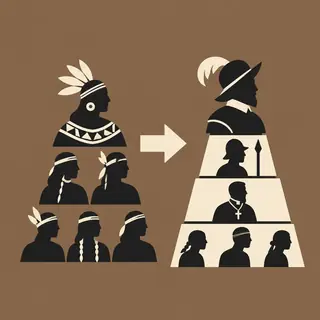
This final synthesis section compares how different European conquests—British, French, Dutch, Swedish, and Russian—interacted with indigenous societies, revealing patterns of cultural survival and transformation. Expect a comparative framework analyzing variables like settler vs. extractive economies, intensity of missionization, and native demographic collapse. For instance, French and Dutch systems often preserved native political structures, whereas British and Russian models led to greater land loss and coerced labor. This subcategory also highlights indigenous agency—alliances, trade monopolies, and hybrid identities—that allowed many communities to negotiate, resist, or accommodate these conquests. You’ll encounter cross-empire case studies, such as the Iroquois who played British against French, or the Tlingit who traded with Russians but maintained sovereignty through potlatch ceremonies.
SEO focus here includes phrases like comparative colonial studies, indigenous resilience, and colonial legacies. The content underscores that no single “conquest” was monolithic; each power’s methods produced distinct outcomes for native peoples, from the preservation of Inuit whaling traditions under Russian contact to the fragmentation of Algonquian communities under British pressure. This section serves as a powerful tool for scholars and educators, offering a holistic view that debunks myths of universal victimhood, instead emphasizing adaptation and continuity. By integrating these varied experiences, readers can better understand the mosaic of modern indigenous identities across the Americas—from Métis in Canada to Creole Alaskans.
Frequently Asked Questions
What is the difference between British and Spanish conquest methods?
British conquest focused on settler colonialism, pushing indigenous peoples off land for permanent agricultural settlements, often via treaties then broken. Spanish conquest emphasized extractive economies, using encomienda systems to control labor and tribute while maintaining some native villages. This led to different resistance patterns: British faced frontier wars, while Spanish saw large-scale revolts like the Pueblo Rebellion. Yet both caused massive demographic loss through disease and forced displacement.
Did any indigenous group successfully repel a European conquest?
Yes, several groups resisted successfully for decades. The Tlingit defeated Russian forces in 1804 and retained control of their territory. The Mapuche in Chile and Argentina held off Spanish and Chilean armies for centuries. The Iroquois maintained their confederacy’s independence by balancing French and British rivals. These cases show that indigenous military knowledge, alliances, and geographic barriers often neutralized technological advantages.
How did the fur trade affect indigenous societies?
The fur trade brought firearms, metal tools, and alcohol, which sometimes increased power but also dependency. It intensified intertribal warfare for hunting grounds, leading to displacement and resource depletion. Economically, it fostered partnerships but also debt and exploitation. Socially, it created new roles for women and established mixed-ancestry communities, such as the Métis. Over time, overhunting led to ecological collapse and weakened indigenous economies, making them vulnerable to conquest.
What role did disease play in "other" European conquests?
Disease was a silent conqueror, killing up to 90% of some populations before or during direct contact. For British, French, Dutch, and Russian expansions, smallpox, measles, and influenza spread faster than settlers, disrupting societies and enabling land seizures. The Russian conquest of the Aleuts is a stark example, where epidemic caused labor shortages, forcing even harsher treatment of survivors. Disease also shaped resistance, as colonizers used quarantine or “germ warfare” in a few cases.
How can I learn more about a specific tribe’s experience with these conquests?
Start with tribal websites and oral histories—many nations, like the Cherokee or Tlingit, have sovereign archives. Use academic databases like JSTOR or Google Scholar with search terms like “British colonization and Powhatan” or “Russian-American Company and Aleut.” Resources like The American Yawp and Native America: A History by Michael Leroy Oberg offer overviews. For primary sources, check colonial records from the Hudson’s Bay Company or Russian missionary accounts, which are now digitized for free access.