Post-Conquest Cultural Adaptations: Survival, Resilience, and Reinvention After 1492
When European powers arrived in the Americas, indigenous societies did not simply vanish—they adapted, resisted, and recreated their identities under unprecedented pressure. This subcategory explores how Native peoples across the continent transformed their governance, spirituality, economies, and daily life in response to conquest, disease, and colonial rule. You’ll discover not just loss, but remarkable strategies for survival, from syncretic religions to legal battles over land rights, and how these adaptations continue to shape modern indigenous communities today.
🛡️ Political and Legal Adaptations: Navigating Colonial Rule
After conquest, many indigenous groups used colonial legal systems to their advantage, filing lawsuits, petitioning courts, and negotiating treaties to protect their lands and autonomy. In Spanish America, the República de Indios created separate legal status for natives, while some communities hired Spanish lawyers to argue cases before the audiencias. In British North America, tribes like the Iroquois leveraged diplomacy between empires, playing French and English rivals against each other. These actions were not mere submission; they were calculated adaptations that preserved political power where possible.
You’ll learn specific case studies, such as the Zapotec communities in Oaxaca who maintained hereditary rule under Spanish supervision, or the Mapuche of Chile who successfully resisted full conquest for centuries through both warfare and later treaty negotiations. Understanding these legal and political maneuvers reveals how indigenous leaders became cultural brokers, blending traditional governance with colonial institutions to secure survival for their people.
🕊️ Religious Syncretism: Blending Beliefs for Continuity
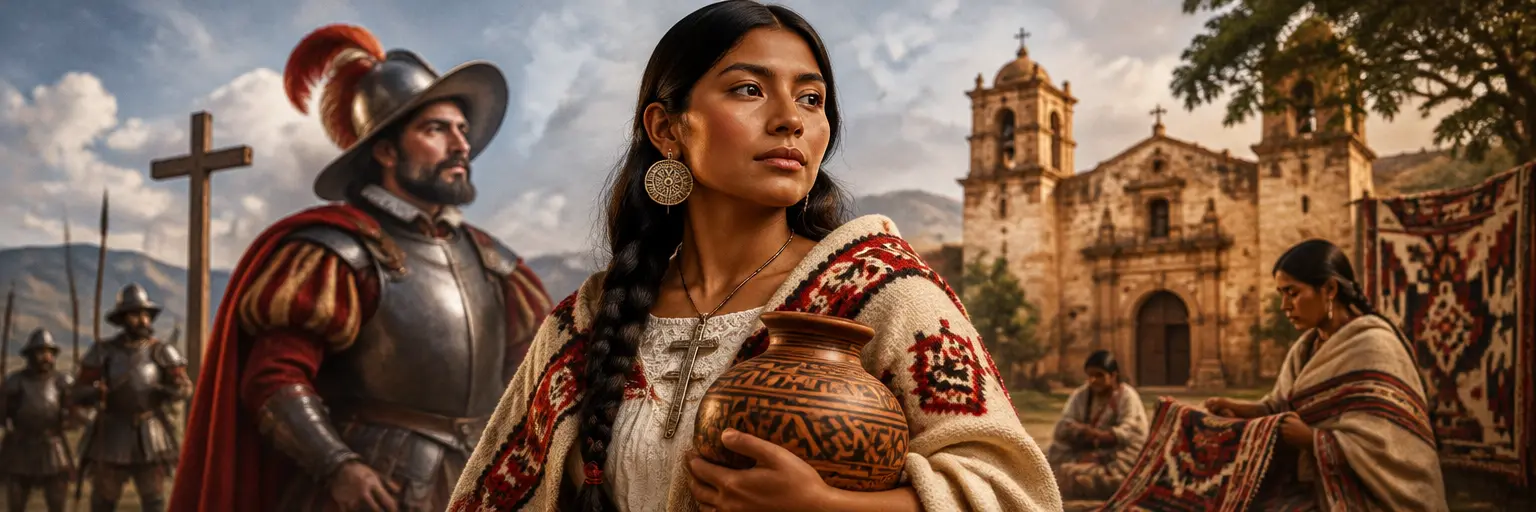
The forced conversion to Christianity might seem like total cultural erasure, but indigenous peoples often reinterpreted Catholic saints, rituals, and symbols through their own cosmologies. The Virgin of Guadalupe in Mexico is a prime example—appearing to an indigenous man and incorporating Tonantzin, an Aztec earth goddess. Similarly, in the Andes, the cult of the Pachamama merged with Catholic feast days, so offerings to the earth goddess happened under the guise of Christian celebrations. This syncretism allowed for the continuation of ancient spiritual practices without direct persecution.
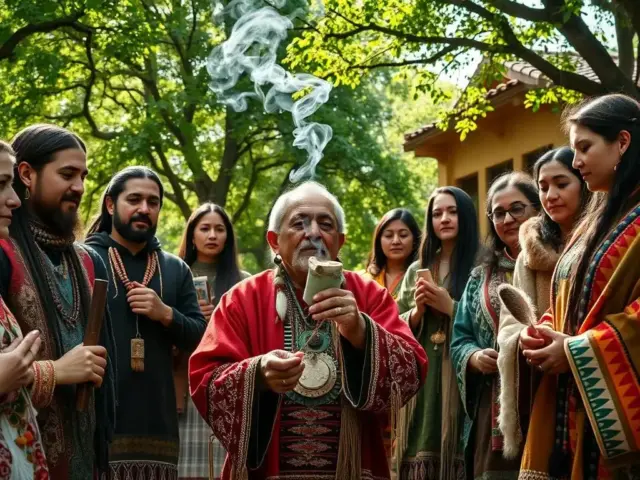
Expect deep dives into how Maya communities wove their own sacred calendar into the Catholic liturgical year, and how Amazonian groups used shamanic healing alongside Christian prayers. These adaptations were not superficial; they involved complex theological redefinitions that maintained indigenous worldviews while outwardly conforming. For modern descendants, these blended traditions are not hybrid "losses" but active, living systems that prove resilience and creativity under duress.
🌾 Economic and Agricultural Adjustments: From Tribute to Market
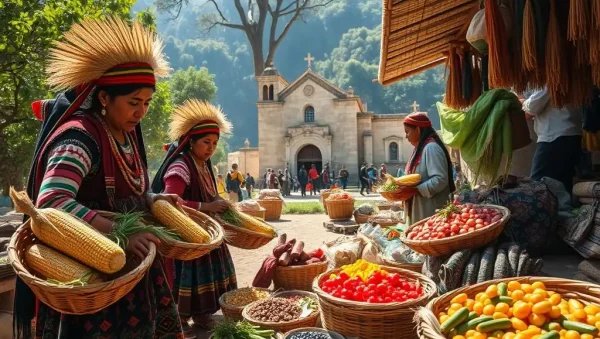
European colonial economies demanded tribute, labor, and new cash crops, forcing indigenous farmers to shift from subsistence agriculture to market-oriented production. The encomienda system in Spanish America compelled natives to provide gold, corn, or labor in exchange for supposed protection, but many communities responded by intensifying the cultivation of European-introduced crops like wheat and sheep while secretly maintaining milpas and quinoa fields. In the Andes, the Inca’s mit’a labor system was repurposed for silver mines, yet indigenous communities negotiated quotas and even hired substitutes to keep their own farms viable.
You’ll find analyses of how the potato, originally domesticated by Andeans, became a global staple while indigenous farmers themselves were displaced. However, this section also highlights how native knowledge of irrigation, terracing, and crop rotation was indispensable to colonial economies—European landowners depended on indigenous expertise. Over time, some communities transitioned to market niches, such as the Otomí who specialized in producing pulque (a fermented agave drink) for Spanish consumers, showing economic agency even within exploitative systems.
🏛️ Social and Kinship Structures: Rewriting Family and Community
Conquest disrupted indigenous social orders, but kinship networks, clan systems, and gender roles adapted to new realities. For instance, the Spanish introduced the concept of compadrazgo (spiritual co-parenthood), which indigenous groups adopted to solidify alliances beyond bloodlines, often linking families to Spanish patrons for protection. Meanwhile, the disruption of male mortality from warfare and disease meant women took on new leadership roles in agriculture and trade, and in some areas, like the Zapotec communities, women retained property rights that were unusual in European law.
This section explores how patrilineal and matrilineal systems flexed, with some groups like the Creek and Cherokee adopting European-style patriarchy to negotiate treaties, while others, such as the Hopi, preserved clan-based matrilineal inheritance. You’ll also see how urban migration to colonial cities created new "Indian" identities that blended ethnic groups, leading to the emergence of pan-indigenous communities that facilitated resistance later. Social structures were not static—they adapted to preserve core values while accommodating colonial pressures.
🎭 Cultural Expression and Material Life: Art, Language, and Memory
Despite bans, indigenous languages, textiles, pottery, and oral traditions persisted by going underground or morphing into new forms. The Nahuatl language survived not only in rural homes but also in legal documents, as indigenous scribes translated colonial records into their own script. Textile patterns in the Andes encoded pre-Columbian cosmology, with weavers hiding symbols like the stepped cross (Chakana) inside Christian designs. Similarly, the Karen (or “dance of the conquistadors”) in Guatemala reenacted the conquest itself, yet the dancers wore masks and costumes that subtly evoked Maya deities.
Expect examples of how indigenous chroniclers, such as Guaman Poma de Ayala in the Andes or Don Domingo de San Antón in Mexico, wrote bilingual histories that preserved native perspectives. Material culture adapted too: glass beads replaced shell wampum in some North American tribes, but wampum belts retained diplomatic power. This section emphasizes that cultural expression became a battleground—each blanket design, song, or carved saint was a statement of identity that survived colonial erasure attempts, proving that art and language were not just traditions but revolutionary acts of memory.
Frequently Asked Questions
What is the most common form of cultural adaptation after conquest?
Syncretism in religion, blending indigenous and Catholic practices, is the most visible adaptation. For example, many communities celebrate Day of the Dead combining pre-Hispanic ancestor worship with All Saints’ Day, using altars and marigolds that predate European influence. This allowed spiritual continuity without open conflict.
Did indigenous legal strategies actually work in colonial courts?
Yes, often more than expected. In Spanish America, native communities won land disputes against Spanish landowners by presenting pre-conquest maps and records. In Mexico’s Yucatán, Maya villages sued successfully to maintain communal lands in the 17th century, using colonial legal language to defend traditional ownership.
How did indigenous women fare under colonial rule?
They adapted by taking new economic roles, especially as markets expanded. In the Andes, women dominated local trade and muleteering, and they preserved weaving techniques that became cash income. Some, like the Mestiza leaders of Cochabamba, even managed properties and influenced politics despite restrictive Spanish laws.
Were there any full-scale cultural rejections of everything European?
Yes, but rare. The Shuar of Ecuador and Amazon groups often rejected missions and labor drafts by moving deeper into forests, maintaining autonomy. More famously, the Pueblo Revolt of 1680 expelled the Spanish for 12 years, destroying churches and returning to traditional kivas, though adaptations later resumed after reconquest.
Can we still see post-conquest adaptations today?
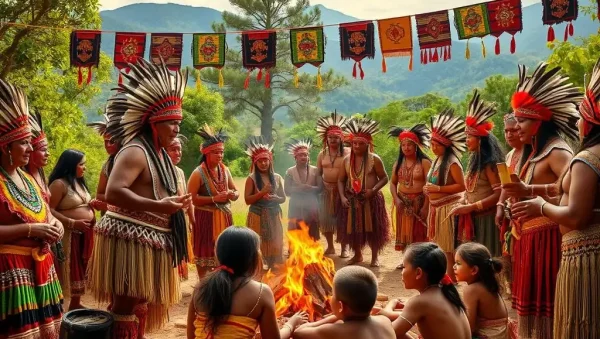
Absolutely. Modern indigenous movements, like the Zapatistas in Mexico, mix ancient communitarian decision-making with contemporary human-rights discourse. Festivals such as the Inti Raymi in Peru are rooted in Inca solstice ceremonies but now incorporate Catholic processions and tourism, showing a continuous, living legacy of adaptation.