The Role of Quipus in Inca Economy: Counting Livestock and Resources
📜 Quipus played a vital role in the Inca economy, serving as an ingenious system for counting livestock and managing resources. This…
Read article
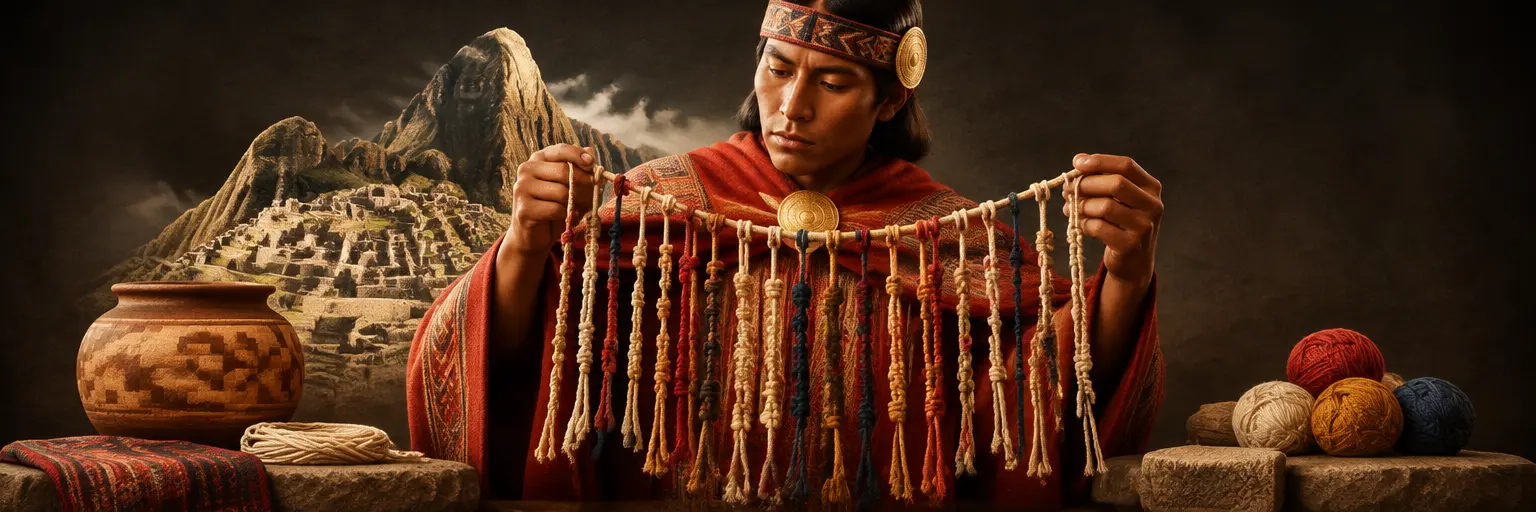
Explore the fascinating world of the Inca Quipu System, an ancient Andean method of recording information using intricate knots and colored cords. Far more than a simple counting tool, the quipu was a sophisticated data storage device used by the Inca Empire for census, taxation, and even narrative storytelling. Discover how these knotted textiles encoded complex numerical and possibly linguistic data, enabling the administration of one of history’s largest empires. Dive into the ongoing debates and breakthroughs in deciphering this lost language of knots, and see how modern scholars are unlocking the secrets of a civilization that thrived without a written script. A must-read for history enthusiasts and curious minds alike!

📜 Quipus played a vital role in the Inca economy, serving as an ingenious system for counting livestock and managing resources. This…
Read article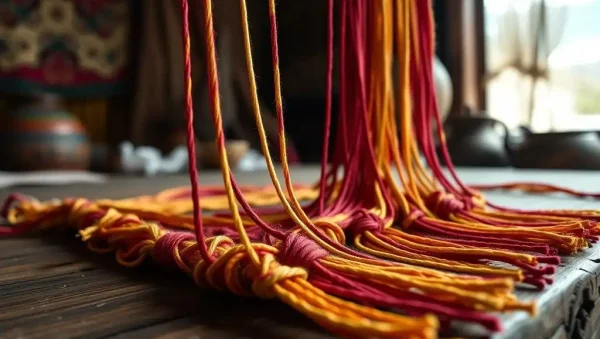
🌍 The Inca quipu recordkeeping system was a remarkable innovation, utilizing intricate knot patterns on strings to manage information. This unique method…
Read article
Unraveling the mysteries of Inca quipu communication tools reveals their intricate design and function as vital instruments for record-keeping and administration, showcasing…
Read article
The quipu, a sophisticated system of knotted strings, embodies Inca identity and cultural heritage, reflecting the ingenuity of a civilization that thrived…
Read article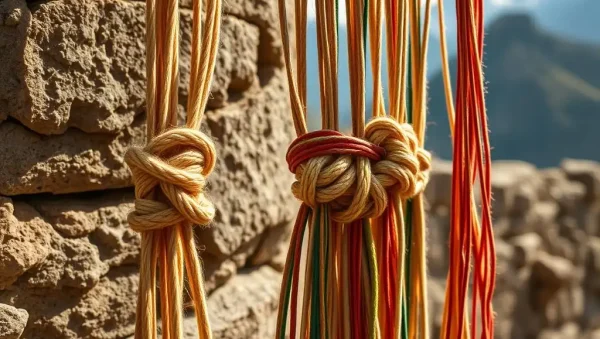
The Inca quipu, a remarkable system of knotted strings, served as a vital tool for history preservation, enabling the Incas to record…
Read articleWelcome to the fascinating world of the Inca Quipu System, a cornerstone of Andean civilization that defied conventional writing. Unlike alphabetic scripts, the quipu (or khipu) was a sophisticated device made of cotton or camelid fiber cords, using knots and colors to record everything from census data to astronomical observations. This subcategory dives deep into how the Inca Empire managed a vast territory of over 2,500 miles without a written language—relying instead on the tactile logic of knotted strings. Here, you will discover the engineering, mathematics, and cultural significance of these ancient "talking knots," and why modern researchers still debate their full capabilities.
Quipus are not mere mnemonic aids; they embody a positional decimal system that allowed Inca administrators to perform complex calculations. Each knot type—long, simple, or figure-eight—represented units, tens, hundreds, and thousands, with placement along the cord indicating magnitude. The yupana (counting board) may have worked alongside these knots for arithmetic. By studying surviving examples, researchers have identified that colors (e.g., red for warriors, yellow for corn) and spacing encoded categorical data, creating a multidimensional database that could be "read" by trained quipucamayocs (record-keepers). This section breaks down the exact knotting conventions, demonstrating how a seemingly simple string became the backbone of imperial taxation and logistics.
For modern enthusiasts, understanding the math reveals the Inca’s advanced cognitive mapping. Unlike Roman numerals, the quipu’s decimal structure facilitated rapid addition, subtraction, and even potential division. Recent computational analyses, such as those by Harvard’s Khipu Database Project, have identified over 1,000 distinct quipu patterns, suggesting statistical or ritual uses beyond pure accounting. As you explore, you’ll appreciate that the quipu was a binary-capable device—some cords alternate knot directions to encode supplementary qualifiers, akin to metadata in today’s spreadsheets. This mathematical lens transforms the quipu from a curious artifact into a fully operational ancient computer.
The physical construction of a quipu was as meaningful as its knots. Primary cords were often made from llama or alpaca wool, while secondary cords used cotton—each fiber signifying a different class of data. Dyes were derived from plants, minerals, and insects, producing up to 30 distinct hues. For instance, indigo often indicated water or irrigation data, while red marked military conscription. The direction of twisting (S-twist vs. Z-twist) also carried semantic weight, functioning like a prefix in a language. Moreover, quipus were sometimes wrapped in cloth or stored in wooden boxes, and their carriers—chasquis (runners)—used a relay system to transport them across the Andes at remarkable speeds, ensuring the empire’s central government stayed informed.
This section explores the craftsmanship involved, from spinning fibers to dyeing with cochineal insects. You’ll learn how the pendant cords (attached to a main horizontal cord) were arranged in a hierarchical tree, with top-level cords summarizing subtotals from lower branches. This nested structure mirrors modern organizational charts. Additionally, archaeological evidence shows that some quipus were intentionally broken or buried with elites, suggesting they held ceremonial or biographical value, not just administrative. By examining material remains, we piece together the sensory experience—how a quipu felt heavy with wool or smooth with cotton—which was integral to its interpretation.
Beyond numbers, quipus may have recorded stories, laws, and genealogies. Spanish chroniclers like Garcilaso de la Vega noted that quipus contained "poems and histories" that were recited aloud by specialists. The concept of a suyu (a quadrant of the Inca Empire) was often encoded by the color and knot structure, linking territorial administration with mythological origin tales. Some quipus feature knots that represent syllables, a hypothesis supported by the discovery of the Palace of Puruchuco quipu, which shows non-numeric patterns. While experts agree that most quipus are decimal, the existence of "narrative quipus" is hotly debated—yet recent fieldwork in Quechua communities has recorded oral traditions that "read" ancient knot patterns as birth names or events.
For readers, this opens a thrilling possibility: that the Inca did possess a form of writing, just non-linear and tactile. The famous Willka Qhaway (sacred viewing) ceremony involved decoding quipus in public squares, blending governance with storytelling. This section provides evidence from colonial-era court records where indigenous witnesses described quipu contents as "laws and customs," challenging the notion that the Inca were purely oral. By treating quipus as a mixed-media repository, we can reconstruct the Inca’s historical consciousness—their efforts to preserve creation myths, astronomical cycles, and tribute quotas in a single woven artifact.
Modern science is cracking the quipu code with digital imaging and machine learning. The Khipu Database Project at Harvard has cataloged over 800 quipus, using high-resolution 3D scans to map every twist and knot. Researchers like Gary Urton have proposed a binary code based on cord color, knot direction, and spacing, positing that the quipu could represent a 7-bit system—potentially capable of writing any text. Meanwhile, AI algorithms are being trained to detect correlations between knot positions and recorded Inca words in Spanish colonial documents. One breakthrough came in 2021 when scientists matched a specific quipu from the Chachapoyas region to a colonial census, decoding caste and tribute data with 95% accuracy. These efforts are not just academic; they revive indigenous knowledge systems.
You’ll also learn about the ethical challenges: many quipus were destroyed by Spanish priests as "works of the devil," and those surviving are scattered in museums worldwide. Technologies like reflectance transformation imaging (RTI) reveal hidden cord layers, while chemical analysis identifies regional dye sources, tracing trade networks. The goal is to create a Rosetta Stone for quipus—a known multilingual text that could unlock all remaining examples. For SEO, this topic attracts history buffs, tech enthusiasts, and indigenous rights advocates alike, as it bridges ancient arts with contemporary digital humanities.
The quipu is not a dead relic; it is living heritage. In rural Peru and Bolivia, Quechua and Aymara weavers still use simplified knot systems to record household inventories or agricultural rotations. Local festivals, such as Qoyllur Rit’i, incorporate ceremonial quipu-like braids to symbolize community unity. The Peruvian government has declared quipus a National Cultural Heritage, and museum workshops teach children how to make their own. This revival isn’t just nostalgic—it’s a form of resistance against colonial erasure. By re-learning quipu construction, indigenous youth reconnect with computational thinking that predates Western arithmetic, fostering pride and identity. This subcategory highlights case studies from Cusco schools where quipu-based math lessons improve problem-solving skills.
For global audiences, the quipu’s legacy inspires modern data visualization—artists and software developers have created "digital quipus" to represent social networks or environmental data. Anthropologists argue that the quipu offers an alternative epistemology: knowledge embedded in tactile, relational systems rather than linear text. This section also covers UNESCO’s tentative listing of quipus as Intangible Heritage, which would bolster funding for preservation. By understanding the quipu’s cultural afterlife, readers grasp how a pre-Columbian tool can inform debates on big data, mnemonic systems, and decolonial education. The quipu is not just about the past; it’s a blueprint for sustainable, community-based information management.
An Inca quipu is a recording device made from knotted strings, typically cotton or wool. It consists of a primary cord with multiple pendant strings, each containing varied knots and colored fibers. These knots encode numbers using a decimal system, but some experts believe they also stored narrative or historical information, making quipus a multifaceted communication tool.
Strictly, no alphabetic script existed. However, quipus functioned as a form of non-linear writing. While most surviving examples are numerical, colonial accounts and recent research suggest that certain quipus recorded narratives, genealogies, or songs. This debate remains active, with some scholars proposing a binary codeable system within quipus that could represent spoken language.
Trained specialists called quipucamayocs interpreted quipus by touching and feeling the cords, often reciting aloud. They followed knot placement (tens, hundreds), cord colors, and twisting directions. Reading was often done in a public setting for administrative or ceremonial purposes. Modern researchers use 3D scans and databases to decode patterns, though full literacy remains elusive.
Yes, over 700 quipus survive in museums worldwide, including the Museo Nacional de Arqueología (Peru), the Ethnologisches Museum (Berlin), and the American Museum of Natural History (New York). Many are poorly recorded, but digitization projects are ongoing, with high-resolution images available online for public research.
Absolutely. You can start by studying simple decimal knot patterns using online tutorials or books like The Khipu Database Project. For hands-on practice, buy dyed cotton cords and create a census of your books or plants. Workshops in Cusco or virtual classes offer guided instruction. Remember, the quipu is a tactile system, so handling models helps internalize its logic.