Discover the Rich Diversity of Other Indigenous Writing Systems
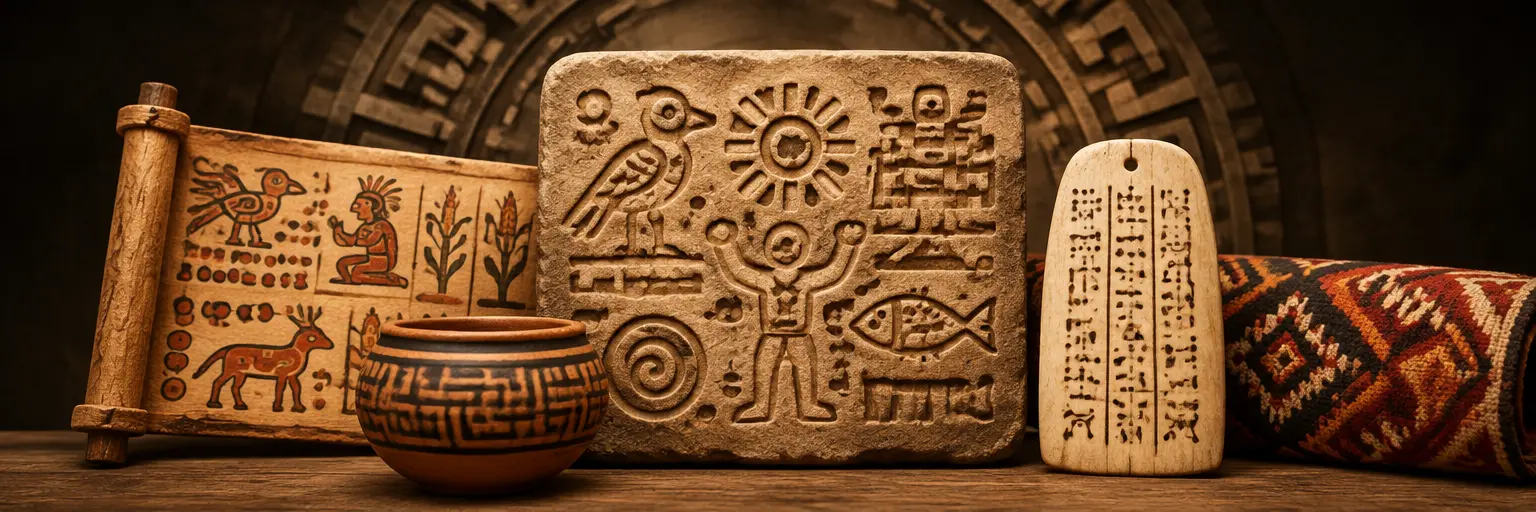
Beyond the well-known Maya glyphs and Aztec pictographs, the Americas harbored a remarkable array of lesser-known writing systems, each uniquely adapted to its culture’s needs. This subcategory explores these alternative scripts, from Andean knotted cords to Mesoamerican codices in obscure languages. Here, you’ll uncover how Native peoples recorded history, astronomy, and ritual knowledge in ways that challenge Western definitions of “writing.” Whether you’re a student, researcher, or curious enthusiast, this page offers a deep dive into the ingenuity of Indigenous communication systems, emphasizing their complexity, regional diversity, and cultural significance.
🧵 Andean Khipu: Knots as a Writing System
The Inka and earlier Andean civilizations used khipu (or quipu)—cords with colored, knotted strings—to record numbers, census data, and possibly narratives. Unlike phonetic scripts, khipu encoded information through knot position, color, and spinning direction, creating a three-dimensional database. Recent research suggests some khipu may contain binary coding or narrative elements, not just accounting. Explore how these fibrous “books” were read by specialized khipukamayuq (record keepers) and why Spanish colonizers actively destroyed them, making surviving examples precious cultural artifacts.
For visitors, this section clarifies the practical and ceremonial roles of khipu in Inka administration, including tax collection and historical poetry. You’ll learn how modern scholars are using digital imaging and statistical analysis to decode patterns that may represent syllables or names. Expect comparisons to other non-linear writing systems, plus guides to identifying genuine khipu versus modern fakes. This knowledge enriches your understanding of how intellectual storage can exist without alphabets, expanding your definition of literacy in the ancient world.
📜 Zapotec and Epi-Olmec Scripts: Early Mesoamerican Innovations
Long before Maya hieroglyphs, the Zapotec of Oaxaca (c. 500 BCE) developed one of the Americas’ earliest scripts, seen in stone monuments like San José Mogote. Similarly, the Epi-Olmec culture (late Preclassic) produced the La Mojarra Stela, inscribed with a complex logosyllabic text that remains partially undeciphered. These scripts mix ideograms and phonetic signs, recording rulers, dates, and rituals. This subcategory examines their evolution, distinctive glyph shapes, and their influence on later writing traditions in the Isthmus region.
Here, you’ll find detailed breakdowns of syllabic charts proposed by epigraphers, plus controversies over whether these systems are fully deciphered or speculative. We highlight key artifacts—like the Tuxtla Statuette and Teotihuacan-style signs—to show how writing varied within Mesoamerica. Practical sections help you distinguish Zapotec glyphs from Maya ones through use of day signs and calendrical notations. By the end, you’ll appreciate how these “other” systems were hotbeds of innovation that shaped later scripts, making them essential for any serious study of Indigenous literacy.
🐚 Michoacán and Central Mexican Pictography: Beyond Aztec Codices
While the Aztec’s pictographic manuscripts (like the Codex Mendoza) are famous, many regional traditions flourished outside Tenochtitlan. The Purépecha of Michoacán used rolled bark-paper books with stylized figures for tribute, while the Mixtec produced pictorial histories like the Codex Nuttall with complex place signs and personal names. Additionally, the Teotihuacan mural tradition includes emblem glyphs that may represent early writing. This subcategory focuses on these non-Maya, non-Aztec visual languages, emphasizing how color, gesture, and spatial arrangement conveyed meaning rather than phonetics.
Expect step-by-step guides to reading a Mixtec birth narrative or a Purépecha tribute list, with annotated images. We discuss how these systems were performative, meant to be read aloud by specialists, and how they recorded calendars, boundaries, and genealogies. Practical comparisons to Aztec tlacuilo (scribe) traditions illuminate shared vocabularies while highlighting local adaptations. For researchers, we include recent advances in taphonomic analysis of pigments and paper fibers to date and authenticate artifacts. This nuanced view shows that “pictography” is not primitive but a sophisticated semiotic system tailored to each community’s needs.
🌾 Rongorongo and the Limits of Decipherment: The Rapanui Mystery
The Rongorongo script of Easter Island (Rapa Nui) is one of the most enigmatic Indigenous writing systems ever discovered. Consisting of glyphs (possibly depicting plants, animals, and human forms) incised on wooden tablets, it was first recorded in the 1860s after the population had been devastated by slavery. Scholars still debate whether Rongorongo is true writing, a proto-writing, or a mnemonic device. This subcategory explores its unique reverse boustrophedon (alternating line direction, with bottom lines flipped) and attempts at phonetic readings using comparative Polynesian linguistics.
Here, you’ll learn about the hardware—the toromiro wood tablets—and how carbon dating places them post-European contact, complicating theories of ancient origin. We present leading hypotheses, from a possible link to Andean khipu to independent invention, but we emphasize the absence of Rosetta Stone and the ethical challenges in destructive sampling. Practical sections offer a visual dictionary of common glyphs and examples of statistical pattern analysis that test for syntax. This discussion broadens perspectives on what “writing” can be and why some systems resist conventional decipherment, making it a fascinating case study for linguists and puzzle lovers alike.
📚 Mesoamerican Marginal Scripts: Totonac, Otomí, and Others
Many Indigenous groups in Mexico and Central America used marginal scripts—systems that were less centralized than Aztec or Maya but still served important roles. For example, the Otomí of Hidalgo created pictorial annals that combined native elements with Spanish influence, while the Totonac left stelae with non-Maya glyphs that remain poorly understood. This subcategory also covers post-contact adaptations, where Indigenous scribes used Latin letters to write their languages (e.g., Nahuatl, Quechua) but retained native syntax and concepts, creating unique hybrids like the Cantares Mexicanos.
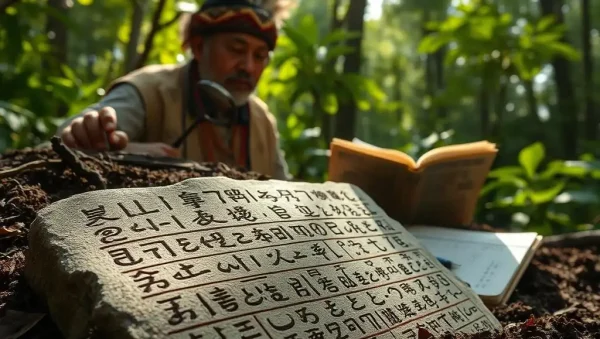
Readers will discover how these scripts were used for land titles, religious texts, and community histories after colonization. We provide side-by-side comparisons of pre-contact vs. colonial-era documents to highlight continuity and change. Special attention is given to epigraphic fieldwork—how archaeologists locate and document such inscriptions in caves or hilltop shrines. Additionally, we address the politics of heritage: how descendant communities are reclaiming these scripts today for cultural identity and language revitalization. This section ensures a comprehensive overview, showing that “other” writing systems are not rare anomalies but a vibrant tapestry of human expression across the hemisphere.
Frequently Asked Questions
What qualifies as an “Indigenous writing system” beyond Maya or Aztec?
Any deliberate, visual system that encodes or codifies information—including khipu knots, pictographs, logograms, or syllabaries—created by Native American groups. This includes Zapotec, Epi-Olmec, Mixtec, Purépecha, and Rongorongo, among others. Some scholars debate if khipu or pictography count as “writing,” but they functioned as record-keeping and communication tools.
Are any of these scripts fully deciphered?
No, but several are partially understood. The Zapotec and Epi-Olmec have identified calendrical and phonetic elements but lack complete translations. Mixtec pictorial narratives are read with known place names and personages, though many nuances remain opaque. Rongorongo has no agreed-upon decipherment, and no single script here has a Rosetta Stone equivalent.
How do I tell a khipu from a decorative cord? What is its code?
Khipu are structured, with standardized knots in horizontal or vertical arrangements, often using seven colors and specific knot types (single, long, double) for numbers or categories. Genuine examples show repeatable patterns and are tied to a primary cord, unlike decorative textiles. Non-numeric readings are still speculative, so judge by provenance and complexity.
Why were most of these writing systems destroyed or lost?
Spanish colonization, religious persecution, and the forced assimilation of Indigenous peoples led to mass burning of books (e.g., in Maya and Aztec contexts), while khipu were ordered destroyed as “idolatrous.” Diseases and slave raids also disrupted the knowledge classes who read these scripts. Surviving pieces are rare, often from caches or imported to Europe.
Can I learn to read or recreate these scripts today?
Yes, but with caution. Linguistics and anthropology courses teach how to analyze glyphs using methodologies. For khipu, you can learn knot notation but full narrative reading is unverified. Many Indigenous communities now teach ancestral scripts (e.g., Mixtec) as part of language revitalization. Always follow ethical guidelines to respect cultural protocols and avoid misrepresentation.