Bridging Worlds: The Impact of Syncretism on Indigenous Social Structures
🌍 Indigenous social structures syncretism played a crucial role in blending traditional beliefs with new influences, shaping the resilience and adaptability of…
Read article
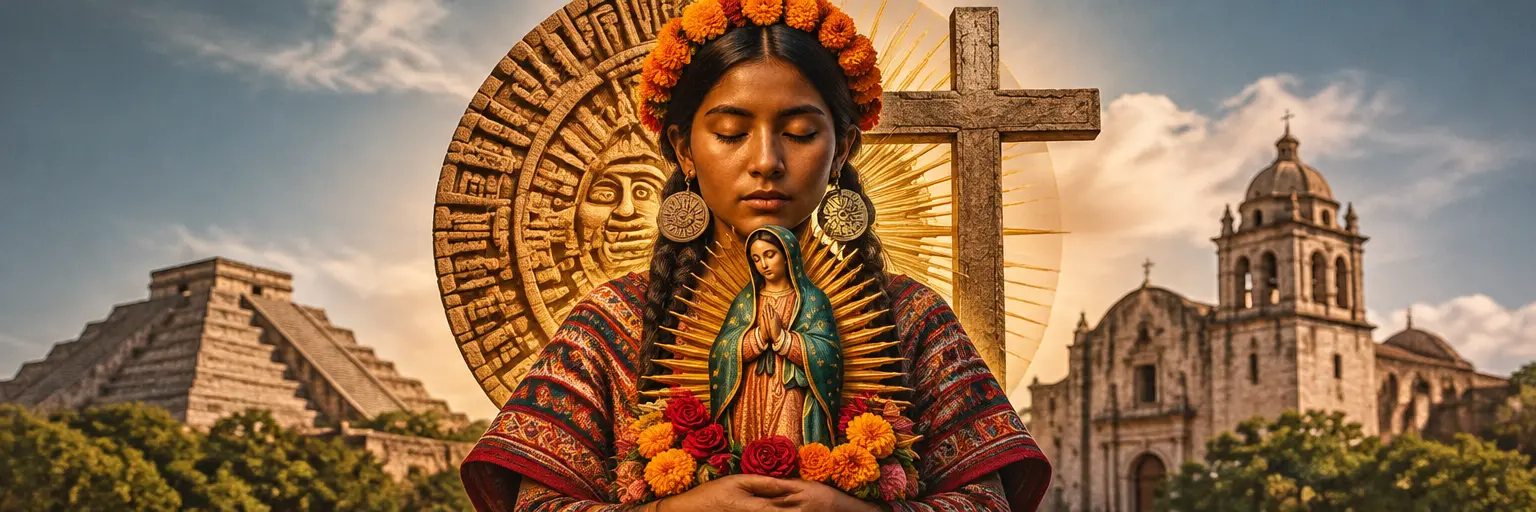
Syncretism in postcolonial religions reveals how Indigenous American spiritual traditions have dynamically adapted, resisted, and interwoven with colonial impositions, creating vibrant, hybrid belief systems that endure today. From the fusion of Catholic saints with ancestral deities to the revitalization of ancient rituals within modern frameworks, these practices highlight the resilience and creativity of native peoples. Explore how symbols, ceremonies, and cosmologies blend, forging unique identities that honor the past while navigating contemporary realities—a testament to living cultures that refuse erasure.
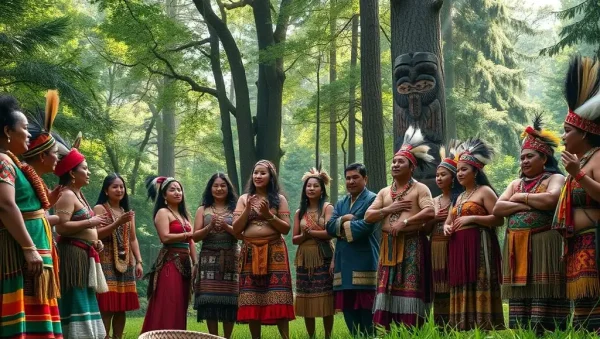
🌍 Indigenous social structures syncretism played a crucial role in blending traditional beliefs with new influences, shaping the resilience and adaptability of…
Read article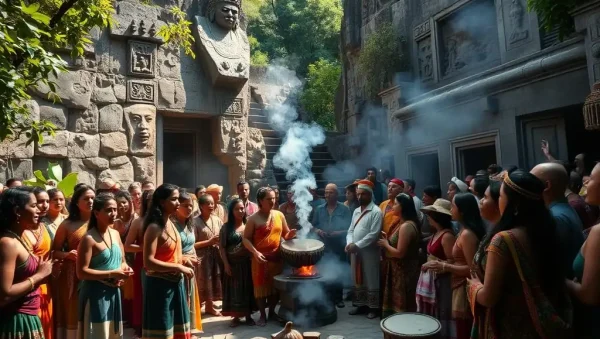
🌍 Indigenous syncretism in religions reveals how ancient practices and beliefs have shaped contemporary spiritual landscapes. By intertwining indigenous philosophies with new…
Read article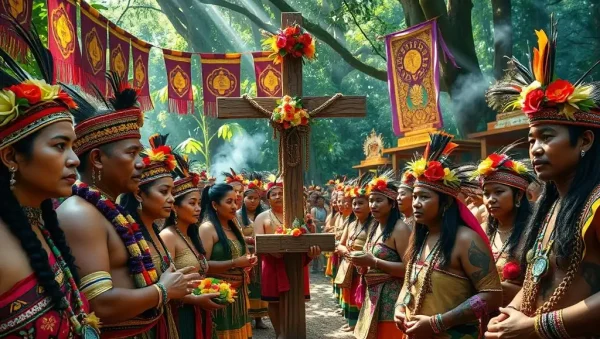
Exploring the rich tapestry of indigenous cultures and syncretism, this article delves into how postcolonial religious narratives intertwine myth and faith, revealing…
Read article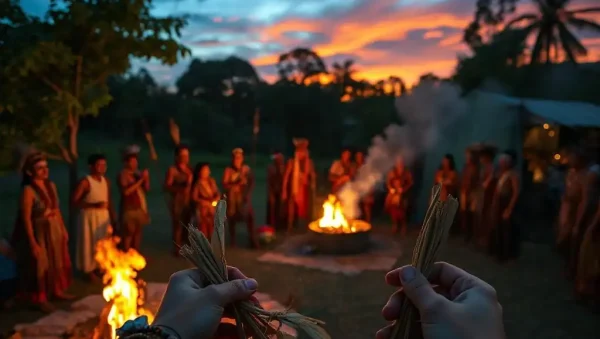
🌍 Indigenous spiritual movements history reveals how syncretism fosters resilience and renewal among Native cultures. By blending traditional beliefs with new influences,…
Read article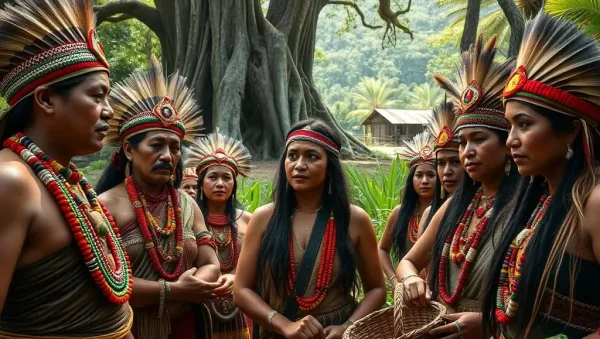
🌍 Indigenous syncretism and colonization reveal how Indigenous cultures adapt and thrive amidst adversity. This article explores the rich tapestry of blended…
Read articleWelcome to our deep dive into syncretism in postcolonial religions, a vital lens for understanding how Indigenous civilizations of the Americas have blended ancestral beliefs with colonial impositions. This subcategory reveals the resilient, adaptive spiritual landscapes that emerged after European contact, where Catholic saints, Andean deities, and Mesoamerican rituals interweave. Here, you’ll uncover the dynamic processes of cultural negotiation—not as loss, but as creative survival. By examining historical contexts and contemporary practices, we illuminate how Indigenous peoples transformed foreign religions into vehicles of resistance, identity, and continuity. Expect rich case studies from Maya, Quechua, Nahua, and other communities, all framed within postcolonial theory and Indigenous resurgence. Whether you’re a student, researcher, or cultural enthusiast, this page offers SEO-rich insights into the spiritual pluralism that defines modern Indigenous life.
Syncretism in postcolonial religions did not begin with conquest; it evolved through centuries of forced conversion, adaptation, and hidden resistance. Following 1492, Spanish and Portuguese colonizers imposed Catholicism, yet Indigenous peoples often interpreted Christian figures through pre-existing cosmological frameworks. For instance, the Virgin of Guadalupe in Mexico fused with the Aztec goddess Tonantzin, while Andean Pachamama (Mother Earth) merged with the Virgin Mary. This blending was not passive—it was a deliberate strategy to preserve sacred knowledge under colonial surveillance. Religious brotherhoods, festival calendars, and oral traditions served as covert repositories for ancestral rites. By understanding these historical synergies, we see syncretism as a political act, not merely theological compromise. This section traces key moments, from the early missionary encounters to the consolidation of hybrid worship spaces in colonial urban centers.
Postcolonial scholars argue that syncretism represents a “third space” where colonized peoples asserted agency, reinterpreting dominant symbols to maintain spiritual sovereignty. In the Americas, this manifested in striking parallels: the Andean Cross (Chakana) absorbed into church architecture, or the Maya rain god Chaac equated with Saint James the Moor-Slayer. These equivalences allowed Indigenous priests to continue ceremonies under Christian guise, ensuring generational transmission despite persecution. Key examples include the Peruvian Qoyllur Rit’i festival, blending Inca star worship with Catholic pilgrimage, and the Haitian Vodou’s incorporation of Catholic saints. This historical grounding prepares readers to appreciate contemporary expressions, where syncretism remains a living, evolving dialogue between past and present, colonizer and colonized.
At the heart of syncretic religions lies a pragmatic spirituality—one that rarely separates the sacred from the mundane. For many Indigenous communities, daily life involves invoking both Christian saints and ancestral spirits, offering maize, coca leaves, or tobacco alongside prayers and candles. Rituals often follow a dual calendar: Catholic feast days coincide with agricultural cycles, such as planting or harvest, ensuring cosmic harmony. Take the Día de los Muertos in Mexico, where pre-Hispanic death rites merge with All Saints’ Day, blending marigolds, sugar skulls, and Catholic masses. Similarly, in the Bolivian Andes, the Alasitas festival pairs the Christian custom of miniatures with the Aymara goddess Ekeko, petitioning for prosperity. These practices are not syncretic confusion but sophisticated systems where practitioners negotiate multiple worlds, honoring ancestors while embracing new spiritual allies. Ritual specialists, or shamans, often serve as bridges, performing both Catholic blessings and traditional healing ceremonies.
What distinguishes postcolonial syncretism is its resilience and innovation—it continually absorbs new elements without losing core Indigenous principles. For example, in Guatemala’s highlands, Maya priests now incorporate biblical Psalms into their fire ceremonies, yet continue to address the Ajaw (Creator) through ancient calendars. In Brazil, Indigenous communities fuse Afro-Brazilian Candomblé with Catholic iconography, creating unique regional expressions. This fluidity allows religion to respond to contemporary challenges, such as environmental degradation or political marginalization. Rituals like the Amazonian ayahuasca ceremonies have gained global attention, blending Indigenous shamanism with Christian mysticism. By exploring daily practices, we reveal how syncretism functions as a lived philosophy, emphasizing reciprocity with nature, community solidarity, and healing—values that resonate far beyond Indigenous circles, offering universal lessons in cultural coexistence.
Postcolonial religions are powerful arenas for resistance, where marginalized peoples reclaim agency against ongoing colonial legacies. Syncretism allows Indigenous communities to assert their distinct identities while navigating national and global pressures. For instance, the Zapatista movement in Chiapas, Mexico, integrates Maya spiritual beliefs with Catholic liberation theology, calling for autonomy and dignity. Similarly, Andean movements draw upon Inca cosmological principles, such as sumak kawsay (good living), to challenge extractive capitalism. These religious syntheses become platforms for political activism, environmental stewardship, and cultural revitalization. By reinterpreting Christian symbols—like Christ as an oppressed Indigenous figure—communities transform faith into a liberatory force. This resistance is not anti-Christian but rather a re-appropriation of religion to serve Indigenous futures, proving that syncretism is a dynamic tool for decolonization.
Identity formation through syncretism also operates at personal and communal levels, offering a sense of belonging amid globalization. For Indigenous youth, engaging with ancestral rituals blended with modern expressions—like Christian rock music in Nahuatl or Quechua—creates bridges across generations. Festivals such as the Wixárika (Huichol) peyote pilgrimages, now blended with Catholic symbols, reinforce ethnic pride and territorial claims. Moreover, syncretic religious identities often challenge national narratives that seek to homogenize culture. For example, Ecuador’s Indigenous political parties employ Andean cosmology in their manifestos, linking spirituality with constitutional rights. By studying these dynamics, we see syncretism not as dilution but as a vibrant assertion of selfhood, enabling communities to negotiate modernity without sacrificing ancestral wisdom. This section highlights how faith becomes a site of empowerment, resilience, and visionary renewal.
Across the Americas, syncretism takes diverse regional forms, reflecting unique historical encounters and ecological contexts. In Mesoamerica, the Maya of Yucatán blend Catholic saints with the worship of Chacs (rain deities) during the Cha’a Chaak ceremony, where offerings of sac-ha (maize water) are made to ensure rains. The Nahua of Veracruz honor the tlaloque (water spirits) alongside San Isidro Labrador, the patron of farmers. Meanwhile, in Oaxaca, the Zapotec fuse pre-Hispanic rituals with colonial church festivals, notably during the Guelaguetza dance. In the Andes, Quechua and Aymara communities syncretize the Inca festival of Inti Raymi with the Catholic Corpus Christi, celebrating both solar deities and the Eucharist. Here, the Pachamama (Mother Earth) is honored with libations of chicha while attending Sunday mass. These examples demonstrate how regional ecologies—from rainforest to highland plateau—shape religious practices, ensuring that syncretism remains intimately tied to land, agriculture, and seasonal rhythms.
Lesser-known variations include the Mapuche of Chile, whose Ngillatun ceremony now incorporates Catholic prayers but retains the sacred rewe (altar) and ancestral spirits. In the Arctic, Inuit shamanism has blended with Moravian Christianity, creating unique snow-burial rituals and drum dances. In the Amazon, the Shuar people integrate Catholic angels with arútam (spirit helpers) in healing chants. These regional examples show that syncretism is not a monolithic phenomenon but a mosaic of localized adaptations, each with its own logic. For SEO and research purposes, this section provides rich keyword coverage on specific tribes, deities, and ceremonies, helping users find targeted information. By comparing regions, we also reveal common patterns—such as the use of sacred mountains, water, and fire—that underline a pan-Indigenous worldview, despite colonial interruptions. This diversity fosters a deeper appreciation for the creative resilience of original peoples.
In the 21st century, syncretic religions are experiencing a powerful revival, fueled by Indigenous rights movements, diaspora networking, and digital media. Younger generations are actively reclaiming ancestral practices, often reinterpreting them for environmental activism and cultural pride. For instance, the Andean New Year (Willka Kuti) on June 21st now attracts thousands to Tiwanaku, blending Aymara astronomy with modern political speeches. Similarly, Maya priests in Guatemala have launched online platforms to teach the Tzolk’in (sacred calendar), merging traditional divination with web-based learning. This revival also extends to diaspora communities in the US and Europe, where Indigenous Migrants hold syncretic ceremonies in parks or shared temples, blending Catholic and ancestral rites for healing from migration trauma. Global interest in shamanism, plant medicine, and Earth-based spirituality has amplified these practices, though often with ethical challenges around commodification. Nonetheless, contemporary syncretism proves its vitality, adapting to digital and globalized contexts while remaining rooted in local cosmologies.
Moreover, syncretic religions are influencing global spirituality, from eco-theology to interfaith dialogues. Indigenous leaders, such as the late Zapotec healer María Sabina, or contemporary Quechua activists, have brought mushroom ceremonies and Andean notions of allin kawsay (good life) to international audiences. Environmental movements, like those opposing mining in Peru, often invoke Pachamama, blending ancestral reverence with climate activism. Interfaith organizations now invite Indigenous elders to share syncretic prayers, recognizing their wisdom in planetary care. This global reach is not a dilution but a multiplication of meaning, as syncretic concepts travel and transform. For our website, this section highlights how postcolonial religions transcend borders, offering profound alternatives to consumerist or dogmatic faiths. By understanding contemporary revival, readers gain insights into how Indigenous cultures are not merely surviving but shaping the world’s spiritual future, affirming that syncretism is a living heritage, not a museum artifact.
Syncretism refers to the blending of different religious beliefs and practices into a new, cohesive system. In postcolonial contexts, it specifically describes how Indigenous peoples of the Americas merged their ancestral traditions with Christianity imposed by colonizers. This fusion is not accidental but a creative response, preserving core spiritual values while adopting new symbols. It reflects resistance, adaptation, and identity, allowing communities to maintain continuity despite historical disruptions.
Indigenous syncretic religions often emphasize direct, reciprocal relationships with nature, ancestors, and seasonal cycles, rather than a distant, static deity. Rituals typically involve offerings like maize or coca, and ceremonies align with agricultural calendars. While Christianity focuses on salvation and scripture, these traditions prioritize harmony, healing, and community well-being. Prayer is practical, addressing immediate needs like rain, health, and protection, rather than abstract theological concerns.
No, participation usually revitalizes ancestral practices, as syncretism is a vehicle for transmission. For example, Catholic feast days often mask Indigenous ceremonies, ensuring their survival under colonial repression. Today, communities consciously blend old and new, reinforcing cultural knowledge. However, outsiders must approach with respect, avoiding appropriation or commodification. When done ethically, syncretism strengthens ancestral ties, not dilutes them, by providing a living context for ancient wisdom.
Recognition varies widely. Some nations, like Bolivia and Ecuador, legally acknowledge Indigenous spiritual beliefs, including syncretic practices, under “indigenous cosmovision” rights. Others, such as Mexico and Guatemala, protect religious freedom but still privilege Catholicism in public rituals. However, many governments now fund Indigenous festivals and rituals, recognizing their cultural and touristic value. Still, conflicts persist over land rights and ceremonial sites, so recognition is often partial and contested.
Begin by researching reputable Indigenous-led organizations or cultural centers, and always ask permission before attending. Treat ceremonies as sacred, not tourist attractions; dress respectfully, avoid photography without consent, and refrain from asking intrusive questions. Offer gifts if customary, and listen more than speak. Support Indigenous communities economically, and amplify their voices, rather than claiming ownership. Most importantly, educate yourself on local protocols, as each community has unique rules for outsiders.