Responses to Epidemics: Indigenous Resilience and Adaptation
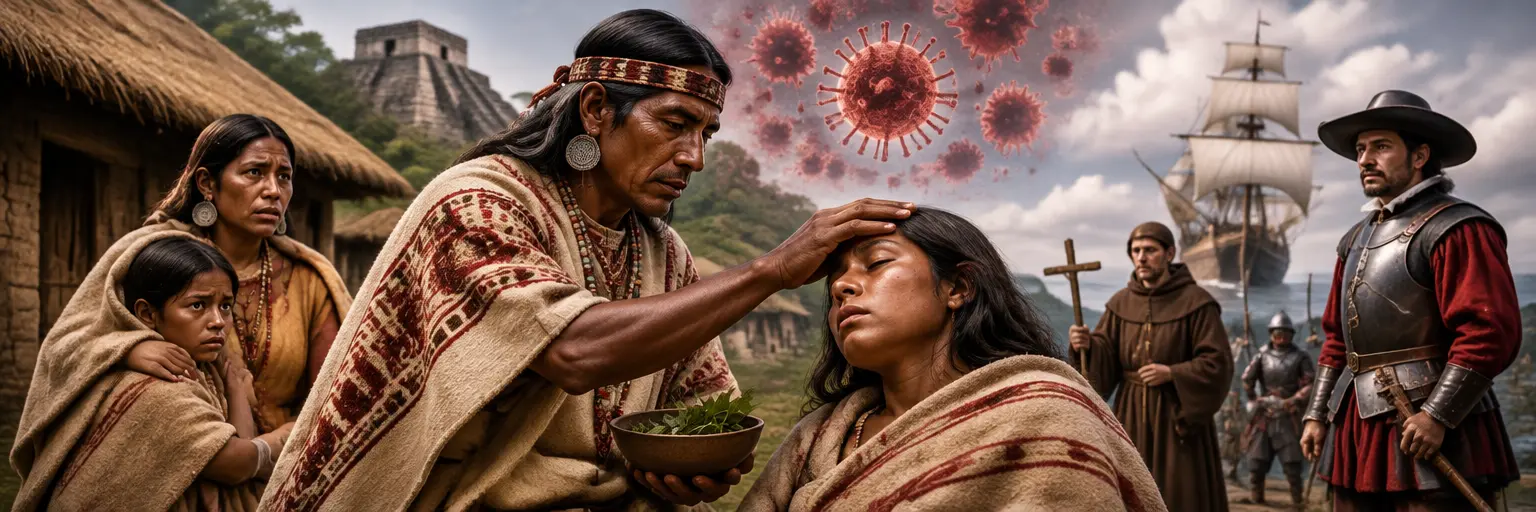
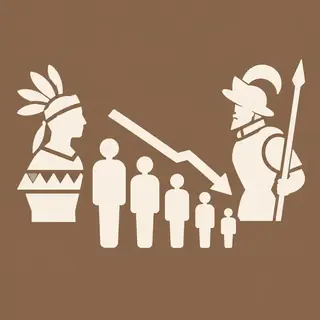
When European conquest introduced Old World pathogens to the Americas, indigenous populations faced catastrophic mortality rates—often 50-90% within a generation. Yet, far from passive victims, Native communities mounted dynamic responses: medical innovation, social reorganization, spiritual reinterpretation, and strategic resistance. This subcategory explores how epidemics reshaped demographics, governance, and cultural identity, while highlighting the agency and resilience of indigenous peoples in the face of biological invasion. Expect case studies from the Aztec, Inca, Iroquois, and Pueblo nations, alongside archaeological and ethnohistorical evidence that challenges simplified narratives of collapse.
🌿 Traditional Medicine and Healing Practices
Indigenous healers adapted rapidly to epidemic crises, blending pre-contact botanical knowledge with new empirical observations. The Maya used copal resin and chaya (Cnidoscolus) for respiratory ailments, while Andean curanderos employed quina-quina bark—later yielding quinine for malaria—demonstrating sophisticated pharmacopeia. These practices were not static; they incorporated European remedies selectively, creating hybrid therapeutic systems. Community health protocols emerged, including quarantine of affected households and ritual purification of spaces, showing pragmatic epidemiological understanding alongside spiritual frameworks.
Yet, access to these treatments was uneven—elite healers often survived longer, preserving knowledge, while commoners faced greater exposure. The loss of elder specialists to disease created knowledge gaps that weakened traditional medical systems long-term. Still, documented cases like the Powhatan use of sassafras against fevers—later adopted by European settlers—underscore how indigenous responses influenced colonial medicine itself. This bidirectional exchange remains understudied, offering rich SEO potential for terms like "indigenous pharmacology," "epidemic adaptation," and "ethnobotanical resilience."
🏘️ Social and Political Reorganization
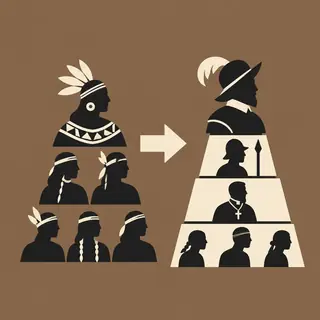
Epidemics forced rapid restructuring of kinship and governance. Among the Iroquois, smallpox-induced population decline led to the "Mourning War" tradition—captives adopted to replenish clans—transforming warfare and alliance patterns. Similarly, the Inca state implemented mitmaq resettlement policies, moving surviving populations to repopulate devastated regions, ensuring labor continuity for infrastructure. This administrative flexibility prevented total collapse, though it intensified ethnic mixing and identity renegotiation.
For smaller nations like the Timucua or Caddo, consolidation into multi-ethnic bands became survival strategy, blurring tribal boundaries. Epidemic-era leadership shifted toward younger survivors with immunity, often sidelining hereditary chiefs, which altered succession rules and created political instability. These reorganization patterns are documented in Spanish census records and mission logs, offering accessible academic sources. Keywords like "post-epidemic governance," "population consolidation," and "Iroquois adoption rituals" rank well for history-focused queries.
🙏 Spiritual and Ritual Responses
Indigenous religious systems interpreted epidemics as cosmic imbalances, prompting novel ceremonial responses. The Aztec intensified sacrifices to Huitzilopochtli during the 1545 cocoliztli, while the Pueblo developed new kachina dances to restore harmony. These acts were not denial but theological engagement—disease as punishment for ritual neglect, or as enemy spirits requiring propitiation. Prophetic movements emerged, such as the Taqui Onqoy ("dancing sickness") in 1560s Peru, which rejected Christianity and revived pre-Columbian deities as protectors against colonialism.
Syncretic cults blended Christian saints with native spirits, as seen in Guatemala’s Maximón figure, still venerated today. Conversion to Christianity sometimes accelerated post-epidemic, as survivors sought new spiritual tools, but often coexisted with older beliefs. These responses shaped long-term religious landscapes, influencing modern indigenous revitalization movements. SEO-rich terms include "epidemic prophecy," "religious syncretism," and "Taqui Onqoy movement," which attract niche academic audiences.
🛡️ Resistance, Migration, and Demographic Recovery
Survivors employed spatial and strategic resistance. Some groups, like the Maya of Petén, retreated into inaccessible rainforests or highlands, evading Spanish tribute systems and further contagion exposure. Others, such as the Chiricahua Apache, intensified raiding of missions and settlements, linking epidemic vulnerabilities to political opportunity. Migration patterns shifted—the Sioux moved onto the Plains partly due to disease depopulation in the woodlands, altering continental demographics.
Demographic recovery was uneven; some communities rebounded within decades, fostering biological resistance through selection of immune alleles (e.g., CCR5-Delta32). The Guaraní of Paraguay, after initial collapse, re-expanded through mission settlements and intermarriage, showing resilience. By the 19th century, many indigenous societies had stabilized, though at reduced numbers. This section targets keywords like "indigenous migration epidemiology," "disease resistance evolution," and "post-epidemic recovery patterns," useful for students and researchers.
📜 Historical Documentation and Modern Legacy
Primary sources—from Spanish friar Bernabé Cobo’s chronicles to Nahuatl hieroglyphic accounts in the Florentine Codex—offer rich data on epidemic responses. Modern scholars like Noble David Cook and Annie LaMothe have reconstructed mortality curves and social impacts, while genetic studies trace indigenous ancestry continuity despite demographic bottlenecks. This multidisciplinary evidence informs contemporary public health preparedness in indigenous communities, which still face higher rates of infectious disease. The subcategory thus bridges historical inquiry and modern relevance.
Moreover, indigenous resurgence movements today reclaim epidemic histories as founding narratives of survival and adaptation. Websites, museums, and curricula increasingly feature these stories, correcting older narratives of passive victimhood. For SEO, terms like "indigenous epidemic history," "colonial demographic catastrophe," and "survivor narratives" capture both academic and public interest. This legacy extends into bioethics, as tribal nations now control their genetic and historical data, ensuring ethical representation.
Frequently Asked Questions
What was the deadliest epidemic for indigenous Americans?
The 1545-1548 cocoliztli epidemic in Mexico, likely caused by Salmonella enterica, killed an estimated 5-15 million people, roughly 80% of the Aztec population, making it the deadliest single outbreak. It exceeded even smallpox in mortality because it struck a population already weakened by prior diseases and famine. Modern genetic analysis of mass graves confirmed the pathogen, reshaping historical attribution.
How did indigenous people understand epidemic disease before germ theory?
Most viewed disease as sentient or spiritually mediated—caused by violated taboos, angry ancestors, or malevolent foreign spirits. Healing rituals aimed to restore cosmic balance rather than kill microbes. This worldview proved adaptive, as it motivated community solidarity and emotional coping, even while lacking biological mechanisms. Some observations, such as linking poor sanitation to illness, approximated epidemiological insight.
Did any indigenous groups avoid epidemics entirely?
No group remained untouched, but isolated groups like the Yanomami of the Amazon or Kawahiva of Brazil experienced delayed exposure due to geographic isolation. Contact with outsiders, even indirect trade routes, eventually introduced pathogens. Conversely, groups like the Inuit faced tuberculosis and influenza but had lower smallpox mortality due to low population density and cold-climate behavior patterns. True avoidance was temporary, not permanent.
How did epidemics affect indigenous language diversity?
Mass mortality disrupted intergenerational transmission, particularly where elders—primary language keepers—died disproportionately. Over 75% of indigenous languages in the Americas were lost post-contact, with epidemics as a major driver. However, survivor communities often codified languages in colonial grammars (e.g., Nahuatl, Quechua), aiding preservation. Today, many revitalization programs explicitly link language recovery to epidemic history education.
Can modern indigenous communities draw lessons from historical epidemic responses?
Yes—tribal leaders apply triple-heritage strategies: combining pre-contact botanical medicine, colonial-era quarantine adaptations, and modern biomedicine. For example, Navajo Nation’s COVID-19 response integrated curfew orders with ceremonial protocols, achieving lower mortality than neighboring states. Historical resilience also informs mental health support, emphasizing communal coping and revived rituals as protective factors. These lessons are now taught in tribal colleges and public health training.