Language as a Lifeline: The Preservation of Indigenous Languages After Conquest
🌍 The preservation of Indigenous languages stands as a testament to resilience, embodying the rich cultural heritage and wisdom of communities that…
Read article
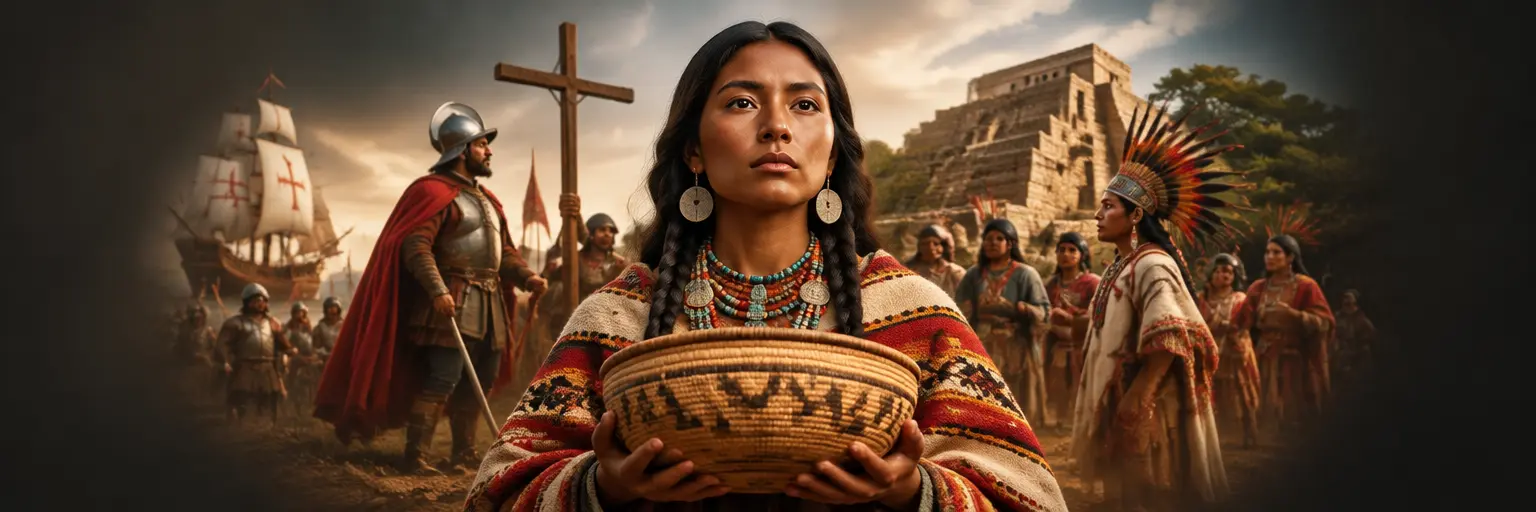
Despite the sweeping devastation wrought by European conquest, the spirit of indigenous peoples proved remarkably resilient. Survival of Traditions explores how native communities across the Americas adapted, resisted, and preserved core elements of their identity—from language and spiritual practices to artistry and communal governance. Although colonial powers often sought to erase these cultures, many traditions not only endured but evolved, blending with new influences to create vibrant, living legacies that continue to shape modern societies. This narrative highlights the power of cultural persistence, honoring the ancestors who kept their heritage alive against overwhelming odds. Discover how these enduring practices, passed down through generations, remain a testament to the unyielding strength of indigenous civilizations.
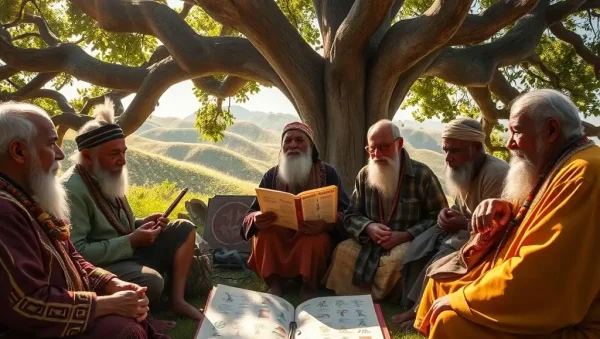
🌍 The preservation of Indigenous languages stands as a testament to resilience, embodying the rich cultural heritage and wisdom of communities that…
Read article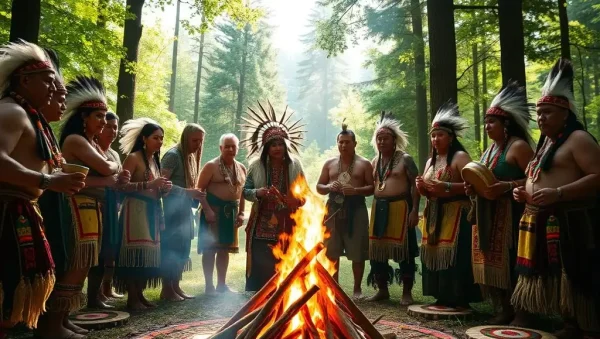
🌍 Ceremony plays a vital role in preserving Indigenous identity and culture post-conquest, serving as a bridge between ancestral traditions and contemporary…
Read article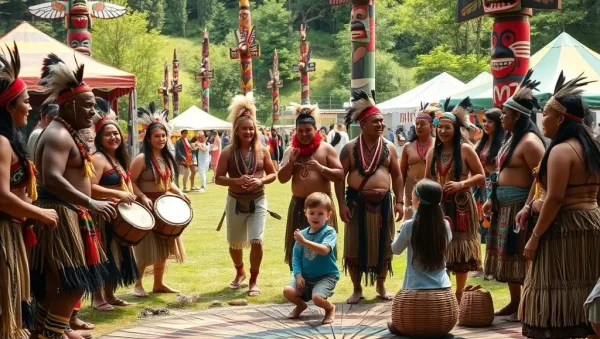
🌍 Indigenous festivals and events serve as vibrant celebrations of resilience, showcasing the rich traditions and cultural heritage of Native communities. These…
Read article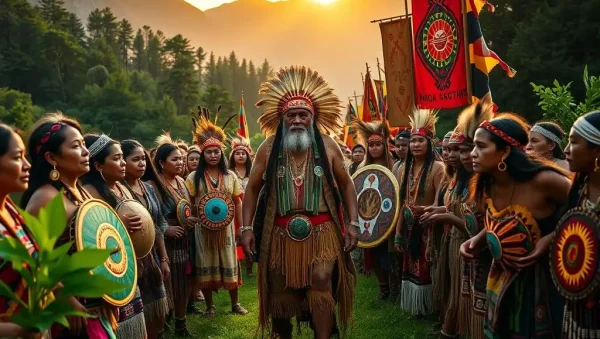
The resilience of indigenous traditions in the Americas showcases the enduring strength of cultures that thrived long before European conquest. These rich…
Read article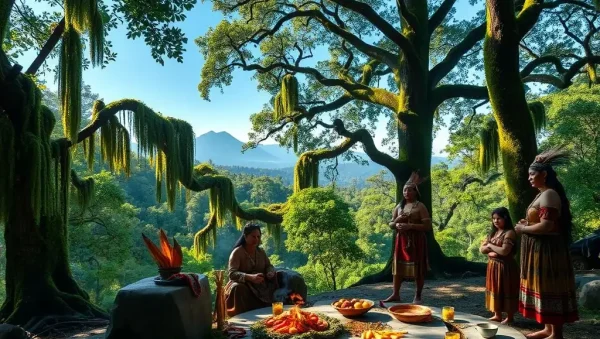
🌿 Indigenous spirituality in the Americas has shown remarkable resilience, adapting and enduring despite colonial challenges. This article delves into sacred spaces…
Read articleExplore how Indigenous peoples across the Americas preserved their languages, ceremonies, arts, and worldviews despite centuries of European colonization. This subcategory reveals the resilience, adaptation, and cultural continuity that define modern Indigenous identities, offering a nuanced view of resistance through tradition.
Language is the backbone of tradition, and despite forced assimilation policies, many Indigenous languages have survived or revived. From Quechua in the Andes to Cherokee in North America, communities have used oral storytelling, written codices, and modern digital tools to keep ancestral tongues alive. This section highlights grassroots efforts, bilingual education programs, and the role of elders as living archives.
You’ll discover how colonial-era documents, created by priests or administrators, inadvertently preserved Indigenous vocabulary and grammar. More importantly, you’ll learn about contemporary revitalization movements—such as Navajo immersion schools and Zapotec radio broadcasts—that turn passive memory into active daily use. These efforts prove that language is not merely a relic but a living bridge to ancestral knowledge, ecology, and spirituality.
European conquest attempted to suppress Indigenous religious practices, yet many ceremonies survived by blending with Catholic or Protestant forms. The Andean Inti Raymi (Sun Festival) now coexists with Corpus Christi, while Hopi kachina dances continue within private village spaces. This fusion—sometimes called syncretism—allowed core meanings to persist beneath outward conformity.
Expect deep dives into specific examples, such as the Day of the Dead in Mexico (rooted in Aztec Mictecacihuatl), the Guatemalan Rabinal Achí dance-drama, and the Amazonian ayahuasca rituals that survived underground. You’ll see how ritual calendars, agricultural cycles, and ancestor veneration were camouflaged but never fully lost, adapting to new pressures while preserving their spiritual essence.
Indigenous art became a silent repository of identity, with designs, colors, and techniques passed down through generations. Andean weavers retained q’ipis (textile bundles) with pre-Columbian motifs, while Pueblo potters continued coil-and-scrape methods using ancestral clay sources. These crafts were often dismissed as folk art by colonizers, yet they encoded cosmology, clan lineage, and resistance narratives.
This section explores how art forms like Huichol yarn paintings, Mapuche silverwork, and Inuit carving evolved under colonial markets without losing symbolic depth. You’ll learn about the revival of ancient techniques—such as Maya blue pigment or featherwork—now taught in community workshops. The focus is on agency: how artisans chose what to sell, what to hide, and what to reinvent, ensuring that visual traditions remain a proud, living testament to resilience.
Survival of traditions extends to the land itself. Indigenous farming systems—like Andean terracing, Amazonian dark earth (terra preta), and Mesoamerican milpa—persisted through colonial land grabs and still guide modern sustainable agriculture. These techniques embody reciprocal relationships with ecosystems, respecting seasonal cycles, biodiversity, and spiritual stewardship.
You’ll read case studies on how communities maintain ancestral seed banks, communal irrigation, and fire management practices. For instance, the Apache use of controlled burns or the Quechua chacra rotation demonstrates deep ecological intelligence. This section also addresses ongoing legal battles for land rights, showing that defending territory is inseparable from defending tradition, with Indigenous knowledge now recognized by global climate bodies as essential for planetary survival.
How does a tradition survive when elders pass away and youth migrate to cities? This section examines dynamic transmission—through storytelling, apprenticeship, digital archives, and pan-Indigenous gatherings. Programs like the Aboriginal Cultural Safety in Canada or the Ñande Reko educational initiative in Paraguay exemplify deliberate efforts to reconnect younger generations.
Expect discussions on the role of social media, where TikTok dances revive ancestral moves and Instagram profiles teach endangered languages. We also explore challenges, such as cultural appropriation vs. appreciation, and the ethics of sharing sacred knowledge. Ultimately, you’ll see that survival is not static preservation but a creative negotiation—where tradition bends, blends, and flourishes in new forms while honoring its roots.
It refers to the ongoing practice and adaptation of Indigenous languages, rituals, arts, and ecological knowledge despite centuries of colonial suppression. Traditions survived through camouflage, syncretism, oral memory, and deliberate revival, ensuring cultural continuity and identity among Indigenous peoples today.
They often overlapped Indigenous celebrations with Catholic feast days, used cryptic symbols in crafts, and held ceremonies in remote or private spaces. For example, Andean weavers incorporated Christian icons into textiles while preserving pre-Columbian motifs that only initiated members could decode.
No, they are dynamic and transformed. While core meanings persist, practices incorporate new materials, influences, and contexts. This is not a loss but a demonstration of adaptability—traditions evolve to remain relevant, as seen in contemporary powwows or urban Indigenous language classes.
Language encodes unique worldviews, ecological knowledge, and spiritual concepts untranslatable into colonial languages. When a language dies, so does an irreplaceable system of understanding. Revitalization efforts help restore community pride, intergenerational bonds, and holistic health outcomes.
Support Indigenous-led initiatives, buy from verified Indigenous artisans, respect intellectual property (e.g., not exploiting sacred designs), and amplify voices rather than speaking for them. Educate yourself on local history, participate in open cultural events, and donate to language or land rights programs.