Understanding Mesoamerican Governance Systems: Power, Order, and Legacy
Mesoamerican governance systems represent some of the most sophisticated political and administrative frameworks in the pre-Columbian Americas, encompassing the Aztec, Maya, Zapotec, Mixtec, and other civilizations. These systems blended theocratic authority, hereditary kingship, tribute networks, and council-based decision-making, creating resilient structures that managed millions of people across diverse ecologies. On this page, you will discover how these governments organized cities, managed resources, codified laws, and projected power through ritual and military might. By exploring their hierarchies, bureaucratic innovations, and legal traditions, we uncover not only how these societies functioned but also how their governance models influenced later understandings of statecraft in the Americas.
🏛️ The Core Structures of Aztec Imperial Rule
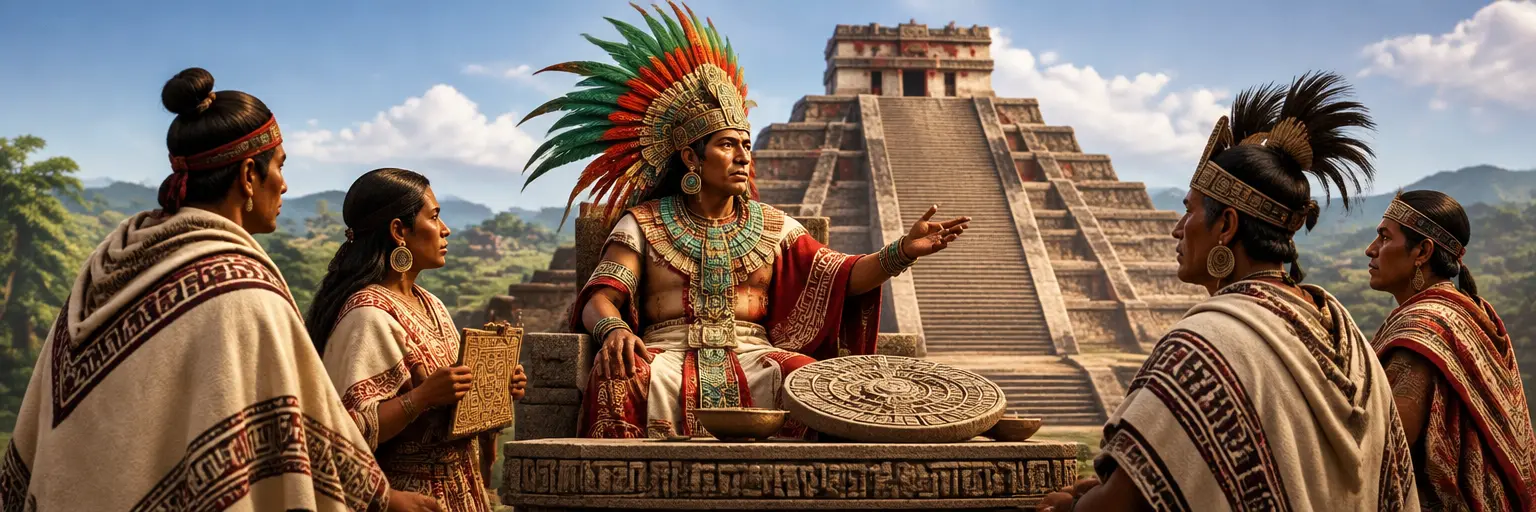
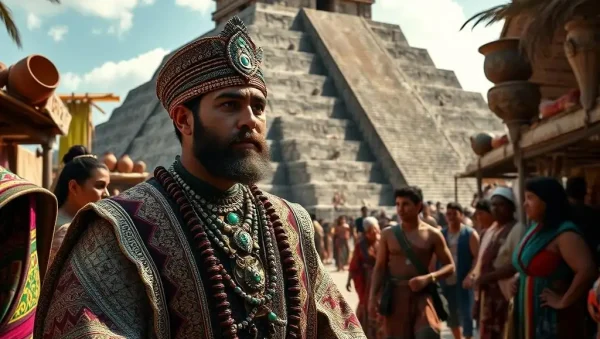
The Aztec (Mexica) Empire, known as the Triple Alliance, was a hegemonic system rather than a unified territorial state. At its head stood the Huey Tlatoani (“Great Speaker”), a semi-divine ruler who combined political, military, and religious authority. Beneath him, a council of nobles (pipiltin) and high priests advised on succession, warfare, and tribute collection. The empire’s backbone was a complex tributary network—conquered city-states (altepetl) retained local rulers but paid goods, labor, and military service to Tenochtitlan, Texcoco, and Tlacopan. This decentralized approach allowed rapid expansion without direct administration, yet required constant renegotiation of loyalty through ritual gifts, marriages, and punitive expeditions. The calpulli system organized commoners into territorial clans that managed land, taxes, and local justice, making governance feel personal even at empire scale.
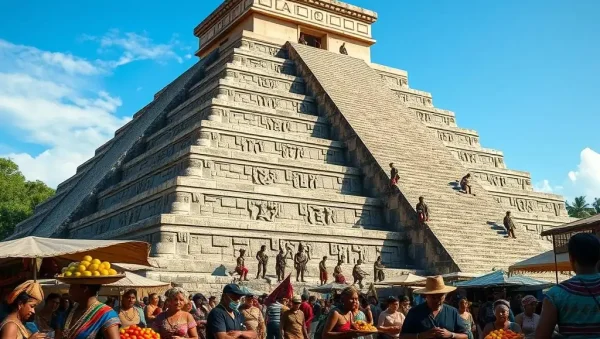
Notably, the Aztec state maintained a dual legal code: customary law for commoners and codified noble law for elites, with specialized courts for commercial disputes and military offenses. The Pochteca merchant guilds operated under their own jurisdiction, controlling long-distance trade and acting as informal intelligence agents. This layered governance enabled efficient resource extraction from over 400 subject polities, while the capital’s massive ceremonial center symbolized cosmic order through architecture—each temple and plaza reinforcing the ruler’s mandate from the gods. Understanding this system reveals how the Aztecs managed diversity without erasing local identities, a lesson in pragmatic imperialism.
🗿 Maya City-State Governance: Kings, Councils, and Calendars
Unlike the Aztec empire, Maya governance was fragmented into dozens of independent city-states (e.g., Tikal, Calakmul, Palenque), each ruled by a Kʼuhul Ajaw (“Holy Lord”) who claimed divine ancestry. The king was not only a political leader but a ritual conduit who performed bloodletting and vision quests to ensure agricultural fertility and cosmic balance. However, governance was not absolute—a council of nobles (ahaw) and scribes advised on succession, war, and alliances. Dynastic politics often led to inter-city marriages, hostage exchanges, and protracted wars for prestige rather than territorial absorption. Intriguingly, Maya governance relied heavily on written records: stelae, codices, and murals documented royal lineages, tribute lists, and astronomical treaties, creating an early form of archival statecraft.
The calendar system (Tzolkʼin and Haabʼ) wasn’t just for religion—it structured administrative cycles, tax collection, and agricultural planning. Provincial governors (sajal) oversaw outlying towns, while batab (local lords) managed village affairs under royal oversight. Warfare often involved capturing elite hostages for sacrifice, which destabilized dynasties and led to periodic collapses—as seen in the Classic Maya “collapse” around 900 CE. Yet, postclassic Maya governments (e.g., Mayapan) adapted by forming confederacies with shared councils, showing remarkable political flexibility. This reveals that Maya “states” were not static but evolved between centralized kingships and oligarchic leagues depending on ecological pressure and elite competition.
⚖️ Legal Codes, Courts, and Social Contracts in Mesoamerica
Mesoamerican law was deeply tied to religious cosmology, with justice seen as restoring cosmic harmony rather than simply punishing offenders. The Aztec legal system, for example, had a supreme court of twelve judges in Tenochtitlan, appointed by the emperor, alongside local courts for minor disputes. Punishments varied by class—nobles faced harsher penalties for public intoxication or theft, while commoners often received fines or labor service. The Nezahualcoyotl code, attributed to the Texcoco ruler, codified over 80 laws covering property, family, and criminal behavior, including rules for water allocation and forest conservation—an early environmental regulation. Courts allowed oral testimony, witness oaths, and even trial by ordeal in some cases, but verdicts were final and appealable only to the emperor.
Maya law, though less codified, operated through local councils (cabildo) and hereditary judges known as ah kin (priest-judges) who interpreted customary law. Serious crimes like homicide or treason were punished by sacrifice, while property disputes were resolved through restitution. Interestingly, land tenure was communal in many Maya areas—households held usufruct rights, with redistribution overseen by lineage heads. This social contract ensured survival during droughts, as surpluses were stored in communal granaries. For the Zapotec, inscriptions at Monte Albán record conquest and tribute lists, implying a legal distinction between allies and enemies. These systems show that governance was not merely coercive but embedded in mutual obligations—leaders owed fertility, justice, and protection, while citizens owed labor, tribute, and ritual participation.
🌾 Tribute Economies and Administrative Logistics
Tribute was the economic engine of Mesoamerican states, but its administration required remarkable bureaucratic precision. The Aztec tribute registry, the Matrícula de Tributos, listed every province’s quota—from jade beads and quetzal feathers to maize, cotton, and cacao—often detailed down to exact bundle counts. Specialized officials (calpixque) stationed in provinces managed collection, storage, and transport to the capital, where a central treasury (petlacalco) recorded income. Roads and causeways facilitated movement, with relay runners (painani) carrying messages and inventory sheets. This system could mobilize up to 200,000 warriors for campaigns, supported by food depots along routes. The Maya used a similar but less centralized tribute, often demanding labor for construction projects rather than commodities, as seen in the sakbe (white roads) connecting cities.
Beyond extraction, governance included public works administration: the Aztec built aqueducts for freshwater (from Chapultepec), chinampas (floating gardens) for food, and massive temples—all requiring coordinated labor drafts. The state managed market regulation too, with judges overseeing the great market of Tlatelolco, standardizing measures and resolving disputes. The Mixtec and Zapotec administrations produced codex manuscripts that recorded land boundaries, tribute rolls, and genealogies of rulers, serving as both legal deeds and historical chronicles. These logistical achievements highlight that Mesoamerican governance was not improvisational but based on meticulous record-keeping and specialized personnel—a precursor to modern census and taxation systems.
🔁 Succession, Dynasties, and Political Crises
Succession rules varied sharply across Mesoamerica. The Aztec throne was elective within the royal house—a council of four high nobles (including generals and priests) selected the Huey Tlatoani from eligible brothers or sons, often favoring proven warriors. This avoided primogeniture conflicts but allowed factional infighting, as seen in the disputed election after Moctezuma II’s death. The Maya, by contrast, practiced patrilineal succession, but with frequent usurpations—e.g., the accession of Pakal in Palenque under a regency when he was a child, suggesting female or noble regents held power. Zapotec succession often involved co-rulership between a secular king (coquitao) and a high priest (coquihui), balancing military and spiritual authority.
Political crises frequently emerged from elite rivalries, environmental stress, or external pressure. The fall of Maya cities like Dos Pilas around 760 CE is attributed to internal noble revolts and warfare over dwindling resources. The Aztec empire faced rebellions in frontier provinces, which they managed through flower wars (ritual battles) to capture victims rather than outright conquest. Dynastic marriages often created overlapping loyalties, leading to proxy conflicts—for instance, the Maya “Star Wars” between Tikal and Calakmul involved shifting alliances but rarely outright annexation. These governance challenges reveal a critical insight: Mesoamerican states were dynamic systems that negotiated power between hereditary elites, meritocratic appointees, and community councils, adapting to crises through institutional flexibility—a lesson in resilience that modern political scientists still study today.
Frequently Asked Questions
What was the role of religion in Mesoamerican governance?
Religion was inseparable from governance. Rulers were considered divine or semi-divine intermediaries who maintained cosmic order through rituals, sacrifices, and calendar ceremonies. Priests often held administrative roles, interpreting omens for warfare decisions, and temples served as treasuries and record-keeping centers. Religious obligations dictated tribute collection times and legitimized punitive expeditions, making faith a practical tool for social cohesion and control.
How did Aztec and Maya governance differ fundamentally?
The Aztec developed a hegemonic empire with a centralized tribute system and a powerful emperor, while the Maya operated as a network of independent city-states with shared culture but no overarching political authority. Aztec governance emphasized imperial expansion and resource extraction, whereas Maya governance focused on localized dynastic power, ritual spectacularity, and competitive peer polities. This difference led to distinct administrative forms: Aztec bureaucratic tribute versus Maya decentralized alliance-building.
Were there democratic elements in Mesoamerican governance?
Yes, especially at local levels. Many city-states had councils of elders or nobles that advised or even elected chief executives. For example, the Aztec emperor was chosen by a council of nobles, and some Maya towns like Tlaxcala had republican-style councils under a rotating leadership. Commoner assemblies existed in certain regions, particularly among the Purépecha and Mixtec, though their influence varied. Thus, governance balanced hereditary authority with consultative processes, but full democracy was rare.
How did tribute systems impact ordinary people?
Tribute placed a significant burden on commoners, who paid goods, labor, and military service. This could lead to famine during poor harvests, as surpluses were diverted to elites. However, tribute also funded public infrastructure like roads, aqueducts, and granaries that benefited communities. Some citizens served as calpixque or local officials, gaining upward mobility. The system was exploitative yet reciprocal, and frequent rebellions occurred when quotas became excessive or collection abusive.
What happened to Mesoamerican governance after the Spanish conquest?
Spanish colonization dismantled indigenous political structures, replacing local rulers with encomiendas and colonial administrators. However, some indigenous governance survived in modified forms: caciques retained limited land rights, and cabildos (town councils) continued under Spanish oversight. Many Mesoamerican legal traditions, such as communal land tenure and water management practices, were absorbed into colonial law. Today, Zapotec and Maya communities in Mexico and Guatemala still use ancestral governance systems, blending pre-Hispanic customs with modern municipal frameworks.