Explore the Rich Visual Legacy of Mesoamerica
Welcome to our deep dive into Visual Arts in Mesoamerica, a vibrant subcategory within the indigenous civilizations of the Americas. Here, we uncover the stunning creativity of the Olmec, Maya, Aztec, Zapotec, and Teotihuacan cultures, whose murals, sculptures, codices, and ceramics still captivate modern audiences. This page is your gateway to understanding how art was not mere decoration but a powerful language of religion, power, astronomy, and daily life. From colossal stone heads to intricate featherwork, prepare to explore the techniques, meanings, and treasures that shaped one of history’s most visually sophisticated regions.
🎨 Monumental Stone Sculpture & Architecture
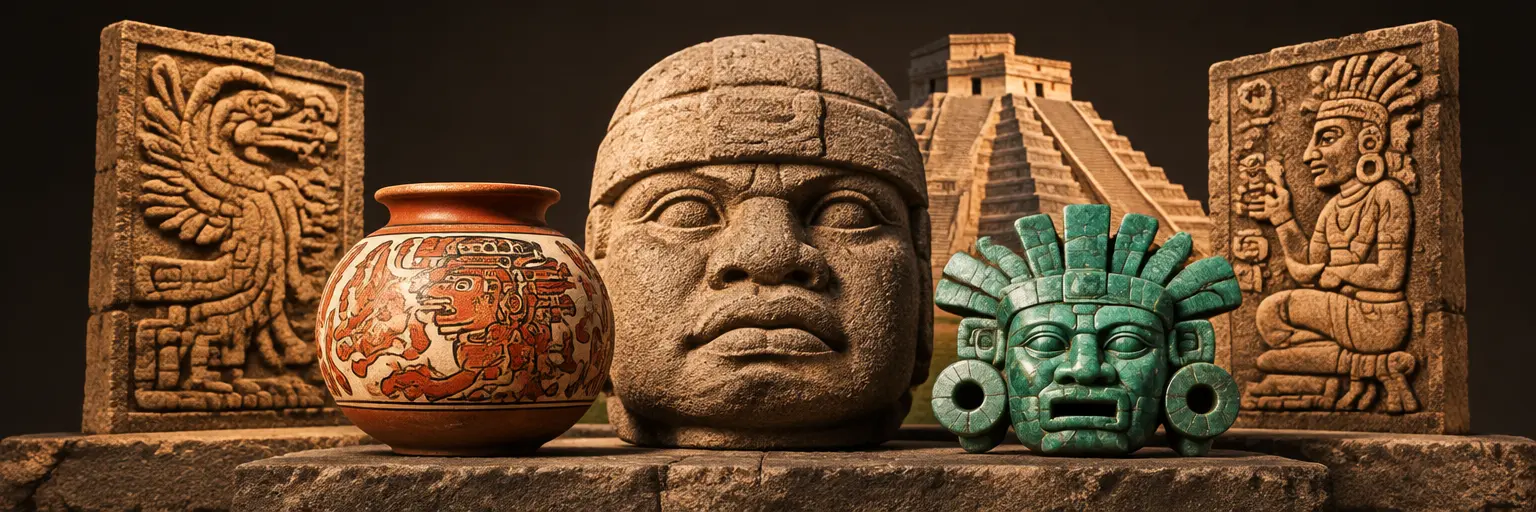
Mesoamerican visual arts are defined by their monumental nature, particularly the colossal basalt heads of the Olmec and the towering stelae of the Maya. These works were more than aesthetic achievements; they were political and spiritual statements. The Olmec heads, weighing up to 40 tons, portray individual rulers with distinct facial features, while Maya stelae combine hieroglyphic texts with royal portraits, commemorating victories and dynastic lineages.
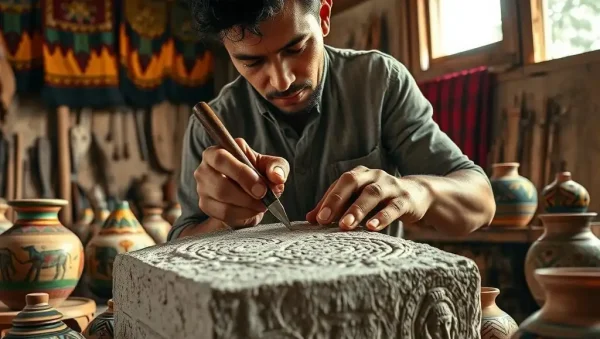
Equally impressive is architectural decoration, such as the carved facades at Uxmal and Palenque, where motifs of serpents, rain gods, and celestial bands cover entire structures. The Aztecs perfected this with the Coyolxauhqui Stone and the Templo Mayor, where sculptures narrated cosmic myths. Expect to learn how these works were carved using only stone tools, often colored with vivid pigments, and placed to align with solstices—transforming architecture into a calendar and cosmos in stone.
🖌️ Mural Painting: A Window to Myth & Daily Life
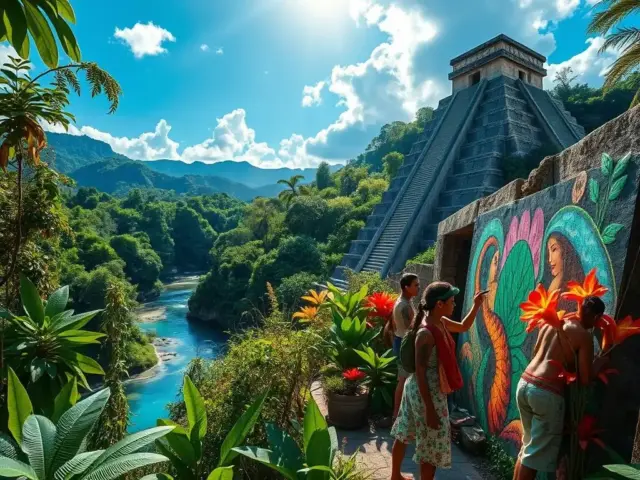
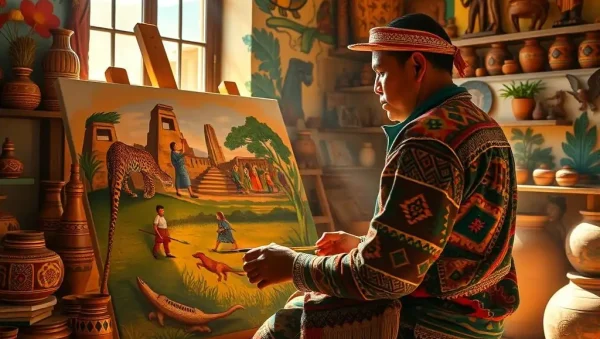
Mesoamerican murals offer some of the most detailed visual records of indigenous life before European contact. The Maya sites of Bonampak and San Bartolo showcase polychrome scenes of battle, ritual bloodletting, and courtly ceremonies, painted in red, blue, yellow, and green derived from minerals and plants. Meanwhile, Teotihuacan’s murals, like those in the Tepantitla compound, depict a lush paradise realm called Tlalocan, filled with butterflies, jaguars, and flowing water.
These murals were not static; they were interactive public texts read by priests and nobles. The Aztecs, inheriting this tradition, covered temple walls and palaces with imagery of eagles, jaguars, and sacrificial processions. What makes this subcategory essential is understanding the color symbolism—blue for water and sacrifice, red for blood and vitality, yellow for maize and fertility. Each pigment had ritual preparation, and the painters, known as tlacuiloque, were highly respected artisans who combined artistic skill with astronomical and historical knowledge.
📜 Codices: The Painted Books of the Ancients
Unlike European manuscripts, Mesoamerican codices were folded screenfold books made of deerskin or amatl paper, painted with a brush using natural dyes. These visual works combined pictographs, glyphs, and numeric bars and dots to record history, tribute lists, rituals, and even medical remedies. The surviving codices—such as the Maya Dresden Codex and the Aztec Codex Borbonicus—are invaluable for decoding the worldview of these civilizations.
For SEO and content depth, note that codices are often underappreciated as “visual art” because they are functional. Yet their layout, calligraphy, and illustration style are masterpieces of graphic design. The Codex Mendoza alone lists conquered towns and tributes, adorned with stylized shields and headdresses. Here, you will learn how to read a codex page, the importance of color coding for deities, and the tragic loss of thousands of these books during the Spanish conquest, with only about 15 pre-Columbian examples surviving today.
🏺 Ceramics & Figurines: Art of the Everyday
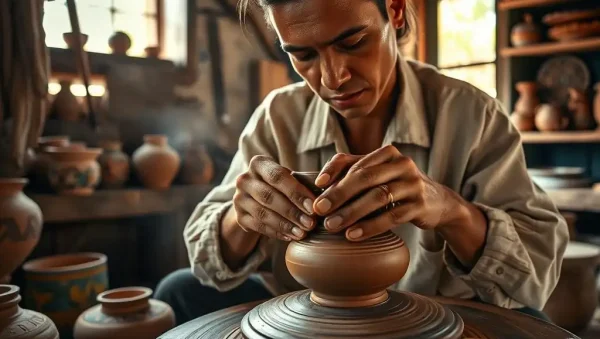
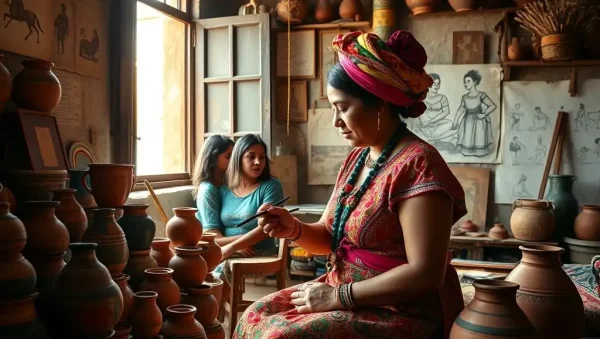
Beyond monumental works, Mesoamericans created extraordinary ceramics and small figurines that reveal intimate aspects of social life. The Maya produced exquisite polychrome vases used for drinking cacao, often painted with scenes of gods, courtiers, and even humorous caricatures. Each vase’s “codex-style” painting served as a ritual object, a tribute gift, and a status symbol. Similarly, the Zapotec cultures of Oaxaca crafted highly detailed ceramic urns depicting the rain god Cocijo, used in funerary rites.
Figurines from the island of Jaina offer a unique glimpse into society—these small clay sculptures show rulers, ballplayers, warriors, and women weaving, each with expressive faces and elaborate attire. The Aztec industry produced mold-made figurines in massive quantities, serving both household altars and trade networks. Readers will appreciate function over form: these pieces were not “art for art’s sake” but carried apotropaic, educational, and ceremonial purposes. The firing techniques, clay tempering, and slip painting methods are also explored in this section.
💎 Featherwork, Jade & Precious Stones
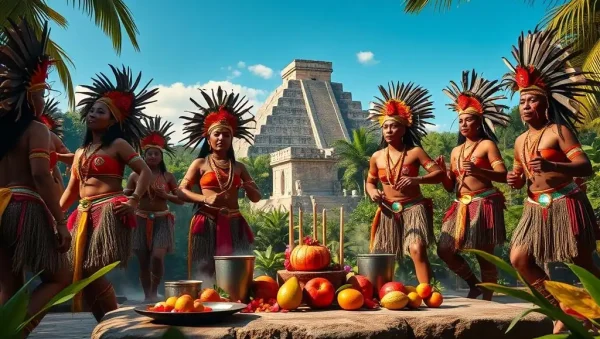
Perhaps the most luxurious visual arts in Mesoamerica were ephemeral objects made from quetzal feathers, jade, turquoise, obsidian, and gold. Aztec feather mosaics (amantecayotl) used iridescent feathers glued to wood or cotton to create shields, fans, and headdresses depicting gods like Huitzilopochtli. These pieces were so prized that they were sent as tribute from conquered provinces and were among the first gifts sent to European monarchs. The only surviving example, the Penacho of Moctezuma, shows the dazzling complexity of this art.
Jadeite, more valued than gold, was carved into masks, beads, and pectorals, especially by the Olmec and Maya. The Maya considered jade to embody breath and the soul, burial masks of rulers like Pakal were inlaid with jadeite and mother-of-pearl. Turquoise mosaics, such as the famous Aztec serpent head at the British Museum, combined thousands of tiny polished tesserae over a wooden base. Learn about the lapidary skills, the status of artisans, and how these precious arts reinforced social hierarchies and cosmovision.
Frequently Asked Questions
What is the most famous example of Mesoamerican visual art?
The Aztec Calendar Stone (Piedra del Sol) is arguably the most iconic, but the Olmec colossal heads and Maya murals of Bonampak are equally celebrated. Each represents different artistic periods and purposes—sculpture, painting, and public monument—yet all offer deep insights into cosmological and political beliefs.
How were Mesoamerican colors made and used?
Pigments came from minerals: red from hematite, blue from Maya blue (indigo plus palygorskite clay), yellow from ochre, and black from charcoal. They were mixed with plant gums for durability. Colors held symbolic meanings—blue symbolized water and sacrifice—and were applied in layers, often using fresco or secco techniques on limestone plaster.
Did Mesoamerican art include writing or text?
Yes, most major works integrated hieroglyphic writing, especially in Maya stelae, codices, and ceramic vases. Glyphs recorded dates, royal names, and rituals, creating a combined visual-literary experience. The Aztecs used pictographic writing for tribute and history, while Teotihuacan used symbolic motifs without a deciphered full writing system.
Why were so many codices destroyed?
During the Spanish conquest, missionaries and conquistadors burned thousands of codices as “works of the devil” to eradicate indigenous religion and culture. Only a few escaped, hidden in caves or taken to Europe as curiosities. Modern scholars have reconstructed much knowledge from these survivors and from post-conquest copies made for Spanish officials.
Can I still see authentic Mesoamerican art today?
Yes, major museums like the National Museum of Anthropology in Mexico City, the British Museum, and the Louvre hold significant collections. Many original murals and stelae remain at archaeological sites like Palenque, Chichen Itza, and Monte Alban. Digital 3D scans and high-resolution databases now allow virtual exploration of fragile artworks.