Spanish Conquest of the Aztecs: A Turning Point in Mesoamerican History
The Spanish Conquest of the Aztecs (1519–1521) marks one of the most dramatic and consequential events in the history of the Americas. This subcategory delves into the complex web of alliances, military strategies, technological disparities, and devastating epidemics that led to the fall of the mighty Aztec Empire. Here, you will uncover how a small force of conquistadors, led by Hernán Cortés, toppled Tenochtitlan, reshaping indigenous civilizations forever and setting the stage for centuries of colonial rule.
⚔️ Key Figures: Cortés, Moctezuma, and Malinche
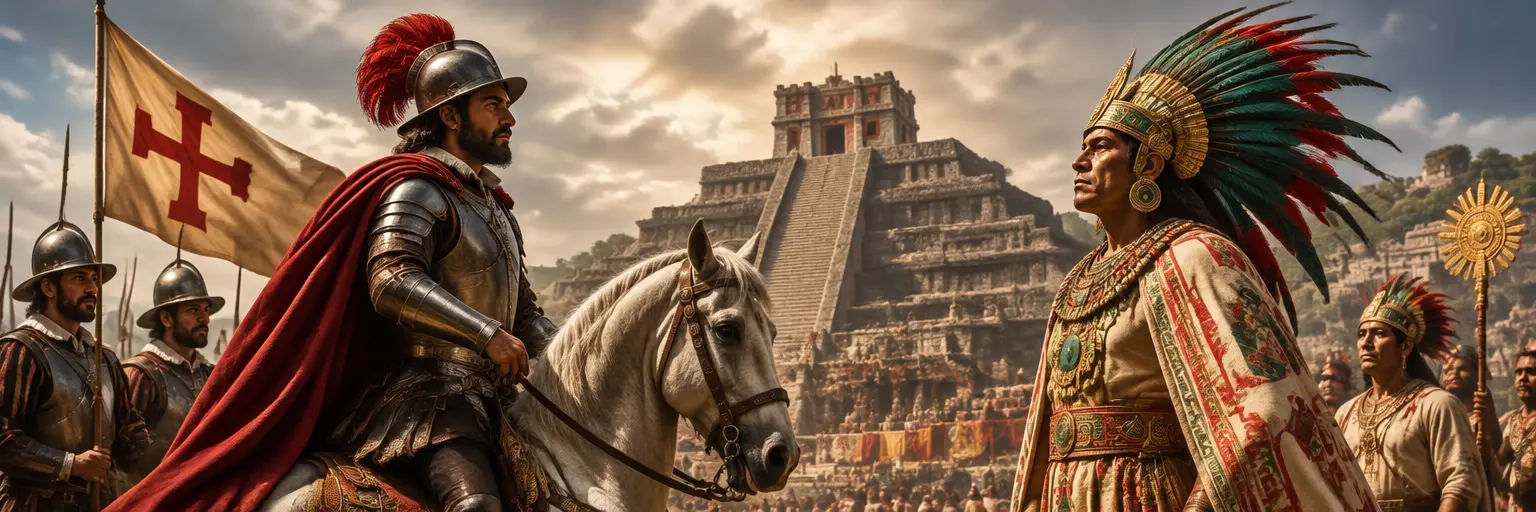
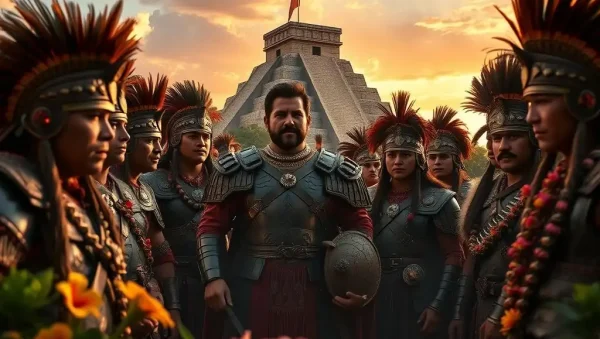
Understanding the conquest requires examining the personalities and motivations of its central actors. Hernán Cortés, an ambitious and ruthless Spanish nobleman, defied colonial governors to launch his expedition. Moctezuma II, the Aztec emperor, faced impossible choices amid omens and political instability, while La Malinche, an enslaved Nahua woman, became Cortés’s indispensable interpreter and strategist. Their intertwined fates—marked by mistrust, diplomacy, and betrayal—shaped every major decision of the campaign.
This section highlights primary sources like Cortés’s letters and indigenous accounts like the Florentine Codex to offer balanced perspectives. You will learn how Moctezuma’s initial welcoming of the Spaniards, driven by mythic prophecies about returning gods, gave Cortés a critical foothold. Meanwhile, Malinche’s linguistic skills allowed Cortés to negotiate with disaffected tributary states, turning resentment against Aztec rule into a powerful weapon. These human stories reveal that the conquest was not a simple clash of civilizations but a web of individual choices and cultural misunderstandings.
🛡️ Military Technology and Tactics
The Spanish brought steel swords, crossbows, arquebuses, and—most crucially—horses, which provided unprecedented mobility and psychological terror. Yet the Aztecs fielded tens of thousands of obsidian-edged warriors with disciplined formations and effective siegecraft. This subsection breaks down how the conquistadors adapted their European tactics to Mesoamerican warfare, often relying on indigenous allies to do the heavy fighting.
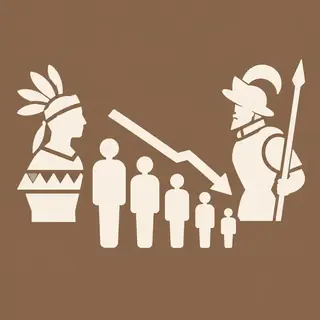
Readers will discover that the conquest’s decisive battles, such as the Noche Triste (Sad Night) and the Siege of Tenochtitlan, were not won by superior technology alone. Cortés’s ability to forge alliances with the Tlaxcalans and other enemies of the Aztecs provided overwhelming numerical superiority. Additionally, the introduction of smallpox and other Old World diseases devastated native populations, with some estimates suggesting up to 90% mortality in affected areas. This section underscores that military victory was as much about biology and politics as about steel and gunpowder.
🏙️ The Fall of Tenochtitlan: A City Under Siege
Tenochtitlan, a magnificent island city of 200,000 inhabitants, boasted canals, aqueducts, and grand temples that astounded the Spaniards. The final siege (May–August 1521) combined land blockades with a fleet of brigantines built by the Spanish to control Lake Texcoco. This focused analysis details the daily horrors of famine, disease, and relentless assaults that led to the city’s capitulation.
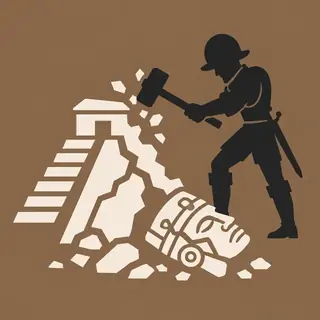
Here, you will examine the strategic missteps of both sides: Cortés’s early retreats, Aztec defensive innovations like raised causeways, and the tragic leadership vacuum after Moctezuma’s death. The fall of Tenochtitlan was not a single battle but a prolonged attrition that destroyed much of the city’s population and infrastructure. By the end, the once-glorious capital lay in ruins, and its survivors faced enslavement, forced relocation, and the imposition of Spanish colonial rule. This section provides a vivid, day-by-day reconstruction of the siege, drawing from both Spanish and indigenous chronicles to capture its chaotic brutality.
🌍 Aftermath: Colonial Rule and Indigenous Resistance
Following the conquest, the Spanish established the Viceroyalty of New Spain, imposing encomienda systems, forced labor, and Christian conversion. However, indigenous resistance did not end with Tenochtitlan’s fall. This subcategory explores rebellions, cultural survival, and syncretism—how Aztec gods, rituals, and languages persisted beneath a colonial veneer.
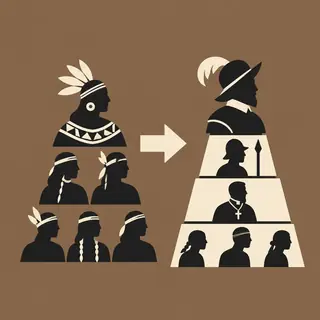
Readers will learn about the Codex Mendoza and other pictorial manuscripts that recorded tribute lists and pre-conquest history, preserving indigenous memory for future generations. The Spanish also repurposed Aztec administrative structures, but the brutal exploitation sparked uprisings like the Mixtón War (1540–1542). Over centuries, a hybrid mestizo culture emerged, blending Spanish and indigenous elements in food, religion, and social hierarchies. This section emphasizes that the conquest’s impact was not a clean break but a messy, ongoing process of adaptation and resilience, with legacies visible in modern Mexico’s identity.
📜 Historiography and Debates
Historians have long debated the conquest’s causes and meanings. Was it a miraculous victory of genius and courage, as earlier European narratives claimed, or a catastrophe of disease and indigenous betrayal? This section introduces readers to revisionist scholarship, including the Black Legend—critiques of Spanish cruelty—and counter-narratives that highlight indigenous agency.
You will encounter debates over Moctezuma’s role: was he a cowardly appeaser or a pragmatic ruler betrayed by his own nobility? Modern historians, using archaeology and indigenous-language sources, now emphasize the demographic collapse as the prime factor, dwarfing Spanish military skill. This subcategory encourages critical thinking by comparing Spanish accounts with the Annals of Tlatelolco and other native texts, showing how memory, politics, and archives shape our understanding. It also discusses the conquest’s representation in museums, textbooks, and popular culture, revealing how contemporary Mexican identity is still negotiating this traumatic past.
Frequently Asked Questions
How many Spanish soldiers conquered the Aztecs?
Cortés initially landed with about 500 men, but he later received reinforcements, reaching roughly 900–1,200 Spanish fighters. Crucially, he commanded between 80,000 and 200,000 indigenous allies during the final siege, making the Spanish a tiny minority in the conflict. Disease and diplomacy, not soldier numbers, proved decisive.
Why did the Aztecs not simply kill Cortés upon arrival?
Moctezuma II hesitated due to the belief that Cortés might be the returning god Quetzalcoatl, although this is debated. More practically, the emperor wanted to gather intelligence and assess the strangers’ intentions. His policy of gifts and hospitality allowed Cortés time to build alliances with anti-Aztec tribes, undermining the empire from within.
What role did smallpox play in the conquest?
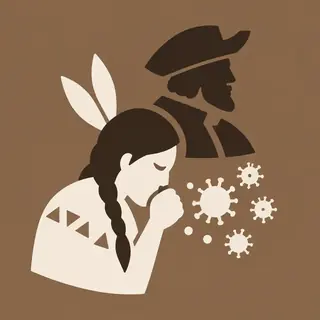
Smallpox arrived in 1520, likely via a Spanish soldier, and swept through Tenochtitlan, killing an estimated 25–50% of its population, including Emperor Cuitláhuac. The disease weakened Aztec resistance, disrupted leadership, and caused psychological collapse. Combined with other epidemics like measles, it reduced the overall native population by up to 90% over decades.
Was La Malinche a traitor to her people?
Views vary greatly. She was enslaved by the Aztecs from a young age, so her loyalty to them was minimal. She chose to work with Cortés for survival and perhaps personal advantage, becoming his mistress and advisor. Modern Mexicans often view her negatively as a “traitor,” but others see her as a victim of circumstances and a symbol of cultural mediation.
What happened to the Aztec survivors after the conquest?
Survivors faced forced labor, tribute, and relocation to new towns. Many were branded with hot irons, sold into slavery, or died from overwork in mines and fields. However, some nobles retained a degree of status, and indigenous languages and customs persisted. Over generations, they intermarried with Spaniards, forming the mestizo population that now dominates Mexico.