Spanish Conquest of the Incas: A Clash of Worlds
Explore the dramatic story of how a small Spanish force, led by Francisco Pizarro, toppled the vast Inca Empire—one of the largest and most sophisticated civilizations in the pre-Columbian Americas. This subcategory delves into the military campaigns, political intrigue, devastating epidemics, and cultural collisions that reshaped the Andes between 1532 and 1572. From the capture of Atahualpa at Cajamarca to the fall of Vilcabamba, you’ll uncover the complex factors—both Spanish ruthlessness and Inca internal strife—that enabled conquest, and examine the enduring legacies for indigenous peoples today.
⚔️ The Prelude: Inca Civil War and Spanish Arrival
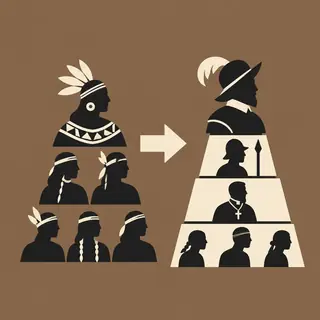
Before the Spanish set foot in the Andes, the Inca Empire was already fractured. A brutal civil war between brothers Huáscar and Atahualpa (1529–1532) over succession had drained resources, decimated armies, and sown deep divisions among the nobility. This internal weakness created a perfect window for opportunists. When Francisco Pizarro and his 168 men landed on the northern coast in 1532, they found an empire exhausted and suspicious, with many subject tribes eager to rebel against Inca rule.
Pizarro, a seasoned conquistador, exploited these fractures brilliantly. He marched inland toward Cajamarca, where Atahualpa had just defeated his brother and was celebrating victory with his army of roughly 80,000. The Spanish used steel weapons, armor, horses, and gunpowder—all unknown to the Incas—to devastating effect. Crucially, they also formed alliances with disaffected groups like the Huancas and Cañaris, who supplied guides, warriors, and intelligence. This period set the stage for the infamous ambush that would change history, highlighting that the conquest was as much a product of Inca political fragmentation as of European military superiority.
🏹 The Capture of Atahualpa and the Ransom of Gold
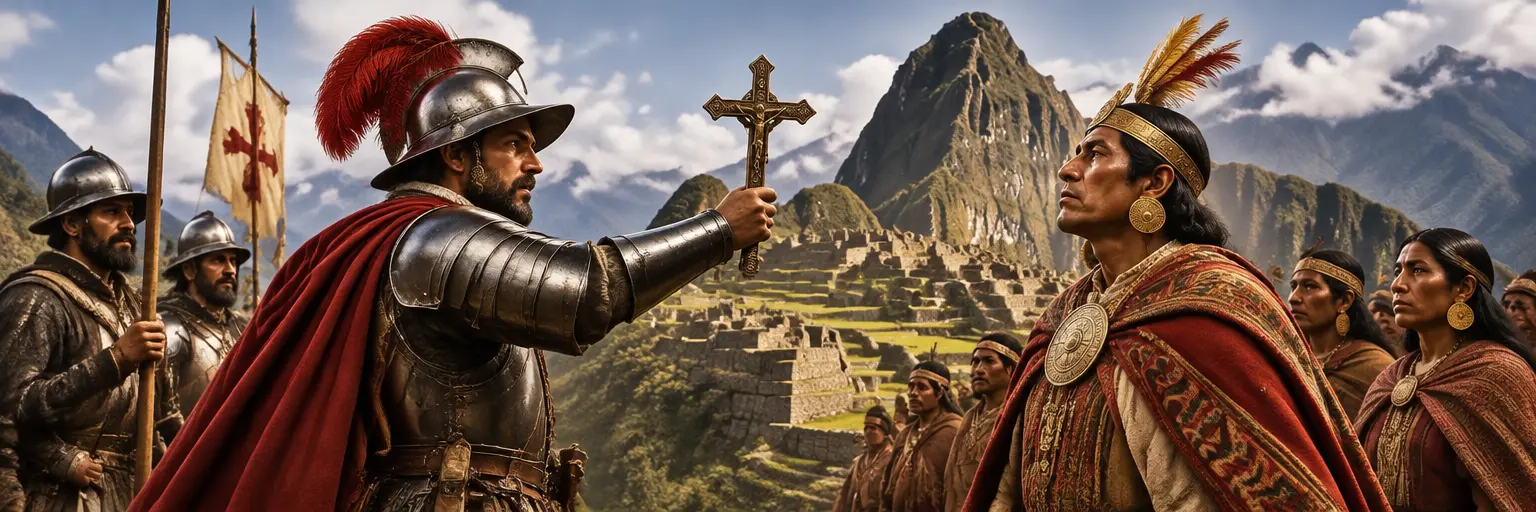
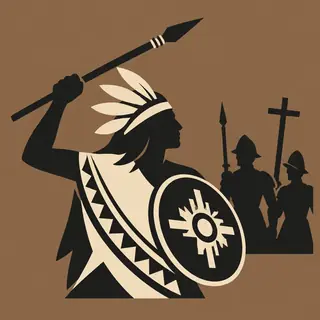
On November 16, 1532, the Spanish sprung their trap at Cajamarca. After the Inca emperor rejected the Bible and Christianity, Pizarro gave the signal, and the cavalry charged into a densely packed plaza, slaughtering thousands of unarmed attendants. Atahualpa was captured alive—a stunning tactical move that decapitated the empire’s command structure. In a bid for freedom, the emperor offered a legendary ransom: a room filled once with gold and twice with silver.
The Incas, honoring the promise, stripped temples and palaces across the empire, delivering vast treasures over several months. However, after the ransom was collected, the Spanish executed Atahualpa by garrote in July 1533, accusing him of treason and rebellion. This act, while eliminating a dangerous hostage, also removed the key figure who might have united resistance. The conquest then shifted from a hostage negotiation to a full-scale military occupation. The sheer influx of looted wealth transformed Europe’s economy, while the brutal betrayal forever marked the conquest as a tale of broken promises and staggering violence.
🛡️ The March to Cusco and the Resistance Under Manco Inca
After Atahualpa’s death, the Spanish installed a puppet emperor, Manco Inca, to legitimize their rule. But Manco was no collaborator. In 1536, he escaped Cusco, raised a massive army of perhaps 200,000 warriors, and laid siege to the capital. For months, the Incas burned the city and attacked the Spanish garrison, using fire arrows, slings, and rocks, almost overwhelming the invaders. The siege was only broken by a daring Spanish counter-attack, but the war was far from over.
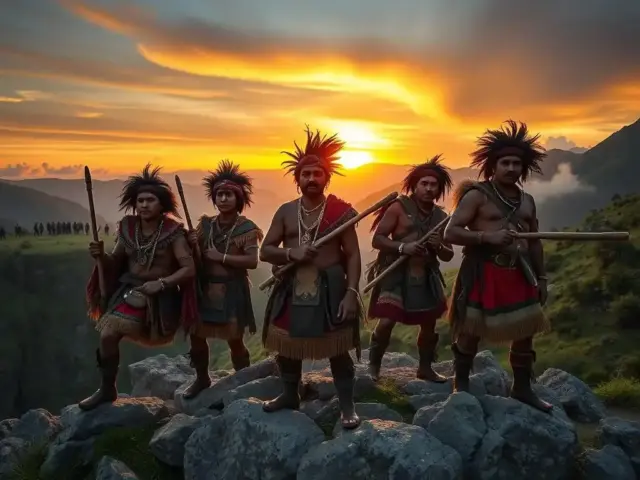
Manco retreated to the remote mountain stronghold of Vilcabamba, establishing a neo-Inca state that resisted Spanish domination for nearly four decades. This period saw guerrilla warfare, raids on Spanish supply lines, and even attempts to retake Cusco. The Spanish, facing simultaneous civil wars among themselves (the Almagristas versus Pizarristas), struggled to crush the rebellion. The resistance showcased the Incas’ resilience and tactical adaptability, proving that the conquest was neither quick nor uncontested. It also forced the Spanish to consolidate their hold through brutal reprisals, massacres, and the forced relocation of indigenous populations.
🏞️ The Fall of Vilcabamba and the End of Inca Sovereignty
The final chapter unfolded in 1572 when the Spanish, under Viceroy Francisco de Toledo, launched a decisive campaign against Vilcabamba. The last Inca ruler, Túpac Amaru, was captured in the dense Amazonian foothills. He was brought to Cusco and publicly beheaded in the main square, marking the definitive end of Inca political independence. Toledo then implemented a series of reducciones—forced resettlements of indigenous people into Spanish-style towns—to better control labor and taxation.
The execution of Túpac Amaru was a symbolic and psychological blow, designed to erase any hope of restoration. Yet, the fall of Vilcabamba did not mean the end of Inca identity. Many noble lineages survived, assimilating into colonial society while preserving their lineage records. The Spanish imposed encomienda systems, forced Christianity, and extracted labor through the mita in silver mines like Potosí. This period saw catastrophic population decline due to disease and overwork, but also the birth of a new mestizo culture. The legacy of Vilcabamba remains a powerful symbol of resistance in modern Andean movements.
📜 Cultural Impact and the Andean World After Conquest
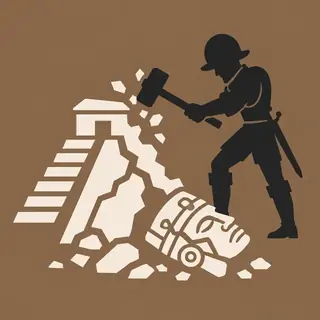
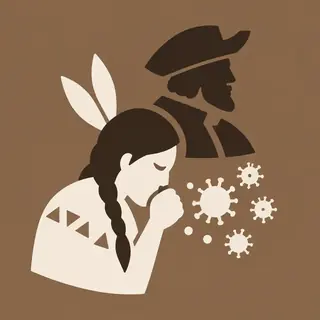
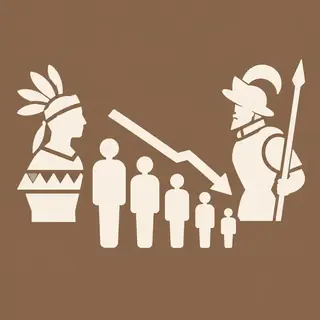
The Spanish conquest unleashed a biological and cultural catastrophe. Smallpox, measles, and influenza, to which the Incas had no immunity, swept through the Andes, killing up to 90% of the population in some areas within a century. The Spanish also destroyed religious sites, burned khipus (knotted cord records), and outlawed indigenous rituals. Yet the conquest was not one-way assimilation. The Incas adapted, adopting European crops, animals, and tools while retaining their languages, kinship systems, and agricultural terracing.
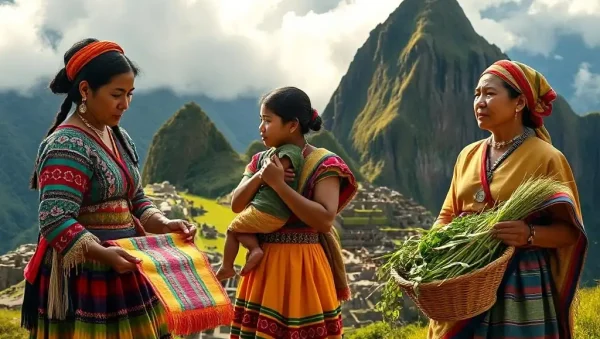
Today’s Quechua-speaking communities of Peru, Bolivia, and Ecuador are direct descendants of this collision. Andean Catholicism blends Christian saints with indigenous deities like Pachamama (Mother Earth), and festivals like Inti Raymi honor Inca heritage. The conquest also reshaped global economies: the influx of Andean silver fueled European trade with Asia, while potatoes and maize transformed diets worldwide. This subcategory emphasizes that the Spanish conquest was not an obliteration but a transformation—one whose scars and syncretisms still shape modern indigenous rights movements, land claims, and cultural pride.
Frequently Asked Questions
Why did the Spanish win against such large numbers of Incas?
The Spanish won due to a combination of factors: superior steel weapons, armor, horses, and gunpowder, but more critically, the Inca Empire was weakened by a recent civil war and smallpox epidemics. Additionally, the Spanish forged alliances with subjugated tribes eager to overthrow Inca rule, gaining thousands of native allies for battle.
What happened to Atahualpa's ransom gold?
The gold and silver collected for Atahualpa’s ransom were melted down into ingots and shipped to Spain, where they were used to fund the Spanish crown’s wars in Europe. Some was also distributed among Pizarro’s men, though many later lost their fortunes. A small fraction was looted by pirates along the way.
Did any Incas survive the conquest as independent rulers?
Yes, the neo-Inca state at Vilcabamba survived until 1572 under rulers like Manco Inca and Túpac Amaru I. They maintained sovereignty over remote Andean regions, conducting raids and preserving Inca traditions until the Spanish finally captured and executed Túpac Amaru, ending all independent Inca rule.
How did smallpox affect the conquest timeline?
Smallpox arrived in the Andes around 1524, years before Pizarro, and killed many Incas including the emperor Huayna Capac, triggering the civil war. This epidemic reduced the empire’s population by up to 50% in some areas, weakening its military, disrupting social cohesion, and making it far easier for the Spanish to conquer.
What is the modern legacy of the Inca conquest?
The conquest left a mixed legacy: profound loss of life and cultural disruption, but also a resilient Andean identity that survives in Quechua and Aymara languages, agricultural practices, and syncretic festivals. Today, indigenous groups use the history of resistance to advocate for land rights, cultural recognition, and political representation in Peru, Bolivia, and Ecuador.