Mesoamerican Architecture: Engineering Marvels of the Ancient World
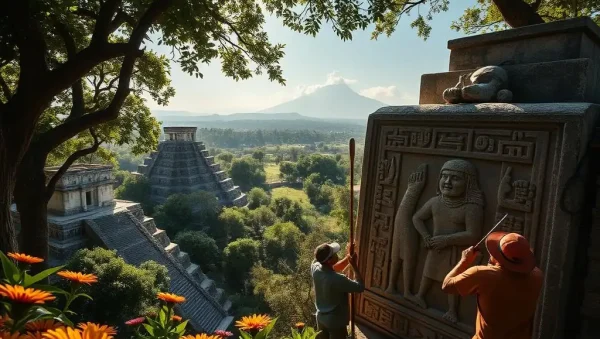
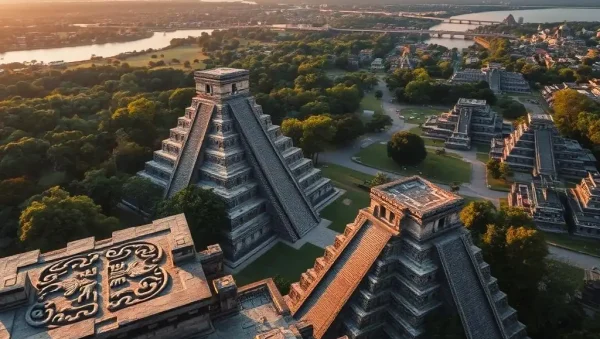
Mesoamerican architecture stands as one of humanity’s most profound achievements, encompassing the monumental pyramids, grand plazas, and intricate urban layouts built by civilizations like the Maya, Aztec, Olmec, and Zapotec. These structures were not merely functional; they embodied cosmology, astronomy, and political power. From the towering Temple of the Inscriptions at Palenque to the sun-aligned Pyramid of the Sun at Teotihuacan, this subcategory explores the materials, techniques, and cultural meanings behind these enduring wonders. Discover how ancient builders used volcanic stone, lime plaster, and precise geometry to create cities that still awe us today, offering deep insights into indigenous innovation and resilience.
🛠️ Building Materials and Construction Techniques
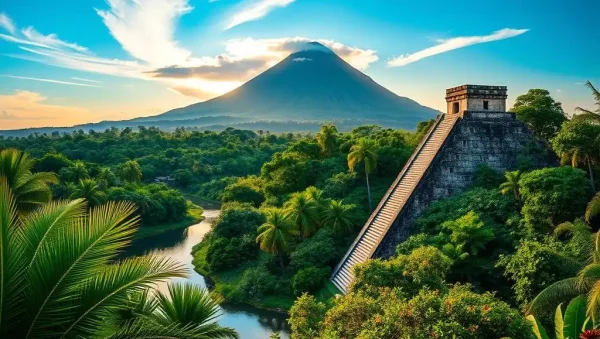
Mesoamerican builders mastered local resources without metal tools or wheeled vehicles. They quarried limestone, basalt, and volcanic tuff, shaping blocks with harder stones and obsidian chisels. Lime plaster, made by burning limestone, provided durable facades and vibrant painted surfaces. They used corbelled arches—overlapping stones that converge at the top—to create interior chambers, as seen in Maya palaces like Uxmal. Ramps, scaffolding, and human labor moved massive blocks, while mud-and-rubble fill formed the cores of pyramids, later encased in cut stone. These techniques allowed construction of structures up to 70 meters high, reflecting sophisticated engineering and organizational skills.
Water management was equally advanced. At places like Monte Albán, Zapotec engineers built terraces and underground drainage systems to control rainwater. The Maya constructed *chultuns* (cisterns) and reservoirs to sustain large populations in limestone regions with no surface rivers. At Teotihuacan, the *Ciudadela* complex integrated drainage and ceremonial waterways, demonstrating hydraulic knowledge. These innovations were not incidental but central to urban life, enabling dense populations and monumental building programs. Studying these methods reveals how indigenous societies solved complex environmental challenges through creativity and communal effort.
🏛️ Iconic Structures and Regional Styles
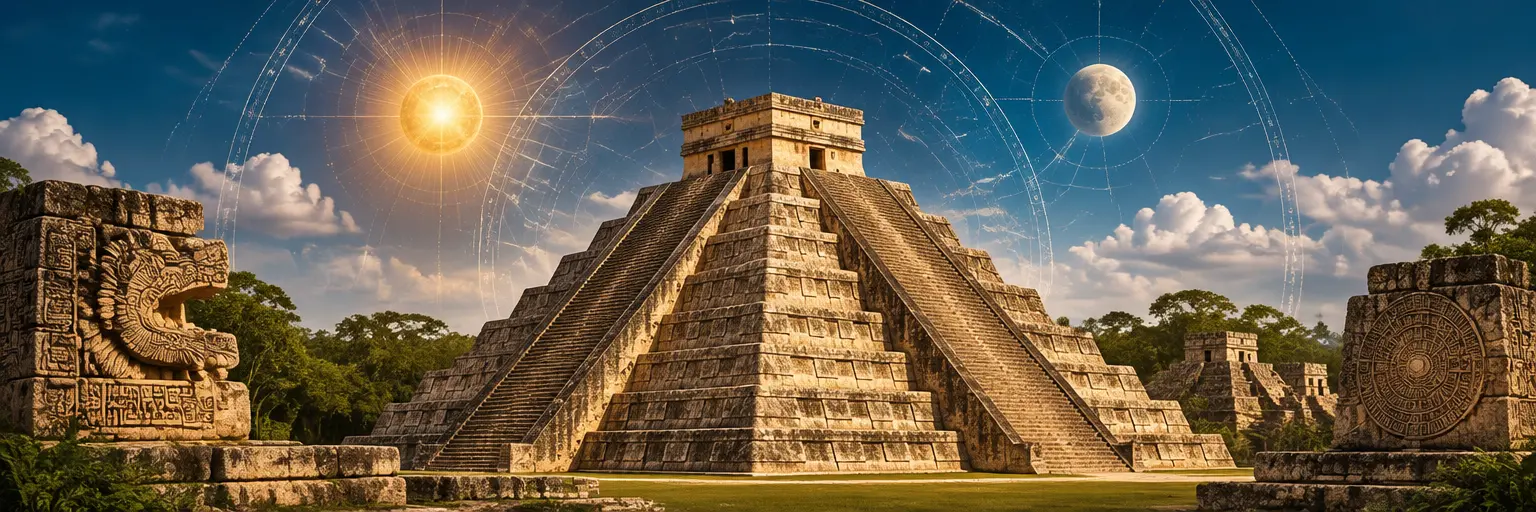
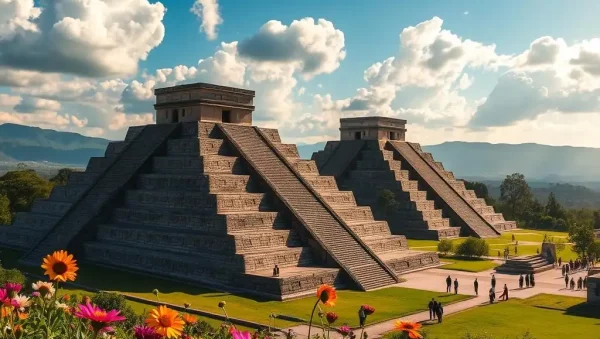
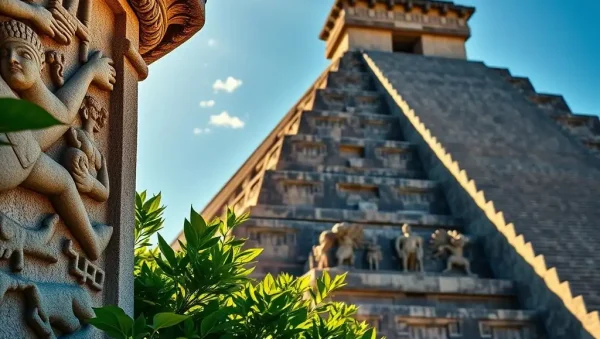
Each Mesoamerican culture developed distinct architectural signatures. The Maya excelled in tall, steep pyramids like El Castillo at Chichen Itza, which also functioned as a calendar with 365 steps. Their *palaces* featured intricate mosaic facades and corbelled vaults. The Aztecs built the Templo Mayor in Tenochtitlan, a twin-temple pyramid honoring Huitzilopochtli and Tlaloc, with successive layers showing previous versions. Teotihuacan’s *Pyramid of the Sun* and *Pyramid of the Moon* anchor a vast grid that aligns with celestial events, while the *Toltec* capital Tula features warrior columns over eight meters tall. These styles reflect differing cosmologies and political priorities, from Maya emphasis on divine kingship to Teotihuacan’s collective urban planning.
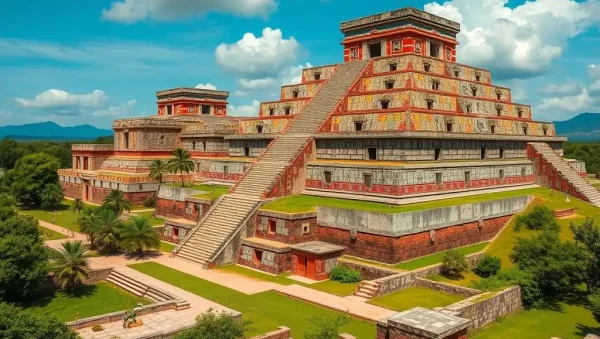
The Zapotec and Mixtec regions offer unique examples at Yagul and Mitla, where geometric stone fretwork decorates palaces, and at Monte Albán, where a hilltop plaza contains a building with carved dancers. The Olmec, the earliest civilization, left earthworks and basalt colossal heads, but their architectural legacy includes the *La Venta* complex with its mound and courtyard orientation. Regional variations showcase how geography and trade influenced design—coastal Maya used coral and shell in plaster, while highland cultures favored volcanic rock. Exploring these structures helps visitors appreciate the diversity and adaptability of indigenous architectural traditions.
🌌 Astronomical and Ritual Significance
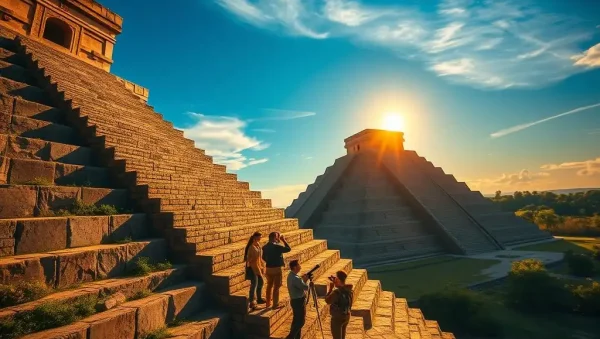
Mesoamerican architects aligned buildings with celestial movements to reinforce religious and political ideologies. The Maya’s *E-Group* complexes at Uaxactun and Tikal track solstices and equinoxes, with sightlines from a western mound to eastern markers. The *Castillo* at Chichen Itza exhibits a serpent-shadow equinox, when sunlight slides down the staircase to join an effigy head—a dramatic display of astronomical precision. Teotihuacan’s grid is oriented 15.5° east of north, aligning with the Pleiades as it rose on the horizon during the rainy season. Such alignments were not symbolic only; they timed agricultural festivals, royal rituals, and warfare. Buildings became cosmic maps, linking the underworld, earth, and heavens in a tripartite structure.
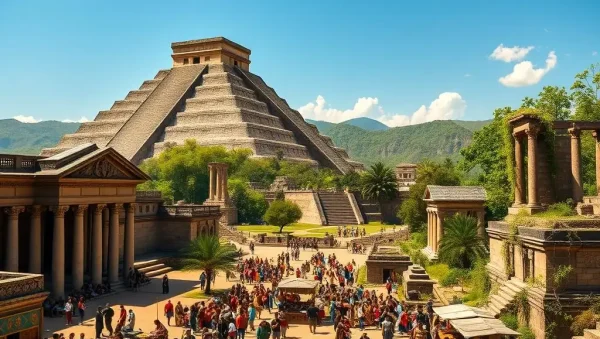
Ritual use extended to bloodletting, sacrifices, and processions. The *Templo Mayor* featured dedicatory caches with offerings, while Maya pyramids contained burial chambers for rulers, as in the *Temple of the Inscriptions* at Palenque. Ball courts, often flanked by sloped walls and rings, were sacred spaces reenacting mythological battles. The plazas beneath pyramids held crowds during ceremonies, with acoustics designed to amplify chants. Stelae and altars placed in front of structures recorded historical events. Understanding these functions shows architecture as a dynamic stage, not just static stone.
🏙️ Urban Planning and Spatial Organization
Mesoamerican cities were meticulously planned around ceremonial centers, with residential areas radiating outward. Teotihuacan’s orthogonal grid, with the *Calle de los Muertos* as its spine, organizes hundreds of apartment compounds, temples, and marketplaces. Maya cities like Tikal and Copan were less rigid but still centered on plazas and acropolises, with causeways (*sacbeob*) connecting distant groups. Aztec Tenochtitlan, built on a lake, featured canals, dikes, and chinampas (artificial islands) for food production, while its *templo mayor* stood at the center of a vast marketplace. Planning reflects social hierarchy—elite compounds near ceremonial cores, commoners further out—and civic functions such as water supply and waste management.
The spatial organization also encoded mythology. The *Quincunx*, a five-point cross pattern, appeared in city layouts, with the center representing the world’s navel. At Monte Albán, a central plaza is surrounded by four cardinal mounds and a sunken court, mirroring cosmic order. Landscaping included residential terraces, defensive walls, and road systems that unified economic and political networks. Comparing these plans reveals different approaches to governance, from Teotihuacan’s centralized state to Maya city-states with aggregated dynasties. Urban design thus serves as a primary source for understanding indigenous social structures and daily life.
🏗️ Preservation, Archaeological Methods, and Modern Legacy
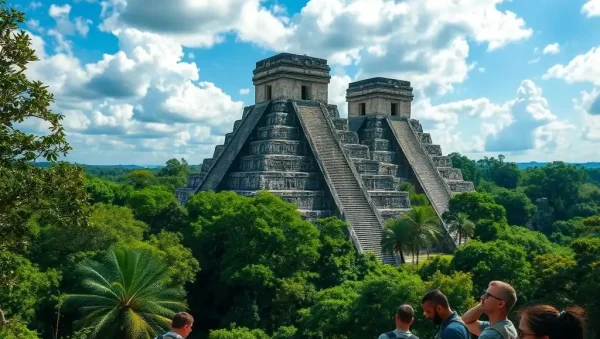
Today, Mesoamerican architectural sites face threats from looting, urban encroachment, and climate change. Archaeologists use LiDAR to map hidden structures beneath jungle canopies, revealing vast settlements like *Calakmul* and *Tikal*’s extended urban landscapes. 3D scanning and photogrammetry document detailed carvings and stuccoes for conservation. Restoration efforts, such as at Teotihuacan and Chichen Itza, balance preserving original fabric with improving visitor access. Indigenous communities increasingly participate in heritage management, ensuring that sites remain culturally alive. These methods not only protect monuments but also deepen our understanding of construction sequences and ancient engineering. For example, recent studies of *Tenochtitlan*’s foundations show how soft lakebed soil was reinforced with wooden piles and stone slabs.
Modern architects and urbanists draw inspiration from Mesoamerican principles—natural cooling using thick walls and shading, rainwater harvesting via reservoirs, and integration of green spaces. For instance, *Nestlé*’s research center near Guadalajara borrowed passive cooling from prehispanic *domed* buildings. Indigenous communities continue to use ancient building styles in homes and ceremonial structures, preserving traditional knowledge. Tourism drives local economies, but sustainable practices are essential to avoid degradation. This subcategory highlights how ancient architectural wisdom remains relevant, offering solutions for climate-resilient design and cultural identity. The legacy of Mesoamerican architecture is not just in ruins but in living traditions and innovative adaptation.
📜 Architectural Symbolism and Iconography
Mesoamerican buildings were covered with symbolic imagery—serpents, jaguars, rain gods, and celestial bands—that communicated political and religious messages. The *Plumed Serpent* (Kukulkan/Quetzalcoatl) appears on facades and columns, representing life-giving rain and renewal. Masks of *Tlaloc* and *Chac* adorned tableros on temples, while *Maw* of the underworld graced funerary structures. Iconographic programs often narrated creation myths or dynastic lineage. For example, the *Temple of the Feathered Serpent* at Teotihuacan features alternating *Quetzalcoatl* heads and *Tlaloc* masks, possibly celebrating a military alliance. The *Codices* and stelae correlate carvings with glyphic texts, allowing archaeologists to decode meanings.
Colors had specific associations: red for death and earth, blue for water and sacrifice, yellow for maize and sun. Fresco painting on interior and exterior walls, like the *Maya murals* at Bonampak and *Teotihuacan*’s *Palace of the Jaguars*, brought buildings alive with scenes of ritual, war, and everyday life. The placement of sculptures—atlantean warriors holding temple roofs—created a physical sense of cosmic support. Studying iconography reveals how architecture served as a mnemonic device for oral histories and as a tangible expression of worldview. This symbolic layer elevates structures from mere engineering feats to profound cultural documents.
Frequently Asked Questions
What is the oldest Mesoamerican architectural site?
The oldest known complex is at *Cuicuilco* in Mexico’s Basin, with a circular pyramid dated around 800–500 BCE. However, *La Venta* (Olmec) and *San Lorenzo* (earlier) have monumental earthworks from ~1200 BCE. Some coastal sites show dating around 1500 BCE, but researchers debate which truly represents “architecture” due to erosion.
How did Mesoamerican builders make vaults without arches?
They used the corbelled arch—layering stones so each course extends inward until the opening closes, then capping with a flat slab. This technique creates a triangular or trapezoidal space, seen in Maya doorways and tomb chambers. It lacks the thrust of true arches but distributes weight effectively for limited spans.
Were Mesoamerican pyramids purely for ceremonies?
Yes, primarily. Most pyramids housed temple sanctuaries, were used for astronomical observations, and buried important rulers. Many contain hidden tombs, as at Palenque. However, some—like the *Pyramid of the Moon*—had residential or administrative compounds nearby. Pyramids were also centers of pilgrimage and economic activity.
Why are many structures aligned to astronomical events?
Alignments served agriculture and religion, marking planting and harvest seasons, solstices, and equinoxes. They also reinforced royal authority, with kings claiming celestial favor. Such alignments were calculated with horizon observations and vertical sightlines, proving advanced knowledge of astronomy and mathematics.
Which modern technology helps uncover hidden Mesoamerican structures?
LiDAR (Light Detection and Ranging) is revolutionary, sending laser pulses to map ground elevation through dense forest, revealing vast urban layouts and pyramids—like the 60,000+ structures found in the Petén. Ground-penetrating radar, magnetometry, and 3D photogrammetry also find buried walls and chambers non-invasively.