Language and Ritual: The Importance of Sacred Texts in Mesoamerican Religions
The Mesoamerican sacred texts significance lies in their role as vital spiritual guides, preserving ancient rituals and cultural wisdom. These texts not…
Read article
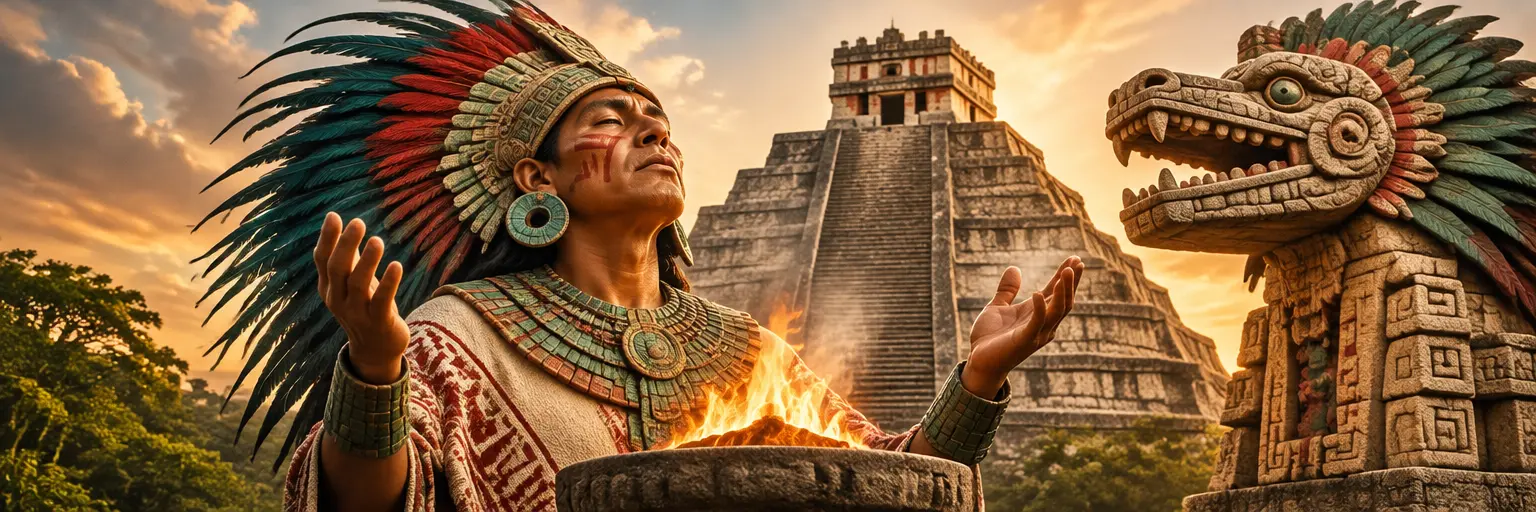
Explore the profound spiritual world of the Mesoamerican Religions, where the divine intertwined with every aspect of daily life. From the awe-inspiring pyramids of the Aztecs to the intricate calendar systems of the Maya, these ancient belief systems reveal a universe teeming with gods, cosmic cycles, and sacred rituals. Discover the rich symbolism behind deities like Quetzalcoatl, the feathered serpent, and the powerful forces of nature they embodied. Delve into the core practices—including ceremonial ballgames, blood offerings, and astronomical observations—that shaped the social and political order of civilizations like the Zapotecs and Mixtecs. Understanding these religions is key to appreciating the indigenous intellectual heritage that continues to influence modern culture. Uncover how mythology, cosmology, and ritual merged to create resilient communities whose spiritual legacy remains a cornerstone of American history. Whether you’re a student of ancient civilizations, a seeker of esoteric knowledge, or a traveler of the mind, this exploration offers a captivating lens into the sacred landscapes that defined an era.
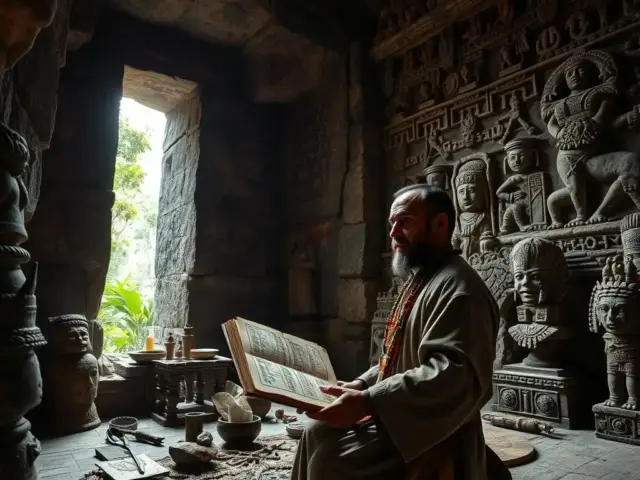
The Mesoamerican sacred texts significance lies in their role as vital spiritual guides, preserving ancient rituals and cultural wisdom. These texts not…
Read article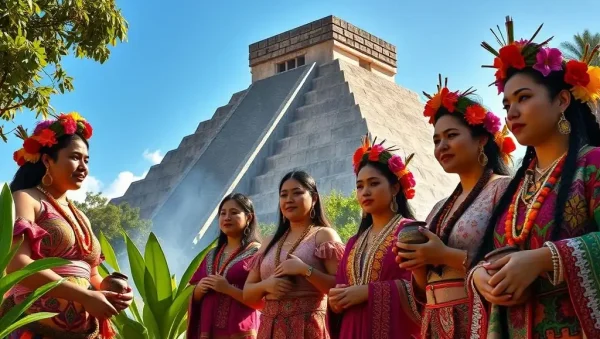
🌸 Mesoamerican women in religion played a vital role in shaping spiritual practices, embodying the divine feminine. Their influence permeated rituals and…
Read article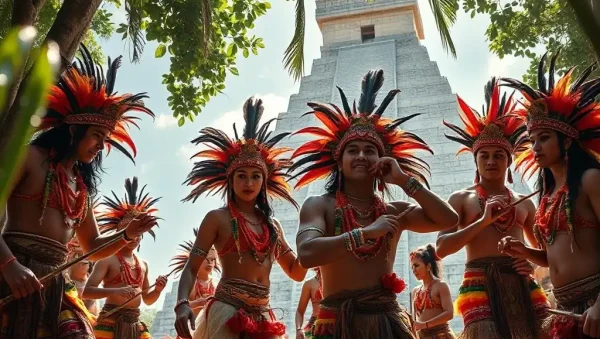
🎶 Mesoamerican music and dance traditions played a vital role in spiritual ceremonies, serving as a conduit for divine connection. These vibrant…
Read article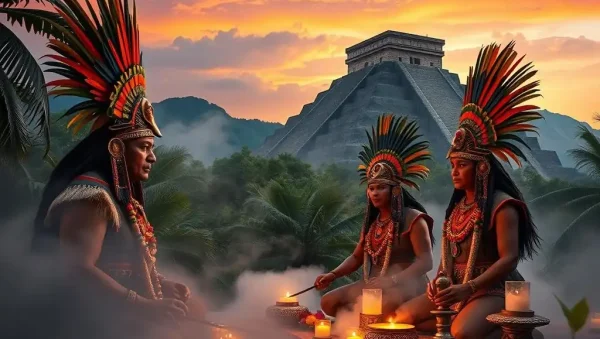
🌍 Discover the rich tapestry of Mesoamerican creation myths explained, where deities like Quetzalcoatl and Tezcatlipoca shape the cosmos. This exploration unveils…
Read article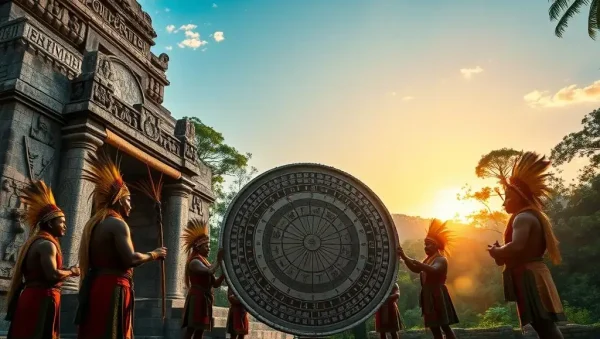
🌟 The Mesoamerican sacred calendar significance reveals how time profoundly influenced religious beliefs, rituals, and agricultural practices among indigenous cultures. This intricate…
Read article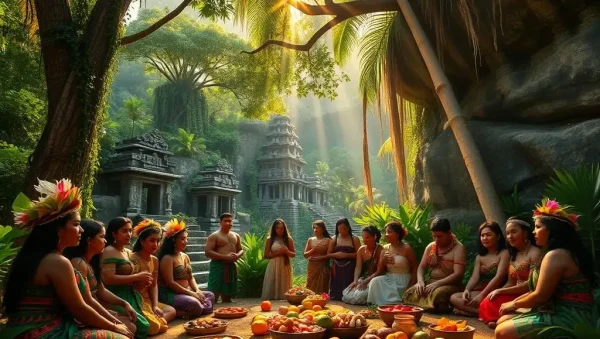
🌿 Mesoamerican spirituality and nature are intricately connected, highlighting a profound respect for the environment. Indigenous cultures viewed natural elements as sacred,…
Read article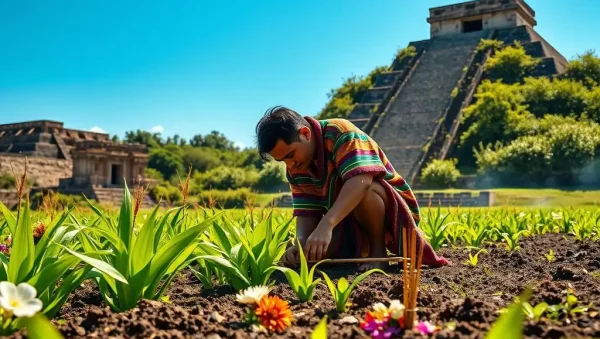
🌾 Mesoamerican agriculture spiritual practices were integral to the daily lives of indigenous cultures, intertwining farming rituals with religious beliefs. These traditions…
Read articleWelcome to our deep dive into Mesoamerican Religions, a subcategory dedicated to the rich spiritual systems of the Aztec, Maya, Olmec, Zapotec, and other indigenous peoples of ancient Mexico and Central America. Here, you will uncover how cosmology, agriculture, politics, and daily life intertwined with the divine, shaping some of the most sophisticated and enduring religious traditions in human history. From blood sacrifice to sacred calendars, this hub offers a structured path for both newcomers and enthusiasts, with content optimized for search engines to help you find precisely the answers you seek.
Mesoamerican religions were anchored in a layered cosmos—thirteen heavens above and nine underworlds below—unified by a central world tree. Creation myths, like the Popol Vuh of the Maya or the Aztec Legend of the Five Suns, explain cycles of destruction and rebirth, where gods sacrifice themselves to sustain humanity. Expect detailed expositions on deities like Quetzalcoatl, Tezcatlipoca, and Itzamna, and how these narratives justified royal authority and ritual calendars.
These myths were not mere stories but frameworks for understanding time, fate, and moral obligation. For instance, the Aztec believed we live in the Fifth Sun, born from the self-immolation of Nanahuatzin, requiring human blood to keep the sun moving. Our content unpacks these narratives with etymological insights, archaeological evidence, and comparative analysis, enabling you to see how each civilization adapted shared myths to local ecologies. You will also learn how cave paintings, codices, and temple carvings encode these celestial tales, making them accessible to non-specialists.
Ritual was the heartbeat of Mesoamerican religion, with public ceremonies held in pyramid-temples, ball courts, and plaza observatories. Blood sacrifice—both human and animal—was believed to feed the gods, renew cosmic order, and ensure agricultural fertility. Expect thorough explanations of heart extraction, gladiatorial sacrifice, and the use of visionary plants like morning glory and peyote, always grounded in ethical, academic context.
Our guides break down the calendar-based rituals such as the Aztec New Fire Ceremony, held every 52 years, and the Maya’s katun-ending celebrations. We also explore the role of autosacrifice (bloodletting from tongue or ears), performed by nobles to communicate with ancestors. By pairing textual sources like the Florentine Codex with modern ethnographic parallels, we offer a balanced view that neither sensationalizes nor sanitizes these practices, helping you understand their deep logic and social function.
Mesoamericans pioneered highly accurate calendars, including the 260-day tzolkin (Maya) and the 365-day haab, which interlocked to create a 52-year Calendar Round. Astronomy was sacred—the Milky Way was a cosmic river, and eclipses were omens. Expect content on how temples like Chichén Itzá’s El Castillo were built to cast serpent shadows at equinoxes, aligning human time with celestial cycles.
We explain the significance of the Long Count, a linear calendar used for history and prophecy, and its famous 2012 correlation. Learn how priests used zenith days, Venus cycles, and lunar counts to predict wars and harvests. Our comparative tables and interactive diagrams (as described in text) will assist you in deciphering glyphs and stone carvings. We also address common misconceptions about “Maya doomsday,” clarifying that these calendars were about renewal, not apocalypse.
Beyond major gods, Mesoamerican pantheons included hundreds of localized deities for rain, maize, fire, and death. The Maya’s Itzamna and the Aztec’s Tlaloc exemplify how natural forces were personified and appealed to. Expect deep profiles of deities—their iconography, myths, and epithets—plus discussions on how the Spanish conquest led to syncretism, blending Catholic saints with indigenous gods, visible in modern Day of the Dead celebrations.
We also cover nagualism (animal spirit companions), the teotl concept of sacred energy, and the role of female goddesses like Chalchiuhtlicue and Ix Chel. Each profile links to art, colonial transcripts, and contemporary ritual survivals. This section serves as a vital resource for students of comparative religion, offering clear distinctions between Aztec militarism and Maya courtly religion, while highlighting shared core beliefs across the region.
In Mesoamerica, religion was inseparable from statecraft. Kings were divine intermediaries, and military conquests were often timed to ritual calendars to obtain sacrificial captives. Expect insights into the Aztec flower wars, the Maya ajaw’s role as rainmaker, and how temple economies redistributed food and goods. You will also learn about the priestly class—their training, hierarchies, and secret knowledge.
Social hierarchy was encoded in religion: commoners paid tribute for temple maintenance, slaves were purchased for sacrifice, and elites wore god-imagery to legitimize rule. Our content examines how calpulli (community houses) organized festivals and how the 20-day months (veintenas) structured civic life. By reading this, you will gain a holistic understanding of how material conditions, political power, and spiritual belief reinforced one another, with case studies from Tenochtitlan, Palenque, and Monte Albán.
The Popol Vuh is the most important surviving Maya creation and hero myth, transcribed in the 16th century from oral tradition. It details the creation of humans from maize, the exploits of the Hero Twins, and the underworld’s trials. For Aztec religion, primary sources include the Florentine Codex, compiled under Bernardino de Sahagún, which documents rituals, gods, and worldviews. These texts are essential for understanding Mesoamerican cosmology.
Most major Mesoamerican cultures, including the Aztec, Maya, and Zapotec, practiced some form of human sacrifice, though frequency and methods varied. The Aztec expanded it dramatically, believing it necessary to sustain the sun. The Maya often used sacrificial victims during royal events or droughts. However, not all rituals involved humans—many used animals, bloodletting, or offerings of food and precious objects. Evidence suggests sacrifice was a religious imperative, not random violence.
The 260-day tzolkin (or tonalpohualli in Aztec) likely originated from combining the human gestation period (260 days) with agricultural cycles of maize. It was used for divination, naming newborns, and scheduling rituals. Each day had a deity and a directional “burden,” influencing everything from marriage to warfare. This calendar interlocked with the solar year, creating a 52-year grand cycle, central to Mesoamerican timekeeping and prophecy.
Spanish colonizers suppressed indigenous religions, destroyed codices, and forcibly converted populations. However, many practices survived in disguised forms—Catholic saints became associated with indigenous deities, and rituals like Day of the Dead blended pre-colonial beliefs with Christianity. Today, many indigenous communities in Mexico and Guatemala preserve elements of ancient religion, such as maize ceremonies and calendar-based festivals, often syncretized with Catholic liturgy.
Yes, there are revivalist movements, notably among the Maya in Guatemala and Mexico, such as the Movimiento Maya, which seeks to restore pre-colonial spirituality. Some urban communities in Mexico also practice “Mexicayotl,” a reconstruction of Aztec traditions, including ceremonies to Tonantzin or Huitzilopochtli. While not continuous in an unbroken lineage, these modern efforts draw on codices, archaeology, and oral traditions to reimagine ancient faiths, often emphasizing environmental stewardship and cultural pride.